The 2026 FIFA World Cup — co-hosted across the United States, Canada, and Mexico — was more than a sporting spectacle. With 48 teams, 104 matches, 16 stadiums, and an estimated 6 billion viewers worldwide, it was the largest commercial and technological mobilisation in the history of global events.
Behind every goal and every highlight reel lay a dizzying array of cutting-edge technologies: AI analytics accessible to every team, sensor-laden footballs transmitting 500 data points per second, private 5G networks in every stadium, and AI-powered broadcasting that generated nearly 9,000 hours of content. The World Cup was, in effect, a massive, high-stakes lab test for technologies that are rapidly becoming affordable and accessible to businesses of all sizes — including SMEs in Malaysia.
Here are five digital technology trends from the 2026 World Cup and the practical lessons they hold for small and medium enterprises.
1. AI and Data Analytics: From the World Stage to Your Shop Floor
One of the most significant technological stories of the 2026 World Cup was Football AI Pro, developed by FIFA and Lenovo. It is a generative AI knowledge assistant built on a football language model trained on hundreds of millions of data points from decades of FIFA tournaments. The platform analyses over 2,000 performance metrics and delivers insights in text, video, and 3D tactical visualisations — and every single one of the 48 competing teams had equal access to it.

Football AI Pro democratised data analytics for all 48 competing teams — a lesson in levelling the playing field.
The SME lesson: Historically, deep data analytics was reserved for organisations with large budgets. Smaller teams arrived at tournaments with far less analytical support. Football AI Pro closed that gap — and the same is happening in business. Affordable AI tools — ChatGPT for content, Google Analytics 4 for customer insights, HubSpot CRM for sales pipelines — now put enterprise-grade analytics within reach of any SME. The key is to stop treating AI as a futuristic concept and start using it as a daily decision-making tool. Whether it's predicting inventory needs, analysing customer behaviour, or automating routine tasks, the data advantage is no longer reserved for big corporations.
2. 5G and Connectivity: The Infrastructure of Speed
Verizon deployed private 5G networks at all 16 World Cup venues. At the 11 US stadiums, public 5G capacity was upgraded by three to five times to handle the flood of fans streaming, uploading, and accessing match data simultaneously. The broadcast backbone carried 7 terabits per second of data from venues to the International Broadcast Centre in Dallas.
Inside stadiums, fans could point their phones at the pitch and see augmented reality overlays with real-time player stats. Digital twin wayfinding helped them navigate to their seats. The entire experience was built on the assumption of ubiquitous, high-speed connectivity.
The SME lesson: Your customers expect the same seamlessness. A slow website, a checkout page that takes more than three seconds to load, or a mobile app that lags — these are the equivalent of a stadium with no network signal. Malaysian SMEs need to invest in proper hosting infrastructure (not the cheapest shared server), optimise their websites for mobile, and consider content delivery networks (CDNs) to serve customers across different regions quickly. With Malaysia's 5G rollout accelerating, businesses should also start exploring how faster connectivity can enable new services — AR product previews, live video support, or real-time inventory visibility.
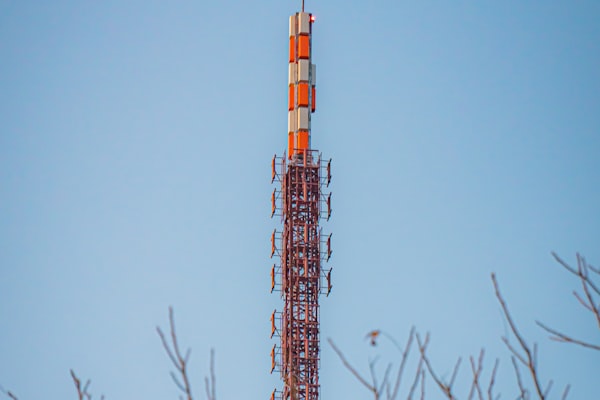
Private 5G networks powered every stadium — a reminder that speed and reliability are non-negotiable for modern businesses.
3. Digital Payments: From Cash to Contactless — Fast
In Mexico, the World Cup served as an urgent catalyst for digital payment adoption. Data showed that only 54% of Mexican MSMEs accepted card payments at the start of 2026. With an expected influx of 5.5 million international visitors who predominantly use contactless payments, the Mexico Ministry of Economy and Visa launched the Crece tu mipyme con pagos digitales initiative — targeting 1 million newly digitised businesses before the tournament.
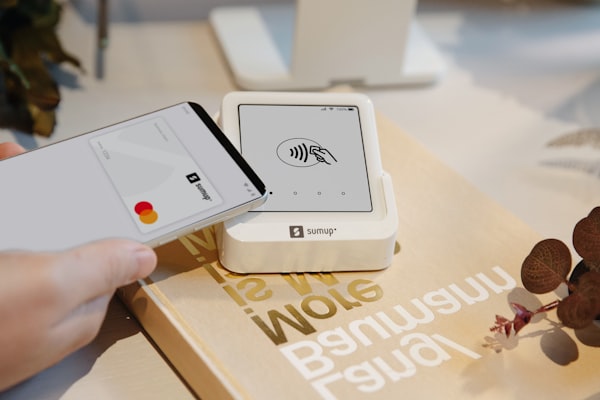
Mexico pushed 1 million MSMEs to adopt digital payments ahead of the World Cup — a powerful lesson for cash-based businesses everywhere.
The SME lesson: Malaysian SMEs face a similar imperative. While digital payment adoption in Malaysia is ahead of many regional peers, cash-only businesses are still common in certain sectors. The World Cup proved that when customers expect digital payments, businesses that can't accept them lose sales outright. Offering multiple payment options — FPX, GrabPay, Touch 'n Go eWallet, card payments, buy-now-pay-later — is no longer a differentiator; it's a baseline requirement. Payment gateway providers in Malaysia have made onboarding simpler and more affordable than ever, with no-monthly-fee options and simple QR-code setups.
4. Broadcasting and Content: The Long Tail of a Single Event
Host Broadcast Services deployed 45 cameras per match across all 104 fixtures — including polecams, cablecams, 360-degree cameras, and referee body cameras with AI-powered stabilisation. The total content generated across the tournament reached nearly 9,000 hours. AI-assisted production tools allowed broadcasters to identify highlights faster and customise content for different platforms and audiences worldwide.
Behind the scenes, Lenovo's AI infrastructure reduced IPTV broadcast latency to under five seconds. Every stadium had large screens showing VAR reviews in real-time, including full 3D-animated offside replays generated from each player's actual digital avatar.
The SME lesson: You don't need 45 cameras to apply this principle. The insight is about content repurposing. A single product launch or business event generates raw material that can be sliced into dozens of pieces: a 2-minute highlight video for Instagram, a detailed blog post for your website, quote cards for LinkedIn, a behind-the-scenes story for TikTok, a newsletter feature for your subscribers. AI tools like Opus Clip, Canva, and Descript make this kind of repurposing effortless. The World Cup showed that massive reach comes not just from producing content, but from distributing the right version of it on every platform.
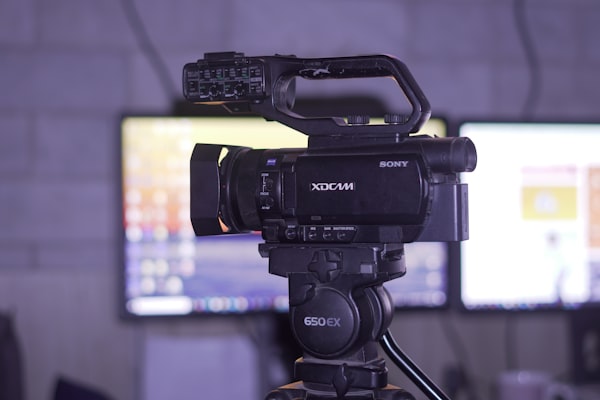
45 cameras per match generated nearly 9,000 hours of content — a masterclass in repurposing for different platforms.
5. Cybersecurity and Infrastructure Resilience
The security operation at the 2026 World Cup was unprecedented. AI-powered facial recognition at entry points allowed registered fans to enter using their face instead of a physical ticket. Boston Dynamics Spot robots patrolled restricted areas and underground corridors. The US government committed $625 million from FEMA alone to protect the 11 US host cities, including $250 million specifically for counter-drone technology.
An Intelligent Command Centre monitored crowd density and security conditions across all 16 venues simultaneously, surfacing potential issues before they escalated.
The SME lesson: If a multi-billion-dollar global event invests this heavily in security, the message for SMEs is clear: cybersecurity is not optional. Malaysian SMEs are increasingly targeted by phishing, ransomware, and social engineering attacks — often because larger businesses have better defences. Basic cyber hygiene — regular software updates, multi-factor authentication, staff training on phishing awareness, and automated backups — is the SME equivalent of that Intelligent Command Centre. It's not about having military-grade security; it's about having the right fundamentals in place so a single breach doesn't put you out of business.
Key Takeaways for Malaysian SMEs
- Adopt AI tools now — The data advantage is no longer reserved for big corporations. Free and low-cost AI tools can level the playing field.
- Invest in digital infrastructure — Reliable hosting, mobile optimisation, and fast load times are table stakes, not luxuries.
- Go cashless or get left behind — Multiple digital payment options are expected by customers. The cost of not offering them is lost revenue.
- Repurpose everything — One piece of content can feed every platform. Use AI tools to make it easy.
- Take cybersecurity seriously — The basics (updates, 2FA, backups, staff training) go a long way in protecting your business.
The 2026 World Cup will be remembered for the football, the drama, and the champions. But for business owners watching closely, it was also a preview of the technologies that will define the next decade of commerce — and a reminder that SMEs who embrace these tools early will be the ones who win in their own leagues.
Conclusion
The 2026 FIFA World Cup was far more than a month of football — it was a global showcase of what happens when technology meets massive scale. From AI-powered analytics that levelled the playing field for all 48 teams, to private 5G networks that redefined in-stadium connectivity, to the urgent push for digital payments in host cities, the tournament laid bare the technologies that will shape the next decade of business.
For Malaysian SMEs, the message is clear. You don't need a billion-dollar budget to benefit from these trends. Affordable AI tools put data-driven decisions within reach. Reliable hosting and mobile optimisation are no longer optional — they are what your customers expect. Digital payments are becoming a licence to operate, not a nice-to-have. Content repurposing lets small teams achieve big reach. And basic cybersecurity hygiene protects you from threats that are growing more sophisticated by the day.
The businesses that will thrive in the years ahead are not necessarily the biggest — they are the ones that pay attention to what the World Cup just demonstrated: that technology adoption is no longer a competitive advantage. It is the price of entry.
Frequently Asked Questions
1. What is Football AI Pro and how does it work?
Football AI Pro is a generative AI knowledge assistant developed by FIFA and Lenovo for the 2026 World Cup. It is built on a football language model trained on hundreds of millions of data points from decades of FIFA tournaments. The platform analyses over 2,000 performance metrics and delivers insights in text, video, graphs, and 3D tactical visualisations. Every competing team had equal access to it, regardless of their budget or technical resources.
2. How did 5G technology impact the World Cup experience?
Verizon deployed private 5G networks at all 16 venues and upgraded public 5G capacity by three to five times at US stadiums. This allowed fans to stream, upload, and access augmented reality overlays with real-time player stats through the FIFA+ app without network congestion. The broadcast backbone carried 7 terabits per second of data from venues to the International Broadcast Centre.
3. What happened with digital payments in Mexico during the World Cup?
With only 54% of Mexican MSMEs accepting card payments at the start of 2026, the government and Visa launched the Crece tu mipyme con pagos digitales initiative targeting 1 million newly digitised businesses. Businesses that adopted electronic payments reported a 30% increase in sales. The programme offered zero-cost POS terminals, reduced transaction fees, and usage-based payment models.
4. How many cameras were used to broadcast the 2026 World Cup?
Host Broadcast Services deployed 45 cameras per match across all 104 fixtures, including polecams, cablecams, 360-degree cameras, and referee body cameras with AI-powered stabilisation. The total content generated reached nearly 9,000 hours. AI-assisted production tools allowed broadcasters to customise content for different platforms and audiences worldwide.
5. What cybersecurity measures were used at the 2026 World Cup?
The security operation was unprecedented. AI-powered facial recognition at entry points, Boston Dynamics Spot robots patrolling restricted areas, and a $625 million federal security commitment including $250 million for counter-drone technology. An Intelligent Command Centre monitored crowd density and security conditions across all venues simultaneously.
This article was written by Ryan Lim, a contributor to SMEBuddies. Ryan covers technology trends and digital transformation topics to help Malaysian SMEs navigate the evolving business landscape.
What the 2026 FIFA World Cup Taught SMEs About Digital Technology and Business