By Julie Daphne · November 2026
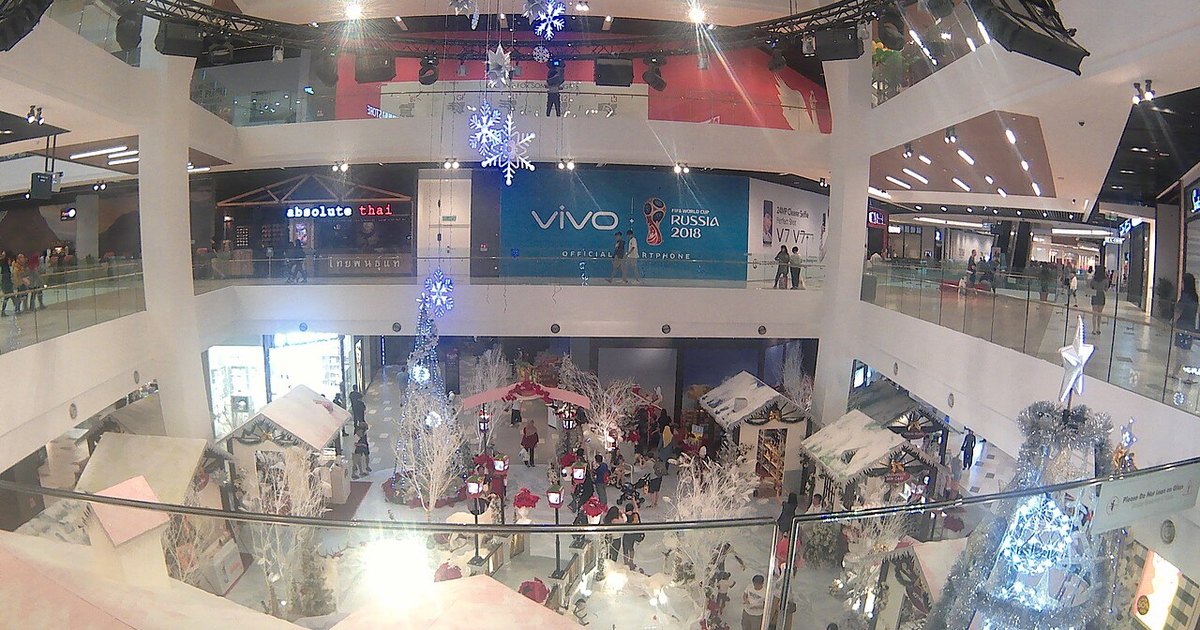
A mall atrium dressed for the festive season. From mid-November the same shopper is being sold to by every mall, every platform and every brand on the same street. Photo: Wikimedia Commons / angys (CC BY-SA 4.0)
What the sale actually is this year
Two different things are running at once, and it helps to keep them apart. The first is a compliance category. The ministry's national sale-notice system, which retailers use to lodge discount notices, lists Malaysia Year End Sale as running 15 November to 31 December 2026 — the same 15 November to 31 December pattern as 2024 and 2025. Sales of more than three days require a notice lodged through that system, and the system rejects a start or end date that falls outside the national category window.
The second is a tourism campaign. Tourism Malaysia has promoted a year-end sale as part of its retail calendar for years; its 2025 edition ran from 15 November 2025 to 1 January 2026 with discounts advertised up to 70% at participating malls, midnight sales and shopper contests. Visit Malaysia 2026 itself continues into 2027 — the Ministry of Finance's budget appendix refers to the tourism year being extended — so the promotional backdrop is longer than the sale window. Confirm this year's published window before you build a campaign around it.
Set the margin floor before the discount
Take an item that costs you RM60 and retails at RM100, sold on a card with a 2.5% merchant fee. Contribution — what is left after stock and the card fee — falls faster than the price, because the fee is a percentage of a shrinking number while the stock cost does not move.
| Discount | Price | Card fee | Contribution | As % of price |
|---|---|---|---|---|
| None | RM100.00 | RM2.50 | RM37.50 | 37.5% |
| 10% | RM90.00 | RM2.25 | RM27.75 | 30.8% |
| 15% | RM85.00 | RM2.13 | RM22.88 | 26.9% |
| 20% | RM80.00 | RM2.00 | RM18.00 | 22.5% |
| 25% | RM75.00 | RM1.88 | RM13.12 | 17.5% |
| 30% | RM70.00 | RM1.75 | RM8.25 | 11.8% |
| 35% | RM65.00 | RM1.63 | RM3.38 | 5.2% |
| 40% | RM60.00 | RM1.50 | −RM1.50 | −2.5% |
Break-even on this item is a 40% discount. Everything between 30% and 40% is work you do for the courier, the landlord and the card network. Write your own floor down — the discount at which contribution covers stock, fees and the cost of the staff hours to sell it — and treat it as the ceiling on your markdowns for the whole season.
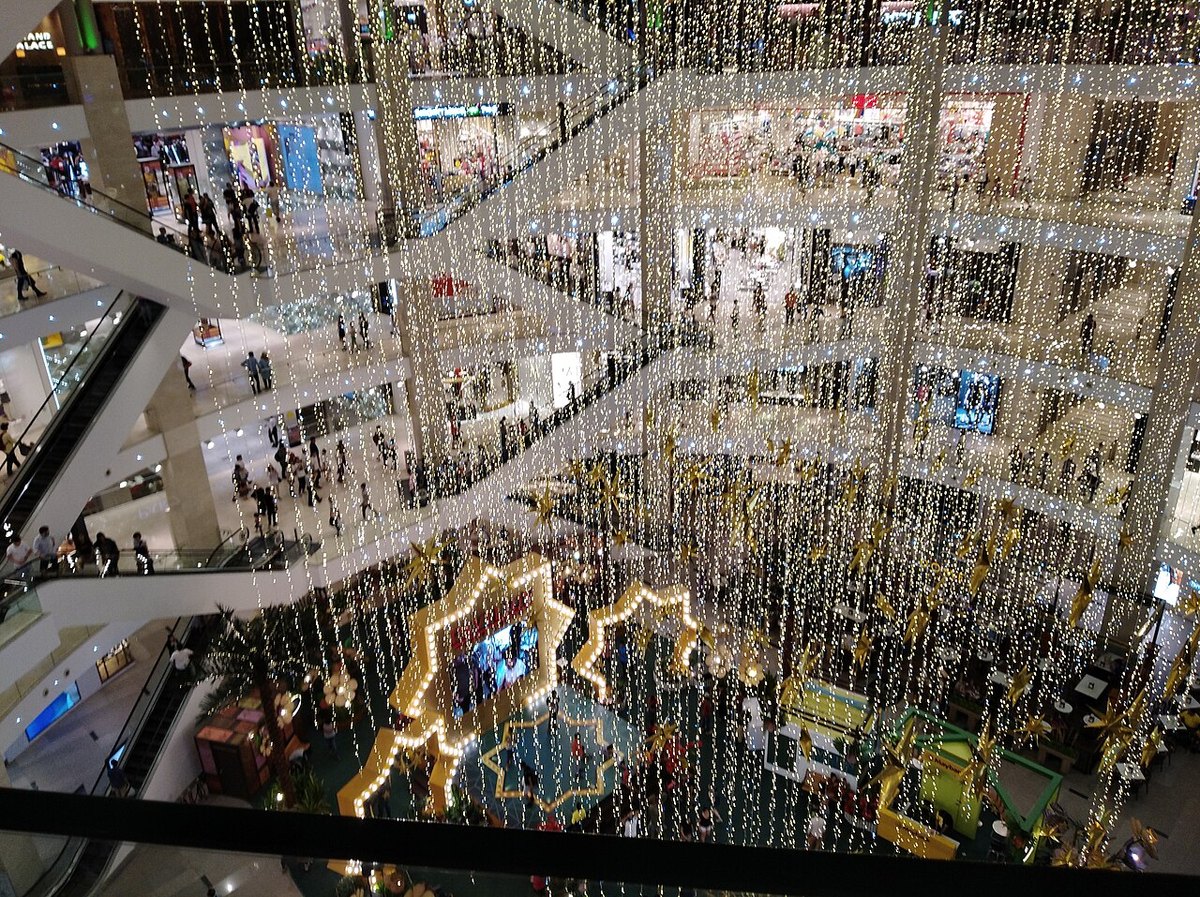
A Kuala Lumpur mall during a festive season, with shoppers moving through several floors at once. Traffic is not the constraint in December; conversion at a sane price is. Photo: Wikimedia Commons / PulauKakatua19 (CC BY-SA 4.0)
Phase one: November, hold the price and add value
November has the Deepavali weekend behind it — the festival fell on Sunday 8 November, with Monday 9 November the replacement holiday in most states — and the year-end sale in front of it. Resist the temptation to open with a discount. November is where you sell at full price with a reason to buy now: a bundle, a gift-with-purchase, free personalisation, extended exchange, an early-bird reservation for December collection. Value-added offers protect the price anchor and cost you less than the equivalent percentage off, because the add-on's cost to you is its cost, not its retail value.
Phase two: December, controlled discounting
December brings gifting and school-holiday family traffic. Schools close on Friday 4 December in Kedah, Kelantan and Terengganu and on Saturday 5 December everywhere else, per the Education Ministry's 2026 academic calendar, and the family shopping that follows is real but price-aware. The discipline that works: discount only lines that will not sell at full price in January anyway, cap the depth at your floor, and keep the discount off your best sellers for as long as they keep selling.
Phase three: January, clearance with a hard stop
January is for stock you do not want to carry into the next season, and it needs a stop date written on the sign. A clearance that runs until the stock is gone teaches customers that your January price is your real price. A clearance that ends on a stated day, and actually ends, does the opposite: it rewards the customer who moved and restores the anchor for everyone else.
What the three phases earn together
Suppose you sell a third of the season's units in each phase: full price in November, 15% off in December, 30% off in January. Blended contribution on that RM100 item is about RM25.80 a unit, against RM37.50 if the same units sold at full price. Now suppose you open at 30% off on 15 November and hold it: contribution is RM8.25 a unit, on the same stock, with the same staff. The difference between those two numbers — roughly RM17.50 a unit — is what a three-phase plan is worth, and it is the reason to spend an evening with a spreadsheet before the signage goes up.
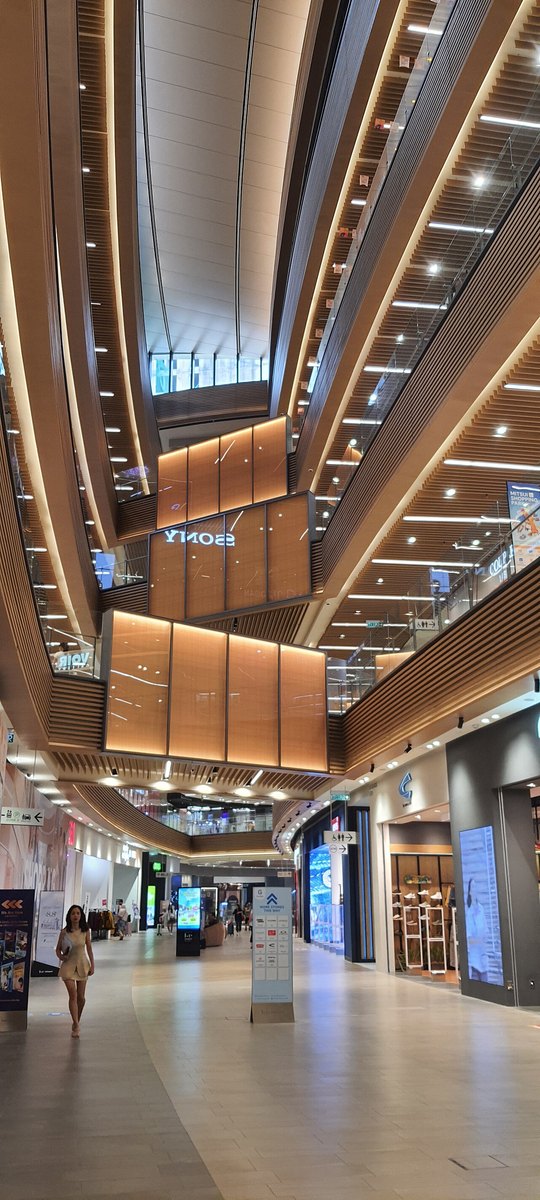
A mall corridor in Kuala Lumpur. Staffing, signage and the length of the queue at the till all shape whether December traffic converts or walks. Photo: Wikimedia Commons / Azreey (CC BY-SA 4.0)
Keep the offer legible to a first-time buyer
Visit Malaysia 2026 has put more first-time visitors in front of Malaysian shopfronts, and a tourist with twenty minutes and no context cannot decode three stacked mechanics. One offer, one condition, one price. If the customer needs to ask a staff member to explain the promotion, the promotion is costing you the sale it was meant to win. The same rule applies to a regular who is comparing you with an online listing on their phone.
Exit without wrecking the anchor
Book the end date before you start, put it on every sign, and diarise the evening you take the signage down. Permanent "sale" stickers are a slow price cut that no spreadsheet records. When the clearance ends, restock the shelves with new-season stock at full price, and give staff a script for the customer who asks for the old discount — a straight no, with the next full-price offer in hand, is kinder than a quiet exception that teaches everyone to ask.

The floor is a number, not a feeling: stock cost, card fee and the discount at which contribution disappears. Photo: Unsplash (CC0), via Wikimedia Commons
Confirm these before the signs go up: whether your planned sale dates fall inside the national sale category window in the ministry's notice system, and whether a notice is required for the length of event you are running; this year's published Tourism Malaysia campaign dates, since the ministry category and the tourism campaign do not always end on the same day; and your actual merchant fee, which varies by card type and acquirer. The ministry's system and your own acquirer statement are the authority, not this article.
Conclusion
A three-month sale is not one decision repeated for ninety days. It is three decisions with a floor underneath them: hold price in November with value added, discount selectively in December, and clear in January against a date you have already booked.
The arithmetic is unforgiving and simple. On a RM60-cost item at RM100, a 30% discount leaves RM8.25; a 40% discount leaves nothing. Running the whole season at 30% off costs you about RM17.50 a unit against a phased plan, and the customers you trained to wait will still be waiting next November.
Do the floor calculation this week, put the end date on the calendar, and brief staff on both. The sale will run whether or not you have a plan; the margin is the part you control.
Frequently Asked Questions
1. When does the Malaysia Year End Sale officially run?
The Domestic Trade and Cost of Living Ministry's sale-notice system lists the category as 15 November to 31 December 2026. Tourism Malaysia's accompanying campaign has run into early January in past editions — the 2025 edition closed on 1 January 2026 — so check the current published dates before planning around the end of the season.
2. Do I need to lodge a notice for my sale?
Discount events of more than three days require a notice through the ministry's sale-notice system, and the system will reject dates that fall outside the national category window. Events shorter than three days do not need the notice, but the consumer protection rules still apply.
3. What discount can I afford?
Work it out from contribution, not from what competitors are advertising. On a RM60-cost item at RM100 with a 2.5% card fee, contribution is RM37.50 at full price, RM18.00 at 20% off, RM8.25 at 30% off and negative at 40%.
4. Is it better to discount early to capture November traffic?
Usually not. Opening at 30% off and holding it earns about RM8.25 a unit, against roughly RM25.80 for the same units spread across a full-price November, a 15%-off December and a 30%-off January clearance. Early discounting also trains customers to wait.
5. How do I end a sale without losing customers?
Set and publish the end date, take the signage down on the day, restock with new-season stock at full price, and give staff a consistent answer for anyone asking for the old discount. Quiet exceptions are what turn a promotion into a permanent price cut.
Julie Daphne covers tourism, hospitality, retail and consumer businesses for SMEBuddies. She writes about the commercial side of the Malaysian shopping calendar — festive seasons, school holidays and national sales campaigns — and about how small retailers and service operators can take part in them without giving away the margin that keeps them open.
The Year-End Sale Is On: Running a Three-Month Promotion Without Losing Margin