By Dennis Tan · November 2026
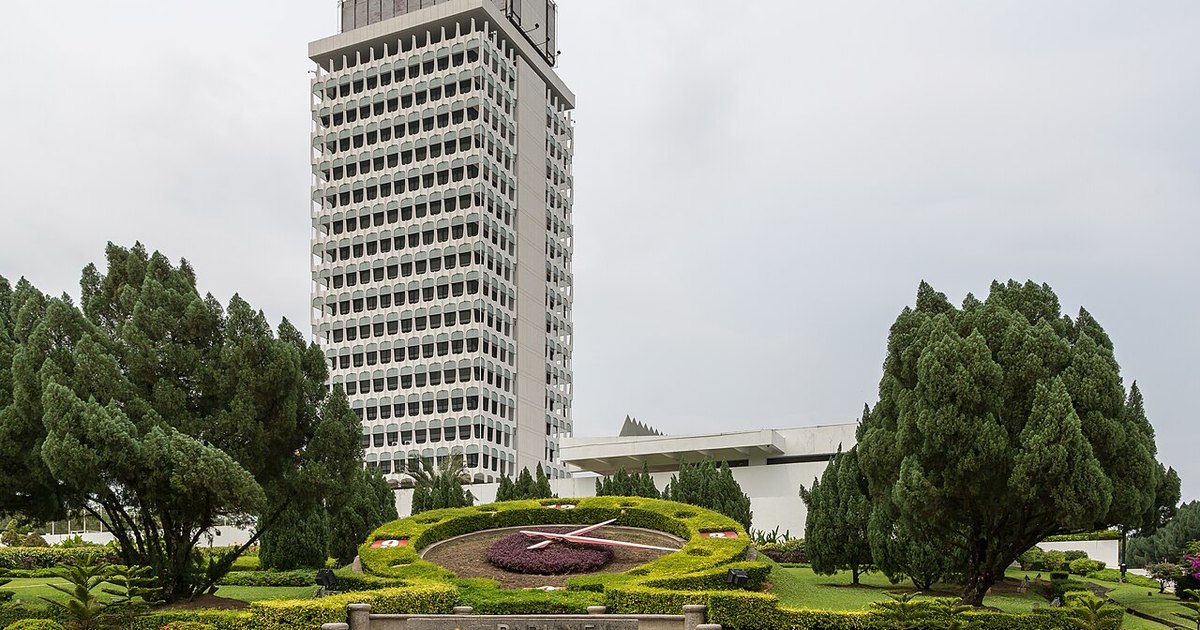
The Malaysian Parliament in Kuala Lumpur. Committee-stage sittings on the Supply Bill 2027 run from 2 to 26 November, voting ministry by ministry. Photo: Wikimedia Commons / CEp (CC BY-SA 3.0)
What is happening in the House today
Committee stage is the least televised and most consequential part of the budget cycle. The House has already approved the Bill in principle; from today it votes on the estimates of each ministry in turn, and amendments can be moved. Figures can shift, programme mechanics can be rewritten, and an allocation can be trimmed — all without touching the headline RM459.8 billion. After 26 November comes the third reading, then the Dewan Negara, then royal assent.
The practical consequence: anything delivered through a ministry — grants, subsidies, matching funds, enforcement capacity — is still in play until the committee stage closes. Anything that lives in the Income Tax Act is not being decided in this debate at all.
What the cut actually is
Budget 2027, tabled by Prime Minister and Finance Minister Anwar Ibrahim on 9 October, proposes a one-point reduction in the tax rates for qualifying micro, small and medium enterprises from year of assessment 2027. The Ministry of Finance's tax measures appendix sets it out plainly: the first RM150,000 of chargeable income falls from 15% to 14%, and the RM150,001 to RM600,000 band falls from 17% to 16%. Income above RM600,000 stays at 24%.
| Chargeable income | Tax at 15%/17% | Tax at 14%/16% | Saving |
|---|---|---|---|
| RM100,000 | RM15,000 | RM14,000 | RM1,000 |
| RM250,000 | RM39,500 | RM37,000 | RM2,500 |
| RM400,000 | RM65,000 | RM61,000 | RM4,000 |
| RM600,000 | RM99,000 | RM93,000 | RM6,000 |
| RM800,000 | RM147,000 | RM141,000 | RM6,000 |
Because the cut applies only to the first RM600,000, the maximum benefit is 1% of RM600,000: RM6,000, reached at RM600,000 and capped thereafter. Anwar told the House it would benefit about 300,000 MSMEs by up to RM6,000 each.
Who qualifies is a separate question
The preferential rate is not automatic for every small company. LHDN's Public Ruling 8/2025, published on 22 December 2025, sets four conditions, and they are tested for each year of assessment. The company must be resident and incorporated in Malaysia. Its paid-up ordinary share capital must not exceed RM2.5 million at the beginning of the basis period. Its gross income from business sources must not exceed RM50 million in that basis period. And there are shareholding restrictions, including the rule in force since year of assessment 2024 that a company more than 20% owned, directly or indirectly, by foreign companies or non-citizen individuals does not qualify.
Two things catch owners out. The tax definition is not the same as the SME Corporation Malaysia definition used for grants and financing, so a company can be an SME for a grant and ineligible for the 14% rate. And the test is applied afresh every year: a capital injection, a new foreign shareholder or a group restructuring can move you out of the band for the following year of assessment.

Modelling 2026 against 2027 takes an hour, not a consultant: two columns of chargeable income, two rate tables, one difference. Photo: Unsplash (CC0), via Wikimedia Commons
Why the Supply Bill is not the tax law
This is the part most coverage skips. A Supply Bill authorises the government to spend money from the Consolidated Fund for a financial year. It does not amend the Income Tax Act 1967, so it cannot change a tax rate. Rate changes reach the statute book through a Finance Bill, which amends the Act itself and is assented to and gazetted as a Finance Act.
Recent practice shows the sequence. Budget 2026 was tabled on 10 October 2025, and the Finance Bill 2025 that carried its tax measures was subsequently tabled for first reading in the Dewan Rakyat, proposing amendments to five Acts including the Income Tax Act 1967. Parliament's public bills list for the current session showed no equivalent Finance Bill for Budget 2027 when this was written, so the 14% and 16% rates remain proposals, not law. Until the Finance Act is gazetted, the operative rates are still 15% and 17%.
Plant and machinery spending gets its own treatment: the accelerated capital allowance is extended to capital expenditure incurred up to 31 December 2030. Photo: Wikimedia Commons / Shixart1985 (CC BY 2.0)
Other measures with a date already attached
The same appendix dates the rest of the package. The small-value asset allowance rises from RM2,000 to RM3,000 per asset, and the annual cap for companies that are not MSMEs rises from RM20,000 to RM30,000, from year of assessment 2027; MSMEs keep the uncapped claim. The accelerated capital allowance on plant, machinery, ICT equipment and software is extended to qualifying expenditure incurred from 1 January 2027 to 31 December 2030. A sales tax refund facility for traders on supplies to manufacturers starts on 1 January 2027, as does a full stamp duty exemption on instruments for opening savings and current accounts, and a flat RM10 stamp duty on peer-to-peer financing agreements running to 31 December 2030.
Note the mix of effective dates. Some measures are pinned to a year of assessment, others to a calendar date. They are not interchangeable, and a single Finance Bill can carry both.
How to model it now
Build two columns in your own accounts: chargeable income for the current basis period, and a forecast for the next. Apply 15% and 17% to the first, 14% and 16% to the second, and you have the number the cut is worth to you — RM1,000 at RM100,000, RM2,500 at RM250,000, RM6,000 at RM600,000. Then compare that number with the cost of the decisions you would take to chase it, and most of them collapse.
The clearest example is deferral. Suppose you delay RM50,000 of legitimate, already-planned spending from December 2026 into January 2027 to "get the lower rate". Your 2026 chargeable income rises by RM50,000 and the tax on it rises by RM8,500 at 17%. Your 2027 chargeable income falls by RM50,000 and the tax falls by RM8,000 at 16%. You are RM500 worse off, and you paid RM8,500 a year early. The rate cut is one point; the cash timing is a year.
Kuala Lumpur at night. The MSME rate cut is one line of a much larger package, and the least certain line in it. Photo: Wikimedia Commons / Marek Ślusarczyk (CC BY 3.0)
Two dates to check before you rely on any of this: the gazette date of the Finance Act carrying the rate change, and your own basis period. The measure is expressed as "from year of assessment 2027", which for a 31 December year end means income earned in 2027, but for a 30 June year end may mean a basis period beginning 1 July 2026. Whether spending in late 2026 qualifies for the raised small-value asset threshold depends on how the Bill is finally drafted. LHDN's published guidance and the gazetted Act are the authority; confirm the position with LHDN or your tax agent before changing a purchasing decision.
Conclusion
The committee stage matters to SMEs for what it does to ministry-delivered programmes, not for the tax rate. The rate cut sits in a Finance Bill that has not yet been enacted, and until it is gazetted the law still says 15% and 17%. Plan on the current rates and treat the one-point cut as upside.
Two things are worth doing this month regardless of the outcome. Check whether you actually qualify — the RM2.5 million capital, RM50 million income and 20% foreign-ownership tests are applied every year — and build the two-column model so the answer is a number rather than an impression.
And do not restructure real commercial decisions around a one-point saving capped at RM6,000. Deferring legitimate 2026 spending to catch it costs more in timing than it saves in rate. If the cut is enacted, take it quietly and move on; if it is amended or delayed, nothing in your business should need to change.
Frequently Asked Questions
1. Is the MSME tax cut law yet?
No. It is a Budget 2027 proposal from 9 October 2026. Tax rates are changed by amending the Income Tax Act 1967 through a Finance Bill, and the new rates bind only once that Act is gazetted. Until then, 15% and 17% apply.
2. Can the committee stage change the tax rate?
Not directly. The committee stage votes on ministry estimates in the Supply Bill. It can move allocations and programme mechanics, including money for grants and subsidies, but a rate change requires the separate Finance Bill.
3. How much will my company save?
One per cent of the first RM600,000 of chargeable income. That is RM1,000 at RM100,000, RM2,500 at RM250,000, RM4,000 at RM400,000 and RM6,000 at RM600,000 or above — provided you meet the MSME conditions in LHDN's Public Ruling 8/2025.
4. Should I delay purchases into 2027 to pay less tax?
Usually not. Deferring RM50,000 of legitimate 2026 spending raises 2026 tax by RM8,500 at 17% and lowers 2027 tax by RM8,000 at 16% — RM500 worse overall, with the cash paid a year earlier. Buy what the business needs when it needs it.
5. Does the raised small-value asset threshold apply to my 2026 purchases?
It depends on your basis period and on how the Finance Bill is drafted. The proposal is expressed to apply from year of assessment 2027, which is not the same as "spending from 1 January 2027" for every company. Confirm with LHDN or your tax agent before bringing a purchase forward.
Dennis Tan covers tax, accounting, payroll and compliance for SMEBuddies. He tracks how budget announcements become law — the parliamentary stages, the gazette dates and the gap between a proposal and a binding rate — and translates the resulting rules into the computations a Malaysian business owner can run on their own accounts.
The SME Tax Cut Is Being Debated Today: What Could Still Change