By Daniel Kong · November 2026

The pile of devices and logins most small firms are now paying for monthly — the audit starts by counting them. Photo: Unsplash
The number that changed this month
On 13 October 2026 Google released Gemini 4 Argon, its flagship reasoning model. The introductory API price runs to 30 November 2026, then doubles. Google's own pricing page, as at 28 October, lists cached input at US$0.10 per million tokens rising to US$0.20, with implicit caching only, and batch work at half the standard rate. At Bank Negara Malaysia's KL reference rate of 4.0664 to the US dollar on 29 October, US$4 per million input tokens is about RM16.27.
For most Malaysian SMEs this is background noise, because they buy seats, not tokens. But the direction matters: introductory prices expire, and a tool that was cheap in the pilot is not cheap in year two. The audit below is about your seats.
Where the money actually goes
Take the published list prices for the assistants your staff are most likely using. They are not comparable products, but they are comparable line items on a bank statement.
| Product | Published seat price | Typical SME reality |
|---|---|---|
| OpenAI Business | US$25 per user a month, US$20 on annual billing; higher tier US$125 (US$100 annual) | Bought for two people, enabled for the whole office |
| Microsoft 365 Copilot | US$30 per user a month, or US$23.50 on annual billing; a US$32 Frontier tier | Bundled into a licence renewal nobody re-read |
| Meta Muse | US$20 and US$100 a month consumer tiers | Paid personally by staff, then expensed |
| Gemini API (Argon) | US$2/US$10 per million tokens to 30 November, then US$4/US$20 | Hidden inside an agency's monthly retainer |
The last row is the one that surprises owners. If a vendor built your customer-support assistant, you are probably paying tokens plus a margin, and you may not know the split. Ask for it in writing before January.
The three-column audit
Open the last twelve months of bank and card statements, not your memory, and list every recurring charge that is an AI tool or has AI bolted on. For each, note seats, monthly cost in ringgit, and the person who would complain if it disappeared.
Then put each subscription in one of three columns.
Produces measurable hours saved
Someone can tell you what they no longer do by hand: quotations drafted, supplier emails summarised, first-line support replies. If hours saved times hourly cost exceeds the subscription, keep it and say so in writing.
Replaceable by one general-purpose assistant
Three tools that each do one narrow job — transcribe, summarise, rewrite — are usually one assistant with three prompts. This is where consolidation pays, and where per-seat pricing hurts: five narrow tools at RM60 a seat is RM300 a month for work one RM80 seat can do.
Unused for 30 days
Check the admin console for last-login dates. In most SMEs this column is bigger than the other two combined, and it is the easiest money you will find this quarter. Cancel it, and tell the person who asked for it why.
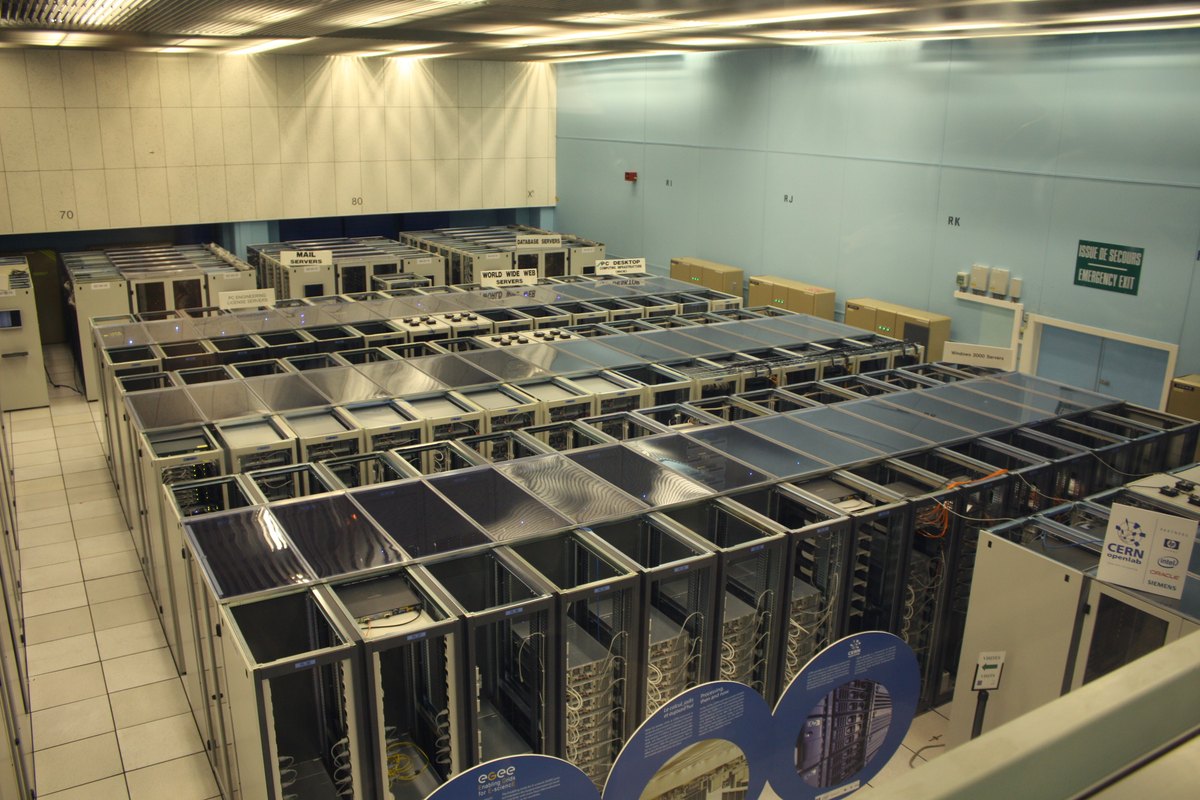
Racks in a data centre: if your AI runs on an API built by an agency, the token bill arrives inside a retainer, not as a line you can see. Photo: Hugovanmeijeren / Wikimedia Commons (CC BY-SA 3.0)
Renegotiate, consolidate, cancel — in that order
Renegotiation is the step everyone skips, and it is usually worth more than cancellation. Annual billing is typically 20 per cent cheaper than monthly on the products above. If you pay monthly for twelve seats and use six, ask for six on annual terms — the discount often covers the reduction.
Consolidation means choosing one general-purpose assistant as the default and treating everything else as a specialist exception that justifies itself. It also simplifies training: staff learn one tool properly instead of three badly.
Cancellation is last because it is irreversible in practice. Exports, prompt libraries and saved chats rarely survive a switch cleanly, and a tool cancelled in December is often re-bought in March at a worse price.
Price the API work separately from the seats
Here is the arithmetic that decides whether your assistant is a bargain or a subsidy. Suppose your customer-support assistant handles 2,000 conversations a month, makes three model calls per conversation, sends 1,500 input tokens each time and receives 300 output tokens including thinking. That is 9 million input and 1.8 million output tokens a month.
At the introductory rate that is US$36, about RM146. From 1 December, at US$4 and US$20, it is US$72, about RM293. Turn on caching for the 60 per cent of input that is a repeated system prompt and the December bill falls to roughly US$51, about RM209. The same work, three different bills, all decided by configuration rather than by the model's quality.

Most renewal decisions are approved in a room like this, on numbers nobody in it has checked. Photo: Unsplash
The RM7,500 question
Budget 2027, tabled on 9 October 2026, set aside RM30 million for AI and automation across 4,000 SMEs — an average of RM7,500 per business. That is not a technology budget; it is one focused project, plus the training to make it stick.
Treat it as a test of discipline. RM7,500 spread over four half-finished pilots teaches nothing and renews four subscriptions next year. Spent on one process, with the hours measured before and after, it produces a number a bank or a buyer will believe.
The honest counterpoint
The cheapest AI subscription is the one your staff actually use. A RM80 seat that saves a supervisor four hours a month beats a RM25 seat nobody opens, and cutting the tool your best people rely on to save RM300 loses the productivity gain and the goodwill in the same week.
Confirm before you act: current list prices and any promotional end dates on the vendor's own pricing page, because they change without notice; your contract's renewal date, notice period and auto-renewal clause, since cancelling after the renewal date usually costs a full term; and whether usage inside an agency retainer is metered or flat. Nothing here is a quotation, and per-seat pricing in ringgit depends on the exchange rate on the day you are billed.

Code on a screen: the API bill is a configuration decision — prompt length, caching, batching — before it is a model decision. Photo: Unsplash
What to do before the January renewals
Block two hours in the first week of December. Export twelve months of card and bank statements, build the three-column list, and put a ringgit figure on each column. Then take three decisions: renew what earns its place on annual terms, consolidate the narrow tools into one assistant, and cancel what nobody has opened since October. Diarise a review for the first week of April, when the 2027 bills are real rather than forecast.
Conclusion
The pricing news from Google is a reminder rather than a crisis: introductory rates end, and the businesses that cope are the ones whose costs are visible. If you cannot name the monthly cost of each AI tool in your business and the person who uses it, you do not have an AI budget — you have a subscription habit.
Do the audit in the order above. Renegotiate the seats you keep, consolidate the narrow tools, cancel the shelfware, and only then look at new capability. The savings are usually enough to fund the one project worth doing properly.
And if an agency built your assistant, ask for the token bill separately. A cost you cannot see is a cost you cannot manage, and from 1 December that particular cost has doubled.
Frequently Asked Questions
1. Did Gemini 4 Argon's API price really double?
Yes. Google's Gemini API pricing page shows US$2 per million input tokens and US$10 per million output tokens through 30 November 2026, rising to US$4 and US$20 from 1 December 2026, with cached input moving from US$0.10 to US$0.20. Only businesses using the API are affected, not people using the consumer app.
2. How many AI subscriptions does a typical SME need?
Usually one general-purpose assistant per team that uses it daily, plus at most one specialist tool with a clear, measured job. Anything beyond that should be justified by hours saved, not by a trial that seemed promising in February.
3. Should I switch to annual billing to save money?
Only after you have cut the seats you do not need. Annual billing is typically about 20 per cent cheaper on these products, but it locks in the seat count for a year, which is expensive if your usage is still falling.
4. What does the RM30 million AI allocation in Budget 2027 cover?
It is spread across 4,000 SMEs, averaging about RM7,500 each — enough for one focused project and the training around it, not for a stack of subscriptions. Confirm the application mechanics and eligibility with the implementing agency before budgeting for it.
5. How do I stop staff expensing personal AI subscriptions?
Give them a sanctioned tool, then require any new AI charge to be approved before purchase and reviewed at renewal. Most shadow spend exists because the official route was slow, not because staff wanted to break a rule.
Daniel Kong covers AI and technology adoption for Malaysian SMEs, with a focus on what tools cost, what they replace and where the claims outrun the evidence. He writes about software procurement, API economics and the practical limits of automation for businesses without a technology team. He works from vendor pricing pages and published documentation rather than press releases.
The 2027 AI Budget: What to Cut, What to Keep, What to Stop Paying For