By Low Kok Ping · November 2026
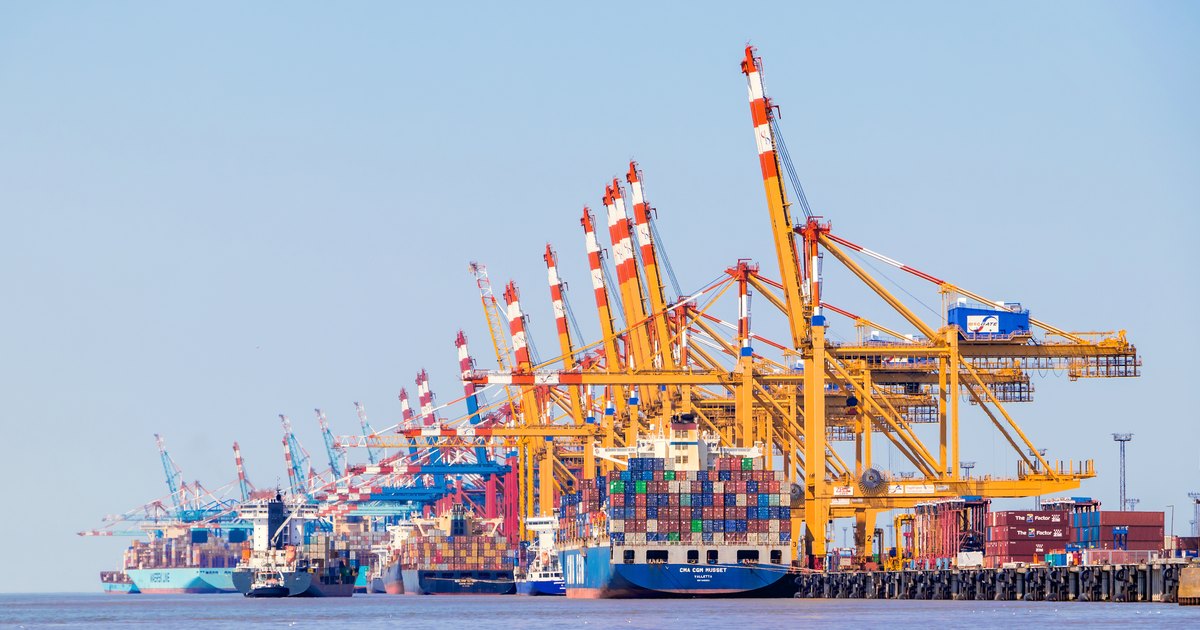
Container cranes at Bremerhaven in Germany. Freight is the cost line that moves fastest and is quoted for the shortest period — which is why it belongs in writing. Photo: Wikimedia Commons
Four costs, one quotation
Every January 2027 quotation carries an assumption about four things you do not control: the exchange rate on imported content, fuel, electricity and freight. If those assumptions are implicit, you are not quoting a price — you are offering an option on your own margin.
The ringgit is the quiet one. It opened at 4.0720/0800 against the US dollar on 29 October 2026, having closed at 4.0795/0835 on 16 October after the advance GDP estimate (Bernama, The Star). Take US$25,000 of annual imported content: RM101,750 at RM4.07 and RM103,750 at RM4.15, a RM2,000 difference — a rounding error in a good year and a margin point in a bad one.
Fuel is the visible one. For 29 October to 4 November 2026 the Finance Ministry set unsubsidised diesel at RM5.27 a litre, up 20 sen, with RON95 at RM4.42 and RON97 at RM4.90, both up 10 sen. Subsidised rates were unchanged: BUDI95 at RM1.99, BUDI Diesel at RM2.10, SKPS petrol at RM2.05 and SKDS diesel at RM2.15. If your lorries run on SKDS your fuel cost did not move; if your subcontractors run on unsubsidised diesel, their rates will.
What to actually write down
The exercise is a single sheet with four columns.
| Item | Share of cost | 2026 movement | 2027 assumption |
|---|---|---|---|
| Imported raw material (USD) | e.g. 18% | FX 4.08 → 4.07 | Budget at 4.20; note the rate used on each quote |
| Diesel / haulage | e.g. 6% | Unsubsidised +20 sen in one week | Assume one further 10 sen step; confirm SKDS eligibility |
| Electricity (AFA) | e.g. 4% | Monthly surcharge, reset each month | Use last quarter's highest bill, not the average |
| Freight and port charges | e.g. 5% | Elevated; LCL revision proposed | Quote per shipment; do not annualise a spot rate |
| Wages | e.g. 22% | RM1,700 floor since 2025 | RM2,000 from June 2027 if not exempt |
Fill in the percentages from last year's accounts, not intuition. The point is not precision but knowing which column can hurt most: a firm with 40 per cent imported content has an FX problem, not a fuel one.

One sheet, four columns, your own percentages. Photo: Wikimedia Commons (Unsplash, CC0)
Fixed and floating: sort every cost into one bucket
Before you can price, you need to know what is contractually locked. Rent under a signed tenancy, a hire-purchase instalment, an insurance premium and a fixed-rate loan are fixed until renewal. Raw material, diesel, electricity, freight and casual labour float; wages step up on a known date.
Three consequences: rent reviews and insurance renewals are the moments to renegotiate, not the middle of a contract; a floating cost should never be quoted as a fixed price for twelve months; and a fixed cost about to float — a tenancy expiring in March, a loan reverting to variable — belongs on the sheet with its date.
Quote validity, and the clause that saves you
The default in Malaysian SME trade is a quotation with no validity period, which can sit on a customer's desk for months. State one: thirty days for a domestic job with local inputs, fourteen where imported content or haulage is significant, seven for anything on spot freight.
Then put the mechanism in writing. A workable clause reads: "Prices are based on diesel at RM2.15 per litre under SKDS and US$1 = RM4.07. If either moves by more than 5 per cent before delivery, the price will be adjusted by the corresponding cost difference, supported by the relevant schedule." That is defensible, checkable and easy for a procurement officer to accept because it is symmetrical — offer the same clause in reverse.

Delivering on a quoted price is a promise about costs you have not yet incurred. Photo: Wikimedia Commons
Freight: what is proposed and what is in force
Be careful with this one, because two different things are circulating. The Port Klang Authority has proposed a revision of less-than-container-load charges from January 2027 — the first review in about a decade — with reported examples including import warehousing rising from RM1,088 to RM1,331 and freight-forwarding charges from RM2,905 to RM3,550, and terminal handling at RM60 per cubic metre against RM55 (The Star, 22 September 2026; NST, 28 September 2026).
That is a proposal after a public consultation, not a rate in force. Price it as a risk and ask your forwarder what they have been told. What is in force is the general elevation in freight and cargo insurance costs that led Bank Negara Malaysia to create its SME Stabilisation Relief Facility in May 2026.
Confirm before you quote: the exchange rate on the day you sign (do not carry October's rate into a February quotation), the current week's diesel and SKDS rates from the Finance Ministry, the Automatic Fuel Adjustment on your own TNB bill, and whether the Port Klang LCL revision has been gazetted. A proposal in September is not a tariff in January. Your forwarder, TNB and the Ministry of Finance are the sources; this article is a method, not a price list.
Passing it on without losing the customer
The rule that works is to pass on movements, not to pass on percentages. A customer will accept "diesel went up 20 sen, which is RM8 on a 40-litre run" far more readily than "we are raising prices 6 per cent". The first is checkable; the second sounds like opportunism.
Second: tell them before the invoice, not on it. A rise communicated in November, with the reason and the effective date named, costs a fraction of the goodwill lost to a surprise line item. Third: give them a way to avoid it — a larger drop size, a consolidated delivery day, or a twelve-month commitment with the volatility clause removed.
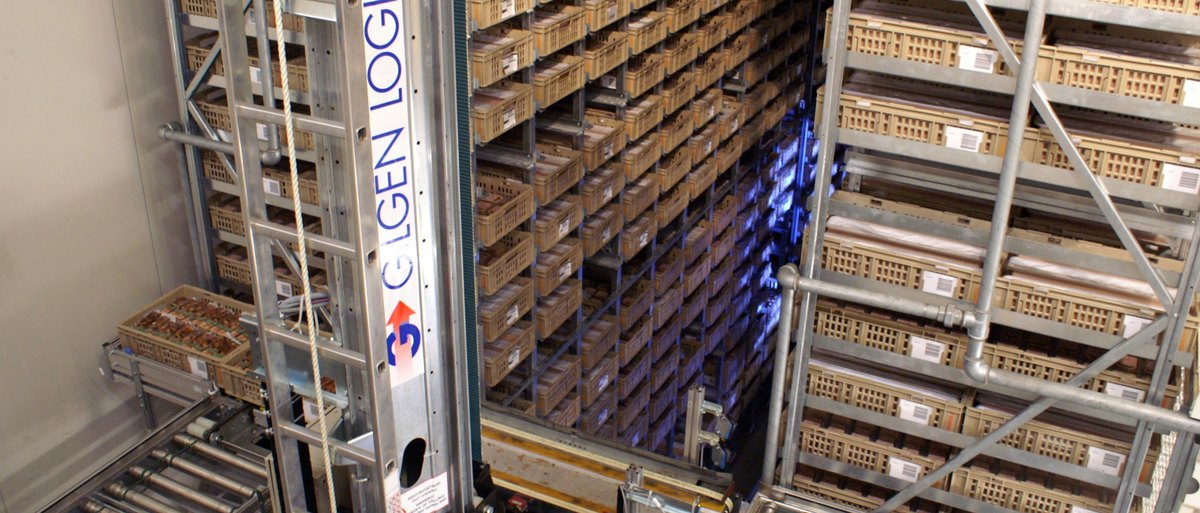
An automated small-parts store. Space, handling and storage are all on the same cost sheet as fuel and freight. Photo: Wikimedia Commons
The cash-flow side
Cost pressure is a working capital problem before it is a margin problem, because you pay for inputs in thirty days and collect in sixty. The SME Stabilisation Relief Facility remains open to affected SMEs in all sectors until 30 June 2027 or full utilisation, and RM3.8 billion of its first RM5 billion tranche had been approved across more than 6,800 SME accounts as at 30 September 2026 (BNM, 9 October 2026). The additional RM5 billion is expected to reach around another 9,000 MSMEs.
If imported content is above a quarter of total cost and receivables are stretching, apply before the year-end accounts are closed. An application supported by a cost inventory and an aged receivables listing is a much shorter conversation than one supported by a feeling.
Conclusion
None of these four costs is forecastable, which is exactly why the response is administrative rather than predictive. Build the four-column sheet, sort every cost into fixed or floating, and put a validity period and a movement clause on every quotation you issue from now on.
Then decide what you will do if the ringgit moves 5 per cent and diesel takes another step. If the answer is "raise prices in March", say so in November and give customers the reason now.
The firms that come through a cost cycle well are rarely the ones that predicted it. They are the ones whose quotations said what would happen if they were wrong.
Frequently Asked Questions
1. What exchange rate should I use in a 2027 quotation?
Use a rate that gives you a margin, and state it on the document. The ringgit was about RM4.07 to the US dollar in late October 2026; budgeting imported content at RM4.20 and naming the rate used protects you without overpricing the quote.
2. Is the Port Klang LCL increase already in force?
No. It is a proposal by the Port Klang Authority following a public consultation, reported in September 2026 and floated for January 2027. Treat it as a risk in your pricing until it is confirmed and gazetted.
3. Can I add a fuel surcharge to existing contracts?
Only if the contract allows it. A signed fixed-price contract cannot be reopened unilaterally, so put the clause in the next one. Retrospective surcharges damage relationships and are often unenforceable.
4. Why is my electricity bill higher than the tariff suggests?
Since July 2025 TNB bills business customers on energy, capacity, network and retail components plus a monthly Automatic Fuel Adjustment. The AFA is reset monthly, so a month with a high surcharge looks nothing like the base tariff.
5. Where can I get help with the working capital gap?
The SME Stabilisation Relief Facility remains open until 30 June 2027 or full utilisation, and was doubled to RM10 billion in Budget 2027. Apply through a participating bank with a cost inventory and an aged receivables listing, not a verbal explanation.
Low Kok Ping covers financing, costs and cash flow for SMEBuddies. He writes about the arithmetic behind everyday business decisions — what a rate move costs, how a cost increase flows through a quotation, and when a working capital facility is the right answer rather than a symptom. His work focuses on Malaysian trading, manufacturing and services firms in the RM1 million to RM50 million revenue band.
Ringgit, Inputs and Freight: A Q4 Cost Check Before You Quote 2027