By Low Kok Ping · September 2026

A laptop open in low light. The monthly close is where Q4 decisions actually get made.
Three Signals From the Second Week of September
The export run is expected to slow. The Edge Malaysia Weekly, in its 7–13 September edition, reported that economists expect export growth to moderate in 2027 after a scorching January-to-July run, citing the high base effect and external risks: US tariff policy, widening US scrutiny of how trading partners produce goods, and geopolitics. Malaysia faces two direct Section 301 actions, and its semiconductor exports are exposed to US measures under Section 232. The World Trade Organization has raised its estimate for global trade growth next year to around 2.6 per cent, so the expectation is moderation, not reversal.
The growth is not being felt. An opinion piece in the same publication on 14 September noted that the economy grew 6.0 per cent year on year in the second quarter of 2026 — the second-fastest pace in three years — but private consumption rose only 4.8 per cent, below 2025's average. Part of the headline is a base effect: net exports were just RM5.9 billion in the second quarter of 2025, against RM12.5 billion to RM21.5 billion in each of the other three quarters. The same analysis said MSMEs are squeezed between higher input costs and weaker demand, and China-based e-commerce competition.
The macro foundations, though, are genuinely stronger. On 14 September, Securities Commission Malaysia chairman Datuk Mohammad Faiz Azmi said the country is in a stronger position than a decade ago thanks to major fiscal decisions such as subsidy cuts, pointing to its US dollar Government Sukuk pricing as evidence of international recognition. CIMB Securities raised its 2026 GDP forecast to 5.0 per cent, IPPFA to 5.4 per cent (while expecting 4.8 per cent in the fourth quarter), and MARC Ratings is at 5.1 per cent. Bank Negara Malaysia held the overnight policy rate at 2.75 per cent on 3 September; the next decision is 5 November.
Why a Cooler Export Year Reaches Your Shop Floor
Even if you have never shipped a container, the export cycle reaches you three ways. Household income in the electronics and data-centre belts cools overtime, contractor work and the local spending that follows. Input costs — components, freight, packaging, energy — track global demand. And consumer behaviour moves fastest: retail sales grew just 2.5 per cent in the second quarter of 2026 against the 4.8 per cent retailers projected, per the Malaysia Retail Industry Report, with Retail Group Malaysia holding a 3.8 per cent full-year forecast.
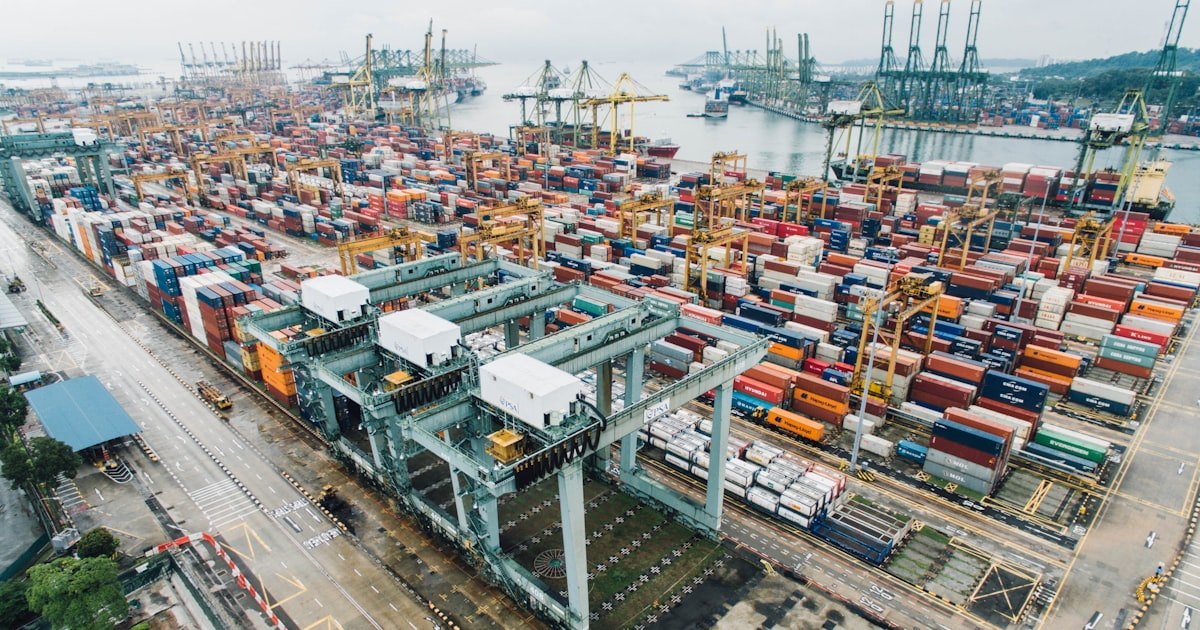
Containers at a port terminal. Record national export numbers do not mean your own invoice gets paid on time.
The mix matters too. Supermarkets and hypermarkets fell 9.0 per cent, department stores dropped 7.2 per cent, and furniture, home improvement and electrical goods slipped 5.8 per cent, while fashion rose 12.9 per cent. Shoppers are not stopping — they are trading down. If your product is discretionary, plan to defend volume rather than price.
The Monthly Dashboard to Fill In Before You Plan Anything
Five numbers, filled in on the same day each month, tell you more about Q4 than any forecast. Copy this table and adjust the thresholds to your history.
| Metric | Where to get it | Green | Amber | Red |
|---|---|---|---|---|
| Revenue vs same month last year | Monthly sales report | At or above last year | Down 1–10 per cent | Down 10 per cent+, two months running |
| Gross margin percentage | Sales less direct cost of goods | Within 2 points of your 12-month average | 2–5 points below | Over 5 points below |
| Receivables days (DSO) | Aged debtors: receivables ÷ daily sales | Within 7 days of your terms | 8–21 days over terms | Over 21 days over terms |
| Cash runway in months | Cash plus undrawn facilities ÷ average monthly cash costs | 3 months or more | 1.5 to 3 months | Under 1.5 months |
| Top-customer concentration | Share of revenue from your largest customer | Under 25 per cent | 25–40 per cent | Over 40 per cent |
| Inventory days | Stock ÷ daily cost of goods sold | Within 10 per cent of plan | 10–25 per cent above plan | Over 25 per cent above plan |

Hands on laptops around a shared table. Numbers only change behaviour when someone owns them each month.
Cash, Receivables and the Leakage That Hurts Most
Payment behaviour across Asia is deteriorating. Atradius's 2026 Asia payment survey found more than 80 per cent of suppliers report late payments, overdue invoices make up close to a third of business-to-business receivables — two in five for smaller firms in construction and trade — and credit losses typically run 1 to 5 per cent of receivables. Experian Malaysia put SME payment at about 64 days in early 2025.

Printed forms, a pen and a phone laid out for a paperwork session. Clean books are what make an e-invoice transition painless.
Two Malaysian specifics matter now. An ACCCIM survey of 817 businesses found 22.9 per cent had waited more than 24 months for overpaid tax; the refund allocation was raised from RM2 billion to RM4 billion, but do not plan on a refund landing on a set date. And e-invoicing: RM1 million to RM5 million turnover businesses have been in the mandate since 1 January 2026, with the relaxation extended to 31 December 2027 and penalties from 1 January 2028. Transactions above RM10,000 need individual e-invoices.
Staffing, Stock and Pricing in the Last Quarter
The statutory wage floor is RM1,700 a month, or RM8.72 an hour, with employer EPF contributions at 13 per cent for monthly wages up to RM5,000 and 12 per cent above that. Cost every hire on fully loaded cost, hire against confirmed revenue, and fund the bonus pool only after receivables turn.
On stock, resist building inventory on an assumption that 2026 repeats: use the inventory-days line, and clear slow-moving lines through bundles rather than site-wide discounts that reset your price point. On pricing, protect gross margin percentage and let volume flex.
Your 90-Day Plan to Close the Year
October. Close the September books on time, fill in the first month's dashboard, and chase every invoice beyond 60 days by name. Review banking facilities — limit, pricing, covenants — before you need them, and confirm Q4 orders in writing.
November. Recheck top-customer concentration and reprice your least profitable accounts. Plan December stock so you finish inside your inventory-days target, and watch the Bank Negara decision on 5 November and the ringgit, where end-2026 forecasts sit at RM4.00–RM4.15 per US dollar (MARC Ratings).
December. Freeze non-critical capital spending, pull cash forward with deposits on new orders, and build the 2027 budget off a flat-to-moderate export assumption. Clean up receivables and payables so the e-invoice transition stays administrative, and review wage and EPF costs before increment letters go out.
Conclusion
Malaysia's economy is strong on paper — 6.0 per cent growth in the second quarter, a record export run, and a fiscal position the Securities Commission chairman described as stronger than a decade ago. None of that guarantees your pricing power in Q4, because the same data set shows retail sales growing at less than half the projected rate and MSMEs squeezed between costs and demand.
Plan for a flat domestic market, protect gross margin, shorten the time between doing the work and getting paid, and keep three months of runway visible at all times. The businesses entering 2027 in good shape will be the ones that spent Q4 collecting cash and clearing dead stock, not the ones waiting for the boom to be felt.
Watch six numbers every month. Everything else is commentary.
Frequently Asked Questions
If the economy is growing 6 per cent, why are my sales flat?
Because growth is concentrated. Second-quarter 2026 growth was driven by electronics exports, data-centre investment and mining, while retail sales grew only 2.5 per cent against a projected 4.8 per cent, and private consumption rose 4.8 per cent. SMEs in domestic, discretionary categories are seeing the weak side of that split.
Does a slower export year mean I should cut prices to hold volume?
No. Protect gross margin percentage first and let volume flex. Discounting defends revenue in the short term but resets your price point with customers, and with receivables already slow, thinner margins and slower collection compound each other.
How much cash runway should an SME hold going into 2027?
Three months of cash costs is the widely used green threshold in the dashboard above, and 1.5 months is the danger line. Include undrawn banking facilities in the calculation, but confirm with your bank that those limits remain available and are not subject to a covenant review.
What should I do about e-invoicing before the year ends?
Businesses with RM1 million to RM5 million in turnover have been within the mandate since 1 January 2026, with the interim relaxation extended to 31 December 2027 and full enforcement from 1 January 2028. Transactions above RM10,000 need individual e-invoices, so clean up customer and supplier data now while there is no penalty pressure.
Which single number should I watch most closely?
Receivables days. It is the earliest warning that your customers are under pressure, it directly determines how much cash you need to fund the business, and unlike GDP or export data, it is entirely within your ability to influence.
Low Kok Ping covers infrastructure, industrial policy and the Malaysian economy for SMEBuddies. He has worked on the commercial side of industrial and construction projects in Malaysia, which is where his interest in how macro numbers reach the shop floor began. He writes about what official data, central bank decisions and fiscal policy mean for the operating decisions small and mid-sized businesses make each quarter. His work for SMEBuddies focuses on cash flow, costing and planning discipline.
Q4 2026 Reality Check: Exports May Cool and Growth Isn't Being Felt