By Dennis Tan · November 2026
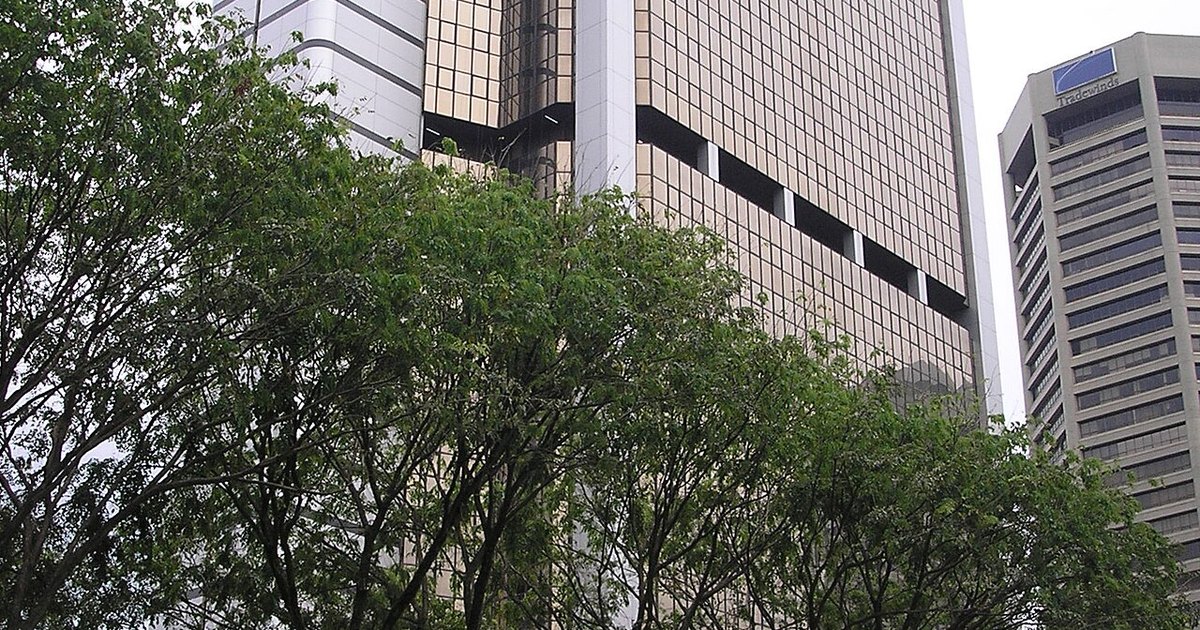
The Employees Provident Fund headquarters on Jalan Raja Laut in Kuala Lumpur. EPF contributions for October wages are due by 15 November, which this year is a Sunday. Photo: Wikimedia Commons / Two hundred percent (CC BY-SA 3.0)
The 15th is a Sunday this month
Three payments for October's payroll fall due in the same week, and the deadline convention is not identical across them. Here is the practical calendar for a business paying October wages.
| Payment | Due date | Practical date this month |
|---|---|---|
| EPF contribution, October wages | 15 November | Friday 13 November, to be safe |
| SOCSO and EIS contribution, October wages | 15 November | Friday 13 November, the last working day before |
| PCB (monthly tax deduction), October wages | 15 November | Friday 13 November, the last working day before |
Pay everything by Friday 13 November and the question disappears — the only approach that survives a bank cut-off, a failed transfer and a clerk on leave.
Three deadlines, three different rulebooks
Each date is set by a different statute and administered by a different body. EPF contributions are governed by the Employees Provident Fund Act 1991; Perkeso administers the Employees' Social Security Act 1969 and the Employment Insurance System Act 2017; PCB is collected by LHDN under the Income Tax Act 1967. EPF's published rule is that contributions must be paid on or before the 15th of the following wage month — there is no weekend extension written into the Act, and the "next working day" practice payroll providers describe is a practice, not a rule.
The penalty structures diverge too. Late EPF payment attracts a late payment charge calculated at the lower of that year's Simpanan Konvensional and Simpanan Shariah dividend rates plus one percentage point, with a minimum of RM10 rounded up to the next ringgit; if the contribution is still unpaid after the last day of the following month, a dividend charge is added. Late SOCSO and EIS contributions attract interest at 6% a year, charged daily, with a minimum of RM5 a month.

Three payments, three deadlines, three penalty formulas. A payroll calendar with all of them written down is cheaper than any of the penalties. Photo: Unsplash (CC0), via Wikimedia Commons
What the Deepavali holidays did to October's payroll
Deepavali fell on Sunday 8 November, with Monday 9 November the replacement public holiday in most states; Sarawak does not observe the festival. For a monthly-rated employee within the Employment Act 1955, working on a paid public holiday means holiday pay plus two days' wages at the ordinary rate of pay, under section 60D(3)(a)(i). Work beyond normal hours on that holiday is paid at not less than three times the hourly rate.
The ordinary rate of pay for a monthly-rated employee is the monthly rate divided by 26. An employee on RM3,000 therefore earns RM115.38 for a day, and working one public holiday adds RM230.77 on top of the month's salary. If twelve staff on that rate worked both days, the additional wage cost is about RM5,538 — a number that belongs in the October payroll run, not in a December surprise.
Coverage is the part employers get wrong. Since 1 January 2023 the Employment Act applies to all employees, but section 60D(3) does not apply to employees earning more than RM4,000 a month unless they are engaged in manual labour, in supervising manual labour, or in operating and maintaining a mechanically propelled vehicle. Above that line the entitlement is contractual, so read the contract before assuming either way.
The combined contribution file: eleven fields, one of them new
Perkeso's Employer Circular No. 1 of 2026, dated 24 April 2026, introduced a single contribution text file covering Act 4 and Act 800 together. It has eleven fields. Fields one to ten carry the information employers already submitted — employer code, identification number, name, contribution month, salary, and the employer and employee shares for SOCSO and EIS. Field eleven is new: the SKBBK contribution, the employee-borne share under the Non-Employment Injury Scheme, or LINDUNG 24 Jam, which took effect on 1 June 2026 and under which cover is compulsory for foreign employees.
The detail that trips up payroll software: field eleven must read 0000 where there is no SKBBK contribution. Blank is not nil. The format became mandatory on 1 October 2026 after a transition period from June 2026, so October's submission is the second month in which a non-compliant file can be rejected outright.

Every line in a contribution file starts as a person on a production line or a shop floor. The wage record behind the file is the part that gets audited. Photo: Wikimedia Commons / Shixart1985 (CC BY 2.0)
What late actually costs now
Perkeso's penalty-free registration window, Ops Pemutihan, closed on 30 June 2026, and the agency said enforcement under Ops Kesan would be intensified from 1 July. The exposure is now in three layers. Late payment interest runs at 6% a year on the arrears, calculated daily, with a minimum of RM5 a month. Registration and record-keeping offences can be compounded under section 95A of Act 4 at up to 50% of the maximum fine for the offence, capped at RM5,000. And prosecution under the Act carries a fine of up to RM10,000, imprisonment of up to two years, or both.
On the tax side, an employer who fails to remit PCB is exposed to prosecution, and tax that was never deducted becomes a debt to the Government. A three-day delay on RM10,000 costs about RM5 in interest; the compound that follows a rejected file costs far more.
The wage records you need for June 2027
Budget 2027 proposed raising the national minimum wage from RM1,700 to RM2,000 from June 2027, with a RM2,500 floor for semi-skilled workers and graduates and an exemption for MSMEs below RM50 million in annual sales. Whatever the final shape, the calculation will be done from your wage records, by job, not from a single payroll total.
Start the register now: every job title, the basic wage, the fixed allowances that count as wages, the number of employees in each band between RM1,700 and RM2,500, and the overtime and holiday pay actually paid in the last six months. That register also answers a Perkeso inspection and an LHDN payroll audit — a second reason to build it properly.
Retail and F&B rosters are where public holiday pay is most often missed: the staff who worked 8 and 9 November are usually the ones on shift, not on salary. Photo: Wikimedia Commons / Azreey (CC BY-SA 4.0)
Confirm before you file: each body's current payment convention for a 15th that falls on a weekend, your own contribution rates by employee category, the SKBBK position for each employee — mandatory for foreign employees, optional for Malaysians — and whether your payroll software is producing the eleven-field file with 0000 in field eleven. Foreign worker EPF contributions have been mandatory at 2% from each side since 1 October 2025 and are payable by the 15th of the following month. EPF, Perkeso and LHDN are the authority on their own deadlines and penalties, not this article.
Conclusion
November's payroll has three deadlines in one week and one of them is on a Sunday. Pay all three by Friday 13 November and the ambiguity is irrelevant; pay one late and you will spend more time on the interest calculation than the payment was worth.
The bigger change is structural. The combined SOCSO and EIS file has been mandatory since 1 October 2026, field eleven must read 0000 rather than blank where there is no SKBBK contribution, and the amnesty that covered late registration closed on 30 June. If your software has not been updated or your file has been assembled by hand, this is the month to fix it.
And the holiday pay from 8 and 9 November belongs in October's run: two days' wages at the ordinary rate for each employee who worked, on top of holiday pay. Compute it from the payroll register, document it, and you will have the same register ready when the RM2,000 wage floor arrives in June 2027.
Frequently Asked Questions
1. Is my EPF payment late if I pay on 16 November?
EPF's published rule is payment on or before the 15th of the following wage month, with no weekend extension written into the Act. Some payroll providers report a next-working-day grace practice, but that is not the stated rule. Pay by Friday 13 November rather than gamble on it.
2. What is field eleven in the combined contribution file?
It is the SKBBK contribution — the employee-borne share under the Non-Employment Injury Scheme, LINDUNG 24 Jam. It must contain 0000 where there is no SKBBK contribution. Leaving it blank is not the same as declaring nil.
3. Do I have to pay two days' wages for Deepavali?
Only if the employee worked on the paid public holiday and is covered by section 60D(3) of the Employment Act — broadly, monthly wages of RM4,000 or below, or manual labour regardless of wage. The payment is holiday pay plus two days at the ordinary rate, and the ordinary rate for a monthly-rated employee is the monthly rate divided by 26.
4. What does late payment cost?
SOCSO and EIS arrears carry 6% interest a year, charged daily, minimum RM5 a month. EPF charges a late payment charge at the lower dividend rate plus 1%, minimum RM10, rounded up. Registration and record offences can be compounded at up to RM5,000, and prosecution can bring a fine of up to RM10,000 or two years' imprisonment.
5. Is SKBBK compulsory for my Malaysian staff?
Perkeso's position is that the Non-Employment Injury Scheme is mandatory for foreign employees and optional for Malaysian employees, with the contribution borne by the employee. Check each employee's category before you populate field eleven, and confirm the current rule with Perkeso.
Dennis Tan covers payroll, tax and compliance for SMEBuddies. He works through the monthly statutory calendar — EPF, Perkeso, EIS and PCB — and the file formats and deadlines behind it, translating the rules into the calculations and records a Malaysian employer actually has to produce each month.
November Payroll: The 15th, Holiday Pay and the Combined Contribution File