By Julie Daphne · November 2026
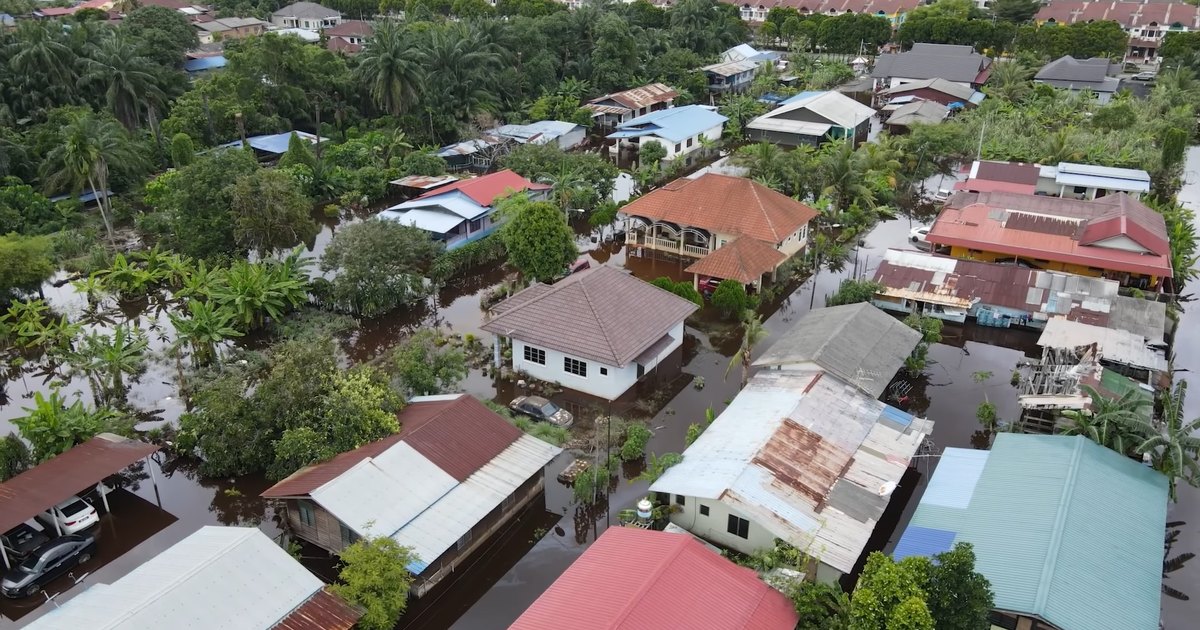
Floodwater around houses and cars in Klang during the December 2021 floods — the kind of water that reaches shoplots and ground-floor stock. Photo: AiMediaMY / Wikimedia Commons (CC BY 3.0)
What MetMalaysia actually forecast
MetMalaysia's statement of 23 October 2026 put the start of the 2026/2027 Northeast Monsoon at 27 October, continuing to March 2027. Dr Mohd Hisham Mohd Anip said three to five episodes of continuous heavy rain are expected from November 2026 to January 2027, with flooding likely in low-lying areas and near rivers, and strong north-easterly winds raising the risk of rough seas and higher sea levels in the South China Sea.
On 27 October the centre's senior director, Maqrun Fadzli Mohd Fahmi, told Bernama TV that flood risk is concentrated in Kelantan, Terengganu, Pahang and eastern Johor. He added the twist that matters: from late January to March 2027 rainfall falls away, bringing heatwave and water-shortage risk. Plan for five windows, not one season — and note that losses usually come from a closed road or a missing worker, not water inside your premises.
Where the policy usually stops
A Malaysian fire policy is narrower than its name: the core section covers fire, lightning and limited explosion. Flood is a separate peril that has to be bought. Chubb's FlexiGuard Plus product page lists flood among the perils that may be added to the fire section; Allianz's Business Shield wording extends cover to flood "in consideration of an additional premium". If your schedule does not name flood, you are not insured against it.
| What you own | Where it usually sits | What to check on the schedule |
|---|---|---|
| Stock and raw material | Fire section, as contents | Declared value against peak stock; flood extension switched on |
| Fixtures, fittings, equipment | Fire section, as contents or tenant's improvements | Whether fit-out you paid for is insured, or sits on the landlord's policy |
| Vehicles and goods in transit | Separate motor and marine policies | Whether flood and water damage are covered, and drivers are named |
| Profit lost while shut | Business interruption section | The indemnity period, and how gross profit was calculated |
Commercial vehicles are the gap most owners find late. A lorry that stalls in moving water is a motor claim, not a fire claim, and stock inside it may be covered by neither policy.
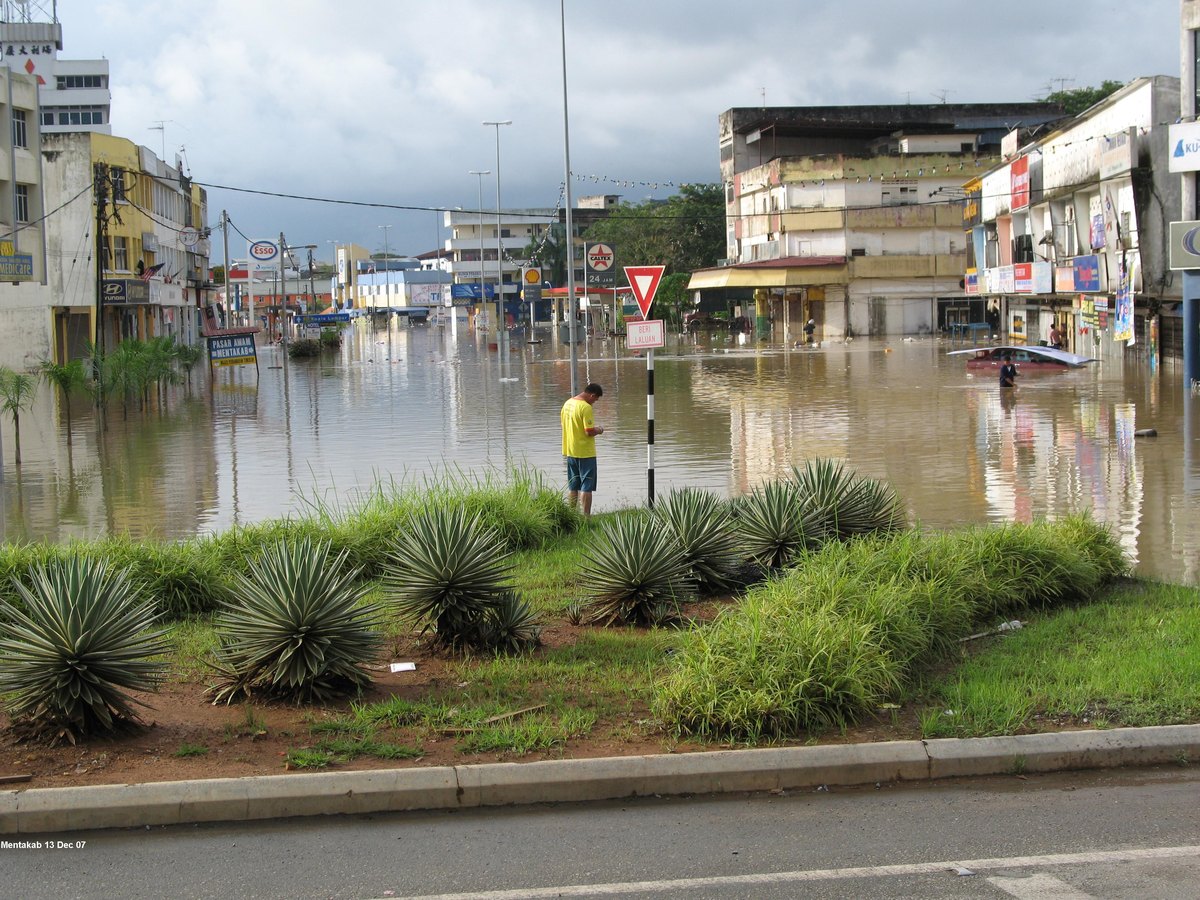
Floodwater across a shophouse street in Mentakab, Pahang, in December 2007 — for ground-floor shops, the water arrives before any warning reaches the owner. Photo: Wikimedia Commons (public domain)
Stock, fixtures and vehicles are three different claims
An adjuster treats these as separate losses with separate evidence. Stock is a quantity question: what did you hold, at what cost? Fixtures are a reinstatement question. Vehicles are a market-value question under a different policy.
This is where small businesses lose money quietly. If you declare RM150,000 of stock but routinely hold RM300,000 in November for the year-end push, average applies: every claim is cut in proportion. The fix takes an hour — pick your real peak stock month, value it at cost, insure that figure.
Business interruption is the number most SMEs get wrong
Business interruption pays the profit you would have earned, plus continuing costs, while you cannot trade. It is not a refund of lost sales. Policies define the sum insured by reference to annual gross profit and the indemnity period as the months of cover after the event.
Two errors recur. Owners insure turnover, then discover the policy pays only the profit element. And they buy six months of cover when reinstating a flooded kitchen and re-certifying could take nine. Some extensions also apply only beyond a waiting period: Allianz's Profit Shield extension, for instance, pays only for interruption exceeding 72 hours.
After a loss, the paperwork decides the claim
Insurers ask for dated photographs, stock records, purchase invoices, sales records and your accounting entries. Since e-invoicing, part of that trail sits in MyInvois: validated e-invoices, credit notes and refund notes support what you bought and sold, and section 82 of the Income Tax Act 1967 requires you to keep those records for seven years anyway.
So photograph the premises before the season, not after: every room, the stockroom, the electrical board, the roof and the drains, with a date visible. Keep a copy off-site. An adjuster who can compare before and after settles faster than one who is told it was all fine last week.
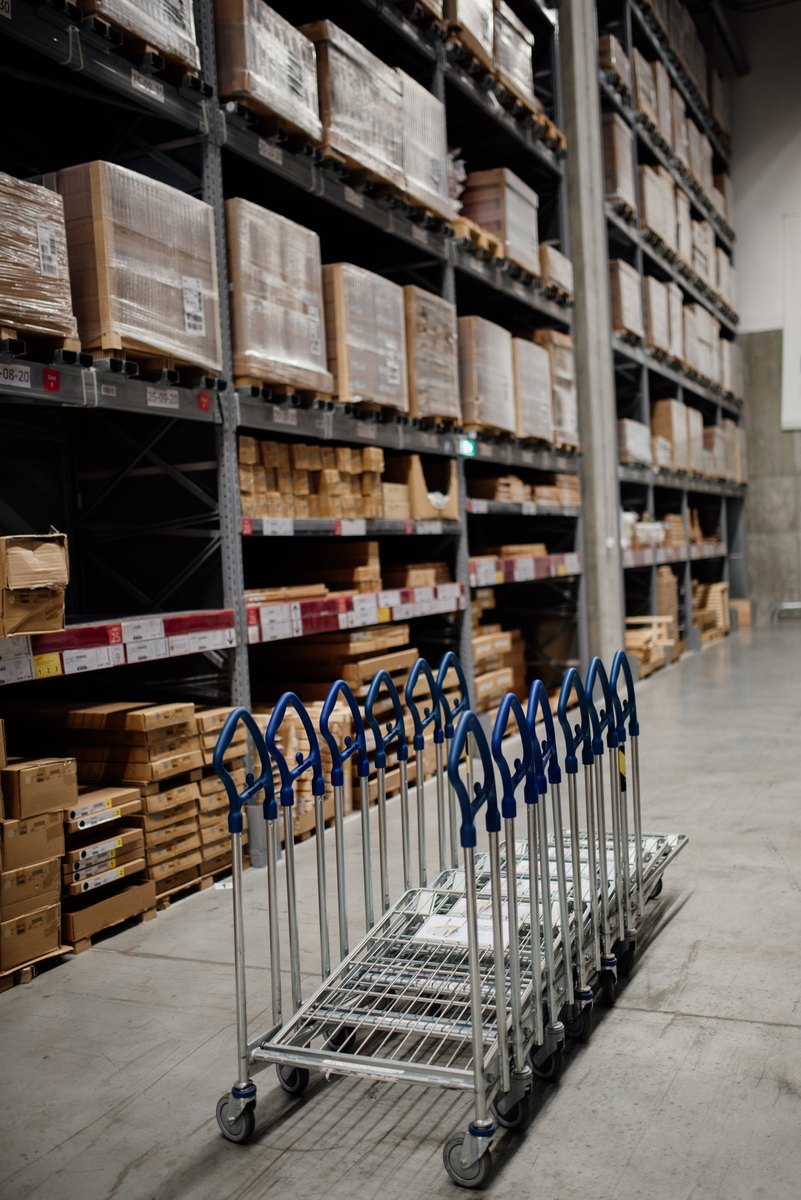
Cartons on pallets and trolleys in a warehouse aisle: raising stock off the floor is cheap; replacing it after a flood is not. Photo: Shixart1985 / Wikimedia Commons (CC BY 2.0)
Staff safety when the roads are gone
The Occupational Safety and Health Act 1994 places a general duty on employers to ensure the safety of employees at work so far as is practicable. Sending a team out through moving water to open a shop is hard to defend under that duty, and it is also how people drown.
Write the rule before you need it: nobody travels when a road is under water, the branch closes, the day is worked from home where the job allows. Decide in advance whether flood absence is paid. There is no general statutory flood leave, so confirm the position with the Labour Department and put your answer in the handbook.
Deliveries: routes, promises and refunds
Courier networks slow down in exactly the weeks customers expect speed. Build three things now: an alternative route or drop-off point for each major customer cluster, a holding message your team can send without asking you, and a written position on delayed orders — how long you wait, when you replace, when you refund.
This is also where the year's cost pressure lands. Marine and war-risk premiums have been elevated since the Middle East conflict began, and Bank Negara Malaysia's SME Stabilisation Relief Facility, now RM10 billion and open until 30 June 2027, exists for exactly the cash-flow shocks that follow. Apply while the business still looks healthy.
The pre-season checklist
Confirm these with your insurer or broker before you rely on them: that flood is named on your schedule; the flood excess and any zone-based loading; that your sum insured reflects peak stock; the indemnity period and gross profit definition; and whether vehicles and goods in transit cover water damage. Flood cover is priced by zone, so premises near a river or on low ground should expect a higher premium, a higher excess, or a refusal.
Then do the physical work in one day: back up records off-site, move stock onto pallets or plinths, clear drains, check the roof, and agree who authorises closure. Keep cash equal to two weeks of fixed costs — rent, wages, EPF, SOCSO, loan instalments — because those fall due whether or not you trade.

A parcel changing hands: in a bad week, the promise attached to the box matters as much as the box. Photo: Meanwell Packaging / Wikimedia Commons (CC BY 2.0)
Conclusion
The forecast is specific enough to act on: heavy rain from November to January, then heat from late January. Check your schedule this week and find out whether the word flood appears on it. If it does not, you are running an uninsured business through the wettest quarter of the year, and the premium you saved is a loan you may have to repay in one lump.
Then fix the cheap things. Photograph the premises, raise the stock, clear the drains, write the closure rule, draft the customer message. None of that needs a budget, and together they decide whether a bad week costs you a week or a year.
Keep the plan honest about money, too. Insurance restores what you had; it does not fund the gap while you wait. Two weeks of fixed costs in reserve, and a facility application filed before you need it, is what keeps a flood from becoming a closure.
Frequently Asked Questions
1. Does my fire insurance cover flood damage?
Usually not unless flood has been added. The core fire section covers fire, lightning and limited explosion; flood is bought by extension or endorsement. Read the schedule and endorsement pages, and ask your insurer to confirm in writing.
2. Is business interruption cover worth it for a small shop?
It is the only cover that pays the profit you lose while shut. It is worth it if a month of closure would be hard to absorb, and it only works if the sum insured reflects real gross profit and the indemnity period matches how long reopening takes.
3. What records will the insurer ask for after a flood claim?
Dated photographs of the damage and of the premises beforehand, stock records, purchase invoices, sales and accounting records, and evidence of costs incurred. Validated e-invoices and credit notes in MyInvois form part of that trail, which is one more reason to keep them retrievable.
4. Can I require staff to come in during a flood?
You can ask, but the employer's general duty under the Occupational Safety and Health Act 1994 is to ensure safety at work so far as is practicable, and directing staff through floodwater is hard to justify. Decide the closure rule in advance and put your position on paid absence in writing.
5. What if the flood leaves me short of working capital?
Bank Negara Malaysia's SME Stabilisation Relief Facility stands at RM10 billion after the RM5 billion top-up in Budget 2027, available until 30 June 2027 or full utilisation, whichever comes first. It is applied for through participating banks, so confirm current terms with BNM and your bank.
Julie Daphne covers tourism, hospitality, retail, logistics and consumer businesses for SMEBuddies. She writes about the operational side of running a Malaysian small business — insurance, seasonality, staffing and the weeks when trading gets disrupted — with a focus on what owners can prepare before a bad season arrives. Her work leans on official advisories and policy documents rather than vendor claims.
Monsoon Season: Insuring Stock, Staff and Deliveries