By Ahmad Firdaus · November 2026

A calculator, a notebook and a laptop — the RM2,000 question is arithmetic before it is policy. Photo: Wikimedia Commons (Unsplash, CC0)
What was actually announced
Anwar told the Dewan Rakyat on 9 October that the minimum wage rises by RM300, from RM1,700 to RM2,000, effective June 2027. He said more than four million workers are covered, and that micro, small and medium enterprises with annual sales below RM50 million would be exempted "to give them time to adjust their business models" (The Edge Malaysia, 9 October 2026). A separate minimum monthly salary of RM2,500 was announced for semi-skilled occupations and graduates, described as a starting point for wage-framework reform. He noted employee compensation was only 33.9 per cent of GDP.
The same budget raised the living wage benchmark for GLICs and GLCs from RM3,100 to RM3,400 from 2027, covering 230,000 workers (Budget 2027 touchpoints, Ministry of Finance). That matters to a small firm more than it looks: it sets the reference wage in the labour market your staff shop in.
RM1,700 has applied since 1 February 2025, and since 1 August 2025 to every employer regardless of headcount (Human Resources Ministry, July 2025). June 2027 is a 17.6 per cent increase on the floor.
Why the exemption is not a shield
Employer groups welcomed the timeline but asked what the threshold means in practice. Malaysian Employers Federation senior adviser Datuk Dr Syed Hussain Syed Husman said clear eligibility criteria were needed, "including how the RM50 million annual sales threshold would be assessed" (MEF statement, 9 October 2026). That question is still open: which year's sales, single entity or group, and how a December year-end is measured.
Samenta national president Datuk William Ng made the operational point. The wage floor is not the only cost pressure — utility tariffs, supply uncertainty and compliance overheads are already rising — and a higher floor creates "a ripple effect as supervisory and technical workers would also expect pay adjustments" (Bernama, 9 October 2026). SME Association of Malaysia president Dr Chin Chee Seong warned the exemption would not fully shield MSMEs, because larger customers and suppliers will pass costs down the chain.
Both are describing the same mechanism: a floor compresses differentials. Pay a machine operator RM2,000 and your RM2,200 line leader is now earning RM200 more for more responsibility. Most owners fix that within two payroll cycles.
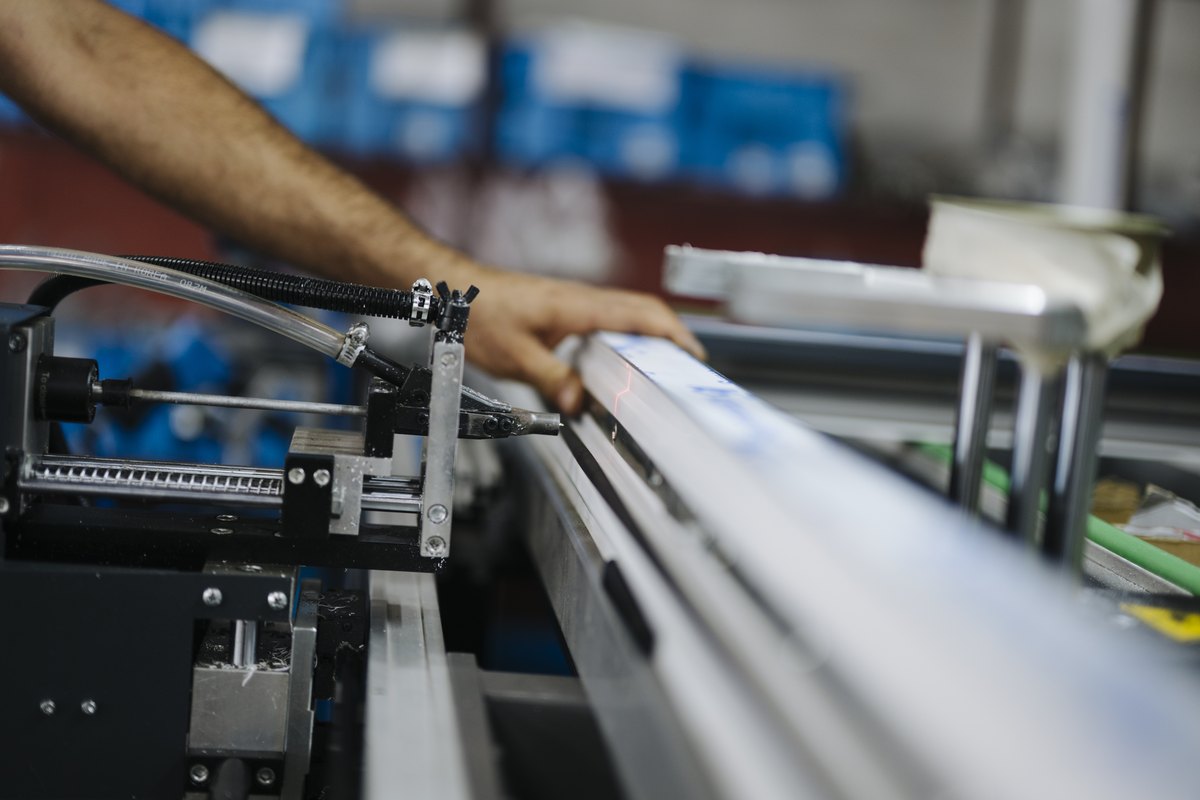
Hands at a machine on a production line — the roles most exposed to a higher wage floor are the ones a machine cannot yet do. Photo: Wikimedia Commons
The arithmetic on a 20-person payroll
Take a services or light-manufacturing SME with 20 full-time staff, all Malaysian, all below RM5,000 a month, and annual sales of RM4.2 million — inside the exemption. Current basic payroll is RM37,850 a month (average RM1,893). Eight staff sit at RM1,700, five at RM1,850, four at RM2,050, two at RM2,200 and one supervisor at RM2,400. Statutory employer cost on any increment is EPF at 13 per cent (wages of RM5,000 and below), SOCSO at 1.75 per cent and EIS at 0.2 per cent, per EPF and Perkeso schedules.
| Scenario | Basic cost / month | With statutory | Per year |
|---|---|---|---|
| Full RM2,000 floor applied to all 20 | +RM3,150 | +RM3,621 | +RM43,451 |
| Exempt, but bottom band lifted to RM2,000 | +RM2,400 | +RM2,759 | +RM33,106 |
| Exempt, full compression (+RM300 to all 20) | +RM6,000 | +RM6,897 | +RM82,764 |
| RM2,500 floor on the 7 staff earning RM2,050–2,400 | +RM2,500 | +RM2,874 | +RM34,485 |
The full floor costs RM43,451 a year, or 8.3 per cent of current basic payroll, and 1.03 per cent of revenue. The compression scenario — the one an exempt firm drifts into when it tries to keep its pay ladder intact — costs nearly twice that at RM82,764. That gap is the real decision: not whether RM2,000 applies to you, but whether you can hold differentials without paying for them.
Absorbing RM3,621 a month through margin needs RM12,932 of extra monthly sales at a 28 per cent contribution margin, or RM24,140 at 15 per cent. That is the honest test. If neither number is reachable, the answer is fewer hours, different roles, or a smaller headcount.
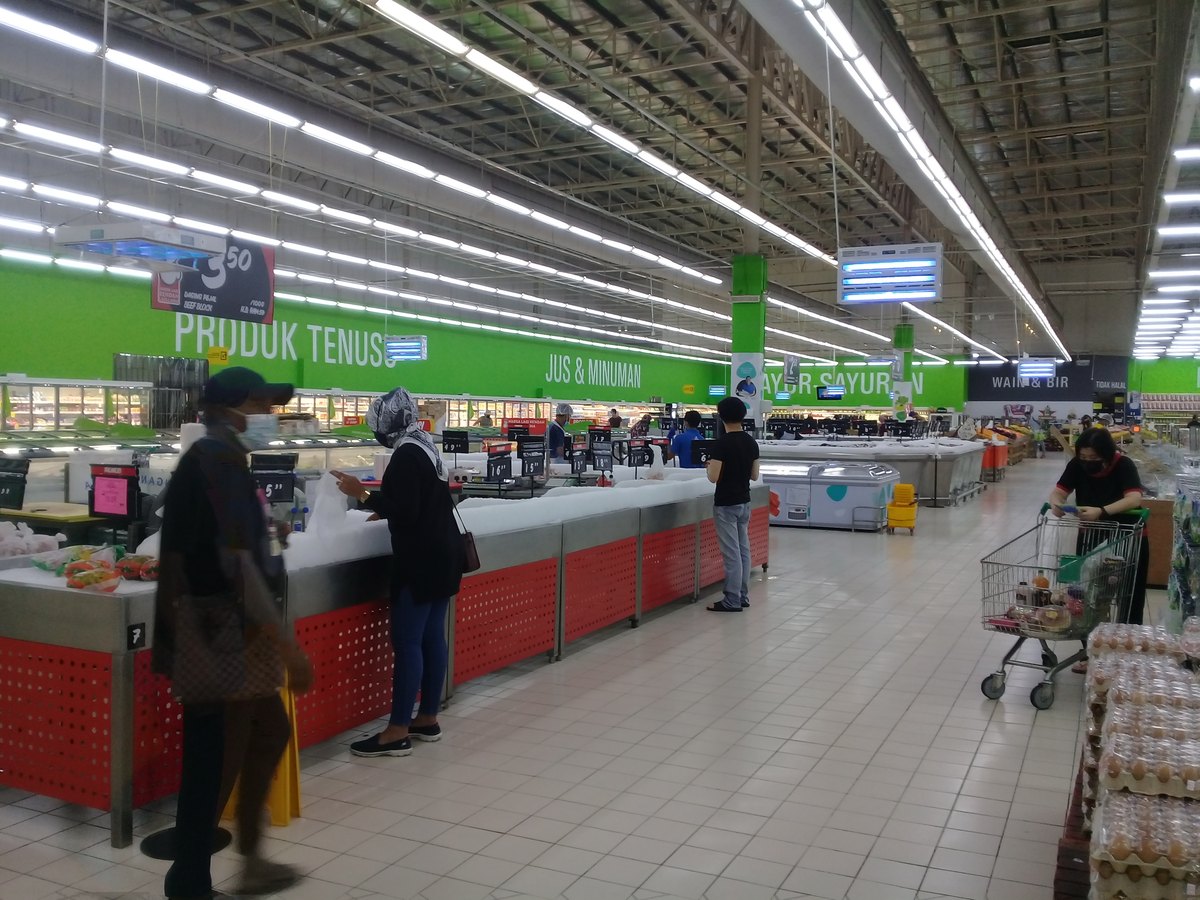
Checkout lanes at a hypermarket in Kota Damansara — retail and F&B carry the largest share of staff on or near the floor. Photo: Wikimedia Commons
The RM2,500 layer nobody has costed yet
The RM2,500 figure for semi-skilled occupations and graduates is the bigger unknown. No occupation list, age band or implementation date has been published beyond "a starting point" in Anwar's speech. If it lands in 2027 and covers, say, diploma-level technicians, the fourth row of the table above is your exposure: RM34,485 a year on a 20-person payroll, arriving on top of the RM2,000 adjustment rather than instead of it.
Confirm before you commit: how "annual sales" is defined for the RM50 million threshold (single entity or group, which financial year), the final minimum wage order and its effective date, the scope of the RM2,500 floor, and whether an exempt employer that voluntarily pays RM2,000 loses the exemption. The Ministry of Human Resources and the Labour Department (JTKSM) are the authorities; a budget speech is an announcement, not the order.
Where the offsets actually are
Overtime is the first place to look, because it is already in your payroll. A team running 120 hours of overtime a month at RM12 an hour at 1.5 times costs RM2,160; a 25 per cent cut saves RM540 a month, and a higher basic rate makes that cut easier to justify to staff. Restructuring shifts, cutting weekend overtime and fixing an allowance for predictable extra hours convert a variable cost into a budgeted one.
Second, price. A 1.03 per cent revenue increase covers the full floor on our model — smaller than most owners assume, and easier to hold than a 5 per cent rise that loses the customer. Third, substitution: the automation that pays back fastest in Malaysian SMEs is scheduling, stock and payroll software that removes administrative hours, not machines that remove people. Fourth, hiring: a vacancy left unfilled for 90 days is a saving and a loss of capacity at once, so decide deliberately.
The six months you have
| When | What to do |
|---|---|
| December 2026 | Build the wage register: every role, basic pay, allowances, statutory cost, overtime hours. No estimates. |
| January 2027 | Run all four scenarios above on your own numbers; decide your position on differentials before staff ask. |
| February–March 2027 | Confirm your exemption status in writing; test price rises with two or three customers. |
| April 2027 | Issue revised offer letters and payroll settings for June; brief supervisors on the new ladder. |
| May 2027 | First payroll on the new rates, run as a dry run before it is live. |
| June 2027 | New floor applies. Review attrition at 60 and 120 days. |
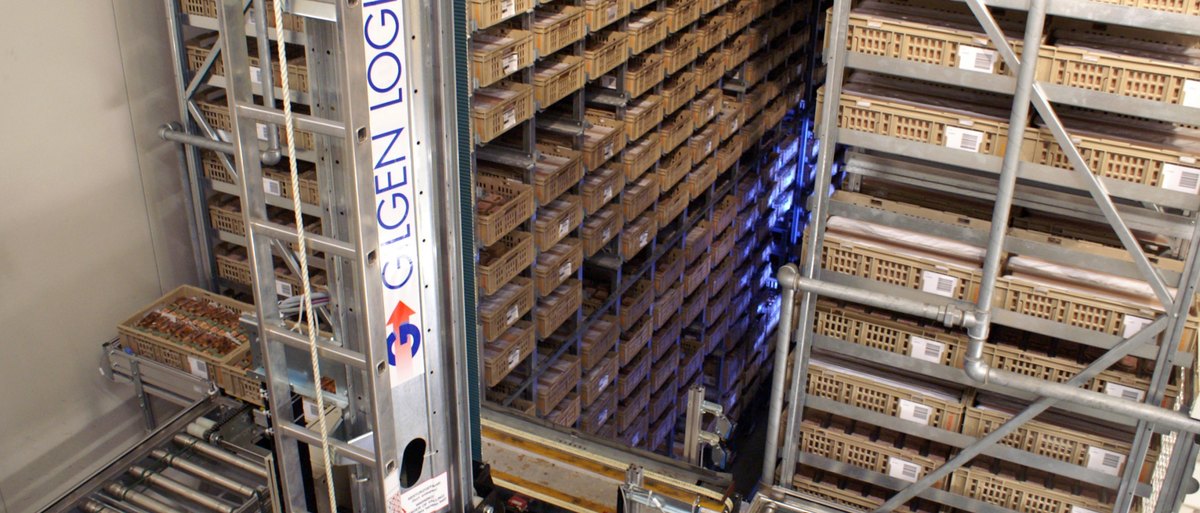
An automated small-parts store — the automation that pays back in a Malaysian SME is usually the system that removes administrative hours, not the machine that removes a person. Photo: Wikimedia Commons
Conclusion
Run the numbers before you argue about the policy. On a 20-person payroll the full RM2,000 floor is RM43,451 a year — 8.3 per cent of basic payroll and about 1 per cent of revenue. The exemption buys you time, not immunity, and the scenario that hurts most is the one where you half-comply and your pay ladder collapses.
Three things to do this quarter: build a register of every role and its true cost, decide in advance what you will pay a line leader when the operator below moves to RM2,000, and test one price increase on your most loyal customers. If the RM2,500 floor lands as announced, the same exercise repeats within a year.
And keep the exemption in perspective. A firm that stays below RM50 million in sales to keep the exemption has made a decision about its future that is worth more than the wage bill. Grow, and pay for it deliberately.
Frequently Asked Questions
1. Is my company exempt from the RM2,000 minimum wage?
If you are an MSME with annual sales below RM50 million, the government said on 9 October 2026 that you are exempted. The assessment method has not been published, and the exemption is expected to be time-limited. Confirm your status with the Ministry of Human Resources or JTKSM before relying on it.
2. Does the minimum wage apply to foreign workers?
The minimum wage order applies to employees regardless of nationality. Foreign workers also carry levy and permit costs, and non-Malaysian EPF members contribute at 2 per cent each for employer and employee, so their total cost per head differs from a Malaysian hire at the same basic pay.
3. What counts in the RM2,000 — basic pay or total pay?
The minimum wage order has historically been assessed against basic wages, not allowances or overtime. Do not assume a travel allowance closes the gap. Check the order itself once it is gazetted; the distinction changes your bill.
4. Should I restructure to contract or gig arrangements to avoid this?
Only if the working relationship genuinely is not employment. Converting employees to "freelance" status while controlling their hours, tools and leave is a compliance risk, and the consequences — arrears, penalties and back contributions — usually exceed the saving.
5. What does the RM2,500 semi-skilled and graduate floor cover?
As of writing, only the headline has been announced: a RM2,500 minimum monthly salary for semi-skilled occupations and graduates, described as a starting point. No occupation list, eligibility criteria or effective date has been published. Model it as a risk, not a cost, until the details appear.
Ahmad Firdaus covers labour policy and regulation for SMEBuddies, with a focus on how employment law and wage rules land on firms with fewer than a hundred staff. He writes about the gap between what is announced in Parliament and what an owner can actually implement in a payroll system, and prefers a spreadsheet to a press release. His work covers minimum wage orders, statutory contributions, foreign worker policy and the practical compliance calendar for Malaysian employers.
Modelling the RM2,000 Wage Now, Six Months Before It Bites