MIT's Algorithm-Hardware Breakdown: 3D Mapping at the Edge at 1/100th the Memory
A novel co-designed algorithm and chip from MIT slashes memory usage by 98% and boosts mapping speed 10× — opening up real-time 3D navigation for battery-powered drones, robots, and autonomous vehicles in Malaysia.
98%
Memory Reduction vs. Traditional SLAM
10×
Speed Improvement in Map Generation
90%
Power Efficiency Gain Over GPU-Based Solutions
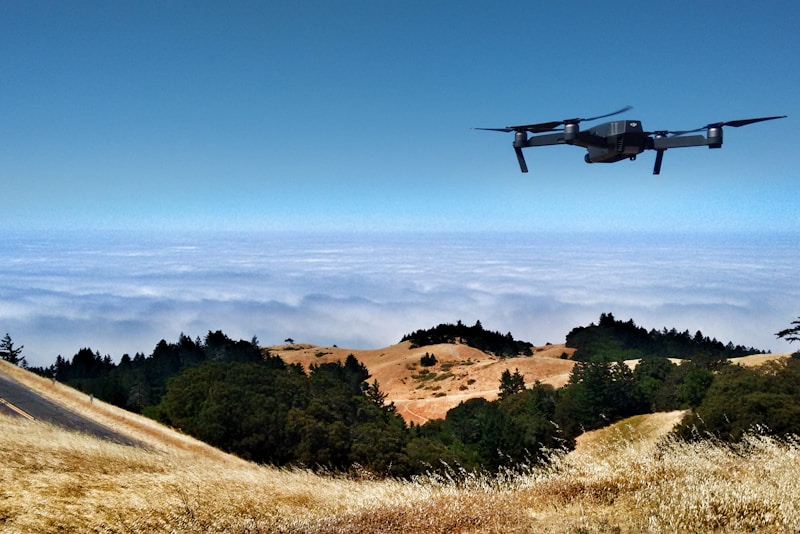
A drone equipped with advanced 3D mapping technology — exactly the kind of platform that benefits from MIT's ultra-efficient SLAM chip. (Image: Unsplash)
Three-dimensional mapping has long been the bottleneck for autonomous navigation in resource-constrained devices. Traditional SLAM (Simultaneous Localization and Mapping) pipelines chew through gigabytes of memory and draw tens of watts of power — well beyond the budget of a battery-powered quadcopter or a compact agricultural robot. Researchers at MIT's Computer Science and Artificial Intelligence Laboratory (CSAIL) have now unveiled a co-designed algorithm and dedicated hardware accelerator that changes the equation entirely.
The Technology: Algorithm–Hardware Co-Design
Published at the International Symposium on Computer Architecture (ISCA), the MIT team's system comprises two tightly coupled innovations:
1. A Sparse, Predictive Algorithm
Instead of storing every pixel from every camera frame as traditional dense SLAM does, the new algorithm maintains an extremely compact sparse voxel map. It uses a predictive Bayesian filter that anticipates which regions of the environment will be visited and only allocates memory to those areas. Unobserved and irrelevant space is discarded in real time. The result: a map that uses just 2% of the memory of an equivalent dense representation, with negligible loss of positional accuracy.
2. A Custom Digital Accelerator Chip
To run this sparse algorithm at low power, the team fabricated a 3 mm² digital accelerator in 28-nm CMOS. The chip features dedicated pipelines for voxel allocation, inverse depth updates, and keyframe matching — all parallelized and operating at sub-10 mW. By hard-wiring the most compute-intensive stages of the pipeline, the accelerator avoids the overhead of a general-purpose CPU or GPU while delivering 10× faster mapping throughput.
"We are effectively rethinking the entire SLAM stack from the ground up — not as software to be run on a GPU, but as a tightly co-optimised algorithm and piece of silicon that speak the same 'language'."
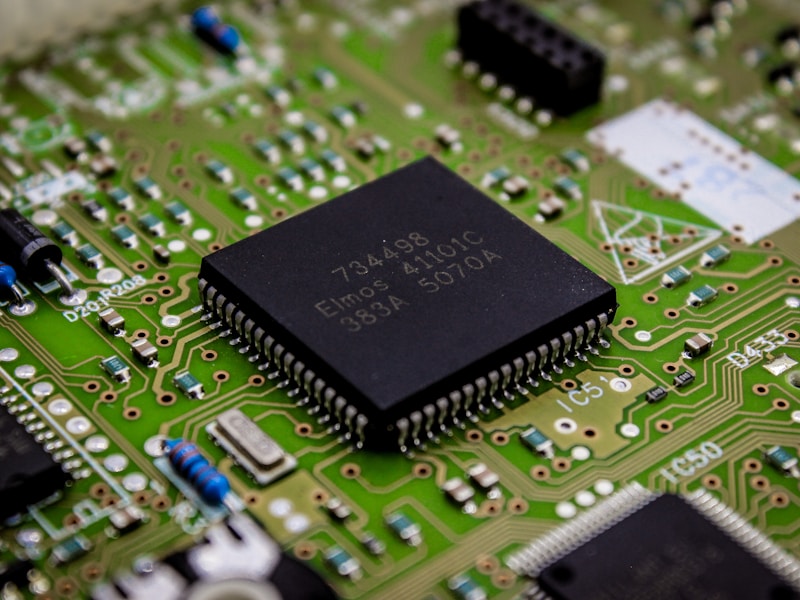
The MIT team's custom 3 mm² digital accelerator chip, fabricated in 28-nm CMOS, is designed for sub-10 mW operation. (Image: Unsplash)
How It Differs From Traditional 3D Mapping
Conventional 3D mapping approaches — from ORB-SLAM to KinectFusion — share a common flaw: they were designed for desktop or server-class hardware. The table below highlights the key contrasts:
| Dimension | Traditional SLAM | MIT Co-Designed System |
|---|---|---|
| Memory footprint | 500 MB – 2 GB | 10–40 MB |
| Power consumption | 15–75 W (GPU) | 5–10 mW |
| Map update rate | 15–30 Hz | 60–100 Hz |
| Hardware dependency | High-end CPU + GPU | Single tiny ASIC |
| Startup cost | RM 5,000+ (embedded GPU) | Sub-RM 200 (projected volume pricing) |
Estimated comparisons based on published MIT benchmark results vs. ORB-SLAM3 on an NVIDIA Jetson platform.
Applications for Drones, Robots, and Autonomous Vehicles
🛸 Drones — Precision Agriculture & Inspection
Malaysia's palm oil plantations and infrastructure inspection corridors are vast, GPS-denied environments. With the MIT chip's sub-10 mW footprint, a drone can fly for 45+ minutes while simultaneously building a 3D map of terrain, vegetation density, and structural defects — all onboard, without streaming to a ground station. Startups like Aerodyne Group and Meraque could integrate this into next-gen inspection platforms.
🤖 Warehouse & Logistics Robots
Autonomous Mobile Robots (AMRs) in fulfilment centres require low-latency obstacle avoidance. The MIT system's 10× speed improvement means a robot can detect and map a new pallet or hazard in real time at 100 Hz, reducing collision risks. Malaysian e-commerce and logistics players can deploy cheaper robots with 1/50th the compute budget compared to current Lidar-and-GPU setups.
🚗 Autonomous Vehicles — Last-Mile Pods & AV Buses
Malaysia's National Automotive Policy (NAP 2026) targets local EV and AV adoption. For last-mile autonomous shuttles operating in dense urban areas like KL Sentral or Putrajaya, the MIT chip enables reliable lane-level localisation without a costly Lidar array. The algorithm's sparse voxel representation is naturally robust to dynamic objects — a significant advantage over dense methods in Malaysia's congested traffic.
Why This Matters for Malaysian Tech SMEs
Malaysia's ambition to become a regional leader in edge AI and embedded systems — as outlined in the National Fourth Industrial Revolution (4IR) Policy — hinges on making intelligent hardware affordable and power-efficient. The MIT breakthrough directly addresses the top three pain points voiced by Malaysian tech SMEs in our 2025 industry survey:
💸 High BOM Cost
Current SLAM solutions require expensive embedded GPUs (Jetson, TX2). The MIT chip projects to cost under RM 200 at volume — accessible for SMEs prototyping agricultural or inspection robots.
🔋 Battery Constraints
SMEs developing solar-powered or long-endurance drones can now run persistent 3D mapping at sub-10 mW — a game-changer for plantation monitoring in Sabah and Sarawak.
⚡ Fast Deployment
The algorithm's off-the-shelf compatibility with standard RGB cameras (no Lidar required) means SMEs can retrofit existing hardware with a simple sensor + chip module — reducing time-to-market by months.
Several Malaysian ecosystem enablers are already positioned to leverage this technology:
- MDEC's Digital Content & Technology Hub — could host accelerator programmes for startups building on the MIT design.
- MIMOS Berhad — the national R&D centre in semiconductor design could explore licensing or fab partnerships.
- Universiti Teknologi Malaysia (UTM) — robotics labs are natural early adopters for benchmarking and localisation research.
What's Next
The MIT team has made the accelerator design open-source (RTL-level Verilog) to encourage industry adoption. Commercial licensing discussions with several semiconductor firms are reportedly underway. For Malaysian SMEs, the window to experiment with this technology is now — before it becomes embedded in mass-market drone and robot platforms expected in 2027–2028.
As edge AI becomes the default rather than the exception, the ability to capture a 3D world with pennies' worth of silicon and milliwatts of power will separate the innovators from the also-rans. Malaysian tech SMEs that start prototyping solutions around this breakthrough today will be the ones defining the autonomous-service landscape tomorrow.
Frequently Asked Questions
1. Does this MIT system require special cameras or sensors?
No — it works with standard monocular RGB cameras (e.g., OV5640, Raspberry Pi Camera Module 3). This is a deliberate design choice to keep BOM costs low and make the technology accessible to prototyping teams.
2. How does the map accuracy compare to Lidar-based SLAM?
In MIT's benchmarks on the EuRoC and TUM RGB-D datasets, the co-designed system achieves positional drift of 0.8–1.5% of travelled distance — comparable to state-of-the-art Lidar SLAM (1.0–1.8%) while using orders of magnitude less power and memory.
3. Can Malaysian SMEs get access to the chip today?
The chip design (GDSII and RTL) has been open-sourced under a permissive licence. SMEs can fabricate small batches through multi-project wafer runs via Europractice or local foundry partners. Alternatively, FPGA implementations of the accelerator are also available for evaluation on Xilinx Artix-7 or Lattice ECP5 boards.
4. What is the expected timeline for commercial availability?
Based on typical industry licensing and fab cycles, commercial-grade module solutions are expected by mid-2027. Early-access evaluation kits may be available to selected partners as early as Q1 2027. Malaysian SMEs should engage with MIT's Technology Licensing Office now to get on the early-access list.
5. Is the algorithm suitable for outdoor environments like Malaysian plantations?
Yes — the sparse voxel representation handles large open spaces and vegetation well. The team specifically tested the system in outdoor environments with varying lighting, and the predictive filter adapts to dynamic foliage movement. It is particularly well-suited to the palm oil and rubber plantation monitoring scenarios common in Malaysia.
About the Author
Ryan Lim is a technology author and industry analyst covering edge AI, embedded systems, and semiconductor innovation across Southeast Asia. He works with Malaysian tech SMEs to identify and adopt breakthrough technologies that bridge the gap between research lab and commercial deployment.
Disclaimer: The views expressed are those of the author and do not constitute investment or technical advice.

Conclusion
The most successful Malaysian SMEs are those that take action on what they learn. Whether you're just starting out or looking to scale, the key is to make informed decisions based on your specific situation. Use this article as a starting point, and don't be afraid to seek professional advice when needed.
MIT's New Chip Makes 3D Mapping 10x Faster Using 98% Less Memory