By Julie Daphne · November 2026
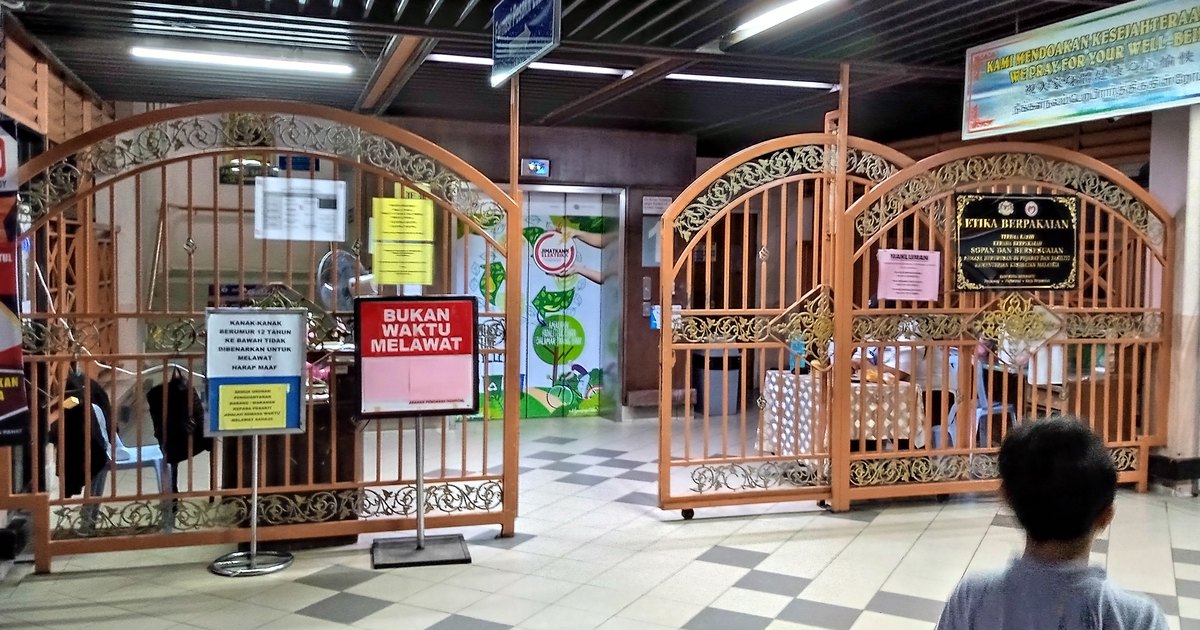
The entrance to a hospital ward at Batu Pahat, Johor, with a sign reading "bukan waktu melawat" — outside visiting hours. Private hospital bills are what MediAsas is designed to make predictable. Photo: Wikimedia Commons
What has actually been published
Anwar told the Dewan Rakyat that MediAsas will feature "standardised hospital charges based on diagnosis and treatment type to ensure medical costs are better controlled and predictable". He said EPF members under 55 will be allowed to pay premiums from Akaun Sejahtera savings, and that SMEs with fewer than 75 employees get a first-year subsidy of RM200 per worker, capped at 50 employees per company (Bernama, 9 October 2026).
The Life Insurance Association of Malaysia, which represents insurers, said the plan offers standalone medical insurance and takaful in two options: MediAsas Teras, a standard plan, and MediAsas Fleksi, a standard-plus plan, with coverage available to individuals up to 85 years old (LIAM, 9 October 2026).
Bank Negara's own product page is the more useful document for an employer. It describes MediAsas as a voluntary, standalone, yearly renewable plan with standardised features, not a social insurance scheme, and not linked to any investment product. It covers pre-hospitalisation, hospitalisation, post-hospitalisation and outpatient treatment, with annual limits that cover "up to 99% of common treatments", built-in cost-sharing features, and cashless admission at panel hospitals. Indicative premiums sit in a target monthly range of RM60 to RM550 for entry ages up to 70. Final features and pricing will be published at the January 2027 launch (Bank Negara Malaysia, MediAsas product page).
A pilot ran from end-July to October 2026 with six insurers and takaful operators and ten Klang Valley hospitals, using staff of statutory bodies, GLCs and SMEs. Bank Negara is explicit that the pilot is not the final product.
The gap between the announcement and your decision
Here is the difficulty: you are being asked to make a January decision on a product whose price and enrolment rules are not yet published. That is not a reason to ignore it; it is a reason to prepare the inputs you control.
| Known | Not yet published |
|---|---|
| Launch month: January 2027 | Premium by age band and plan option |
| Two options: Teras and Fleksi | Whether the RM200 is a premium offset, a rebate or a voucher |
| Subsidy: RM200 per worker, first year only | How "employees" is counted for the 75 and 50 limits |
| Eligibility: SMEs under 75 employees | Underwriting, waiting periods, pre-existing condition rules |
| Coverage to age 85; four treatment stages | Year-two pricing and renewal terms |
| Premium payable from EPF Akaun Sejahtera (under 55) | Whether employers can add dependants under the subsidy |
There is a second number in circulation. Under the RESET strategy, RM40 million has been allocated for MediAsas vouchers aimed at employees of SMEs with fewer than 75 workers (Bank Negara Malaysia, reported 9 October 2026). Whether that voucher sits on top of the RM200 subsidy or is the mechanism that delivers it has not been explained in anything published so far. Treat them as one benefit until someone official says otherwise.
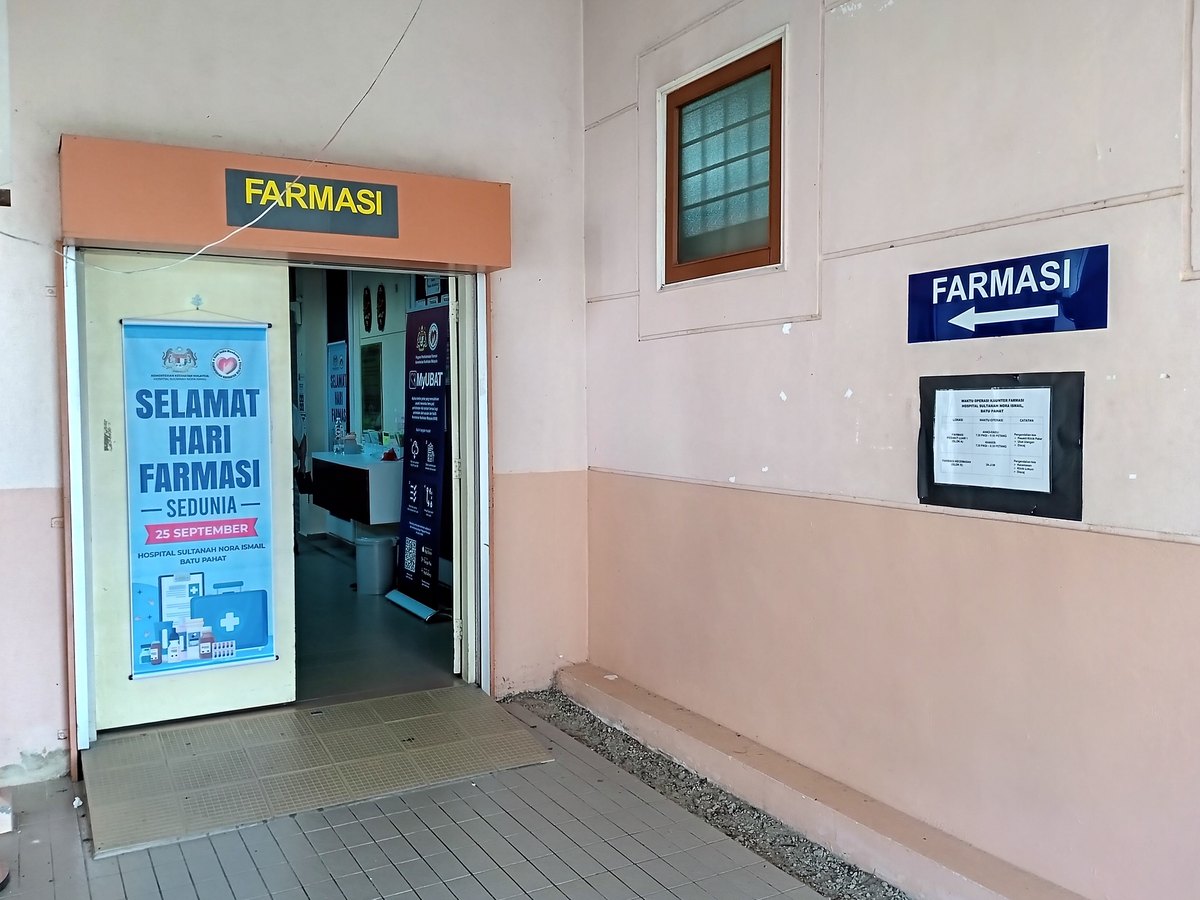
The outpatient pharmacy entrance at Hospital Sultanah Nora Ismail in Batu Pahat. MediAsas pays for private treatment; the public system remains the fallback that keeps a household solvent. Photo: Wikimedia Commons
How it sits beside the group policy you already have
Most SMEs with any medical benefit run a group hospital and surgical policy, usually with an annual limit per employee and a panel of hospitals. MediAsas is not designed to replace that. It is a basic plan with annual limits and cost-sharing, aimed at people who are uninsured or who have dropped cover after a repricing. Two practical rules follow.
First, do not double-cover the same employee. Paying a basic plan premium for someone already on a group policy with a RM100,000 annual limit buys little; the claim goes to the policy with the higher limit first. Second, the real use case is the uncovered tail of your workforce: probationers, part-timers, contract staff and foreign workers who are outside the group scheme, plus the employees who declined cover because the dependant premium was too high.
Counting to 75 and to 50
The caps create two different questions. The 75 is an eligibility test for the company. The 50 is a cap on how many workers attract the RM200. On a 60-person payroll you are eligible and 50 people are subsidised; the other ten are not. On an 80-person payroll you are outside the scheme entirely.
What is not published is how headcount is measured — full-time equivalents or bodies, whether foreign workers and contract staff count, and whether it is measured at application or at some reference date. Get your number ready anyway: an employee list with start dates, nationality, employment type and current medical cover, dated as at 31 December 2026. If the rules later exclude a category, you will know immediately what it costs you.
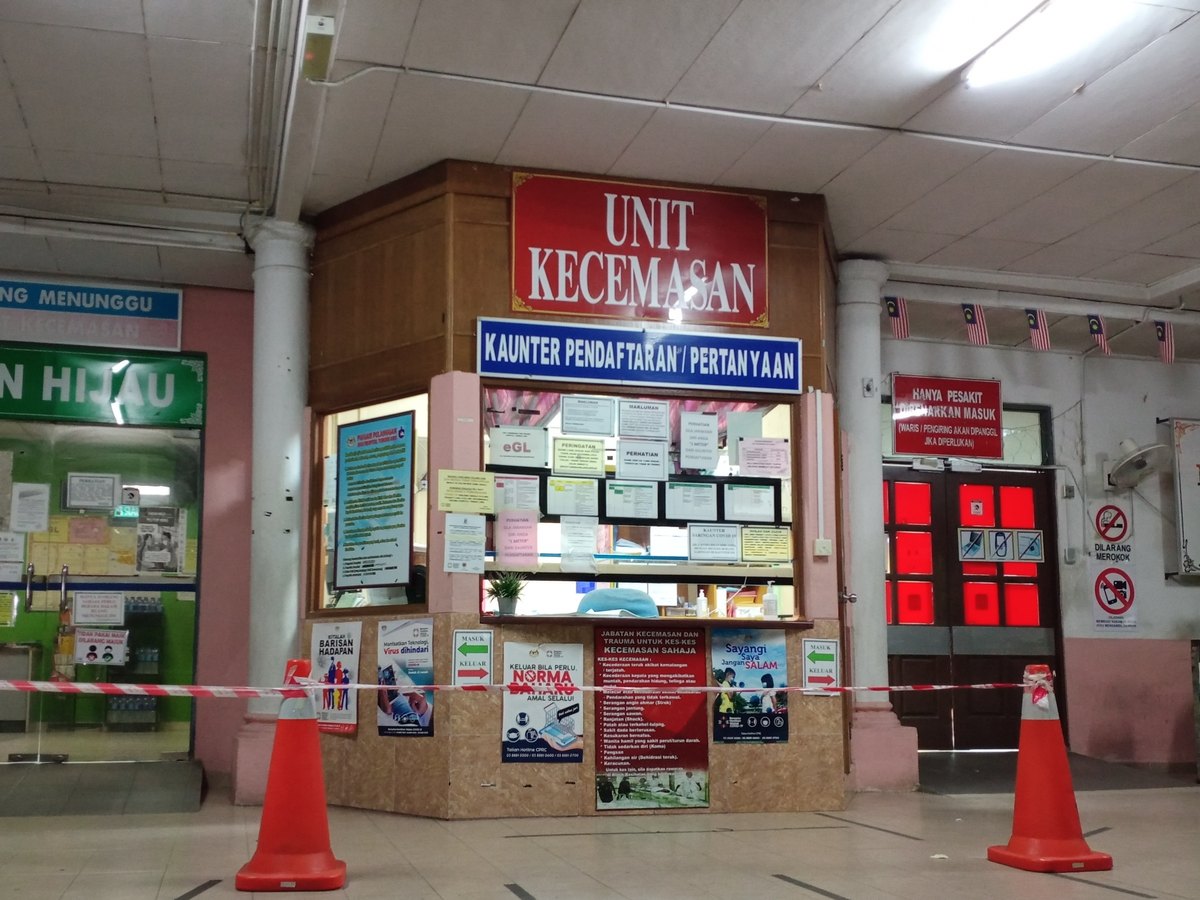
The registration and enquiries counter at the emergency unit of Hospital Tengku Anis in Pasir Puteh, Kelantan — where a bill becomes a number a family has to find. Photo: Wikimedia Commons
The year-two problem
The subsidy is for the first year. Whatever you adopt in January 2027 becomes a full-cost line in January 2028, in the same year the RM2,000 minimum wage takes effect at larger firms and pressure builds on your own pay scales. If the indicative range of RM60 to RM550 a month holds, 50 workers at RM150 a month is RM90,000 a year once the subsidy ends — real money for a firm with RM10 million in sales.
Decide now how you will treat that. Three defensible positions: absorb it as a retention cost, split the premium with employees from year one so the step is small, or run it as a pilot for the uncovered group only and revisit in December 2027. What is not defensible is adopting it for everyone in January and discovering the cliff in December.
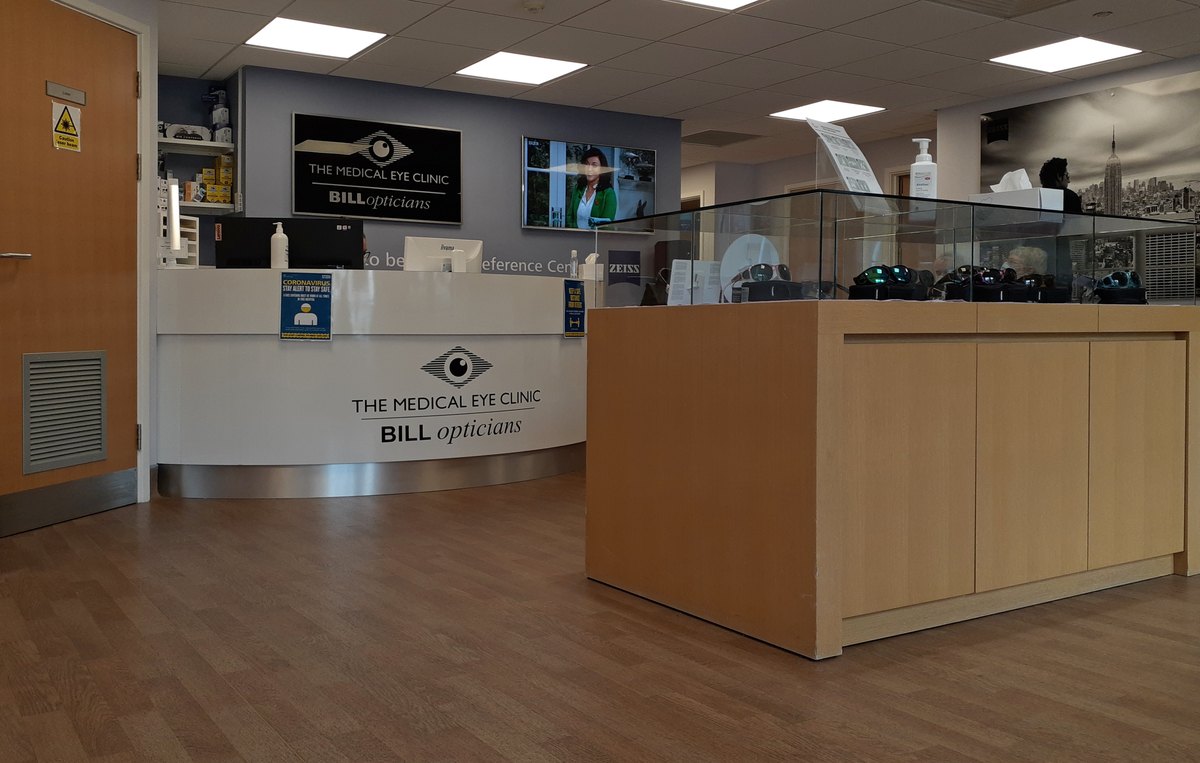
A private clinic reception in Exeter, England — the kind of front desk where a cashless panel arrangement matters more than the premium. Photo: Wikimedia Commons (Geograph, CC BY-SA 2.0)
What to ask before you sign
Ask any insurer or takaful operator four things in writing: the premium by age band for Teras and Fleksi; the annual limit and what the cost-sharing looks like on a RM30,000 bill; the panel hospital list within 30 kilometres of your premises; and what happens at renewal if a staff member claims heavily in year one. Add a fifth if you employ foreign workers: whether they are eligible at all.
Confirm before you commit: final premiums, the mechanism for the RM200 subsidy and the RM40 million voucher allocation, the definition of employee for the 75 and 50 limits, underwriting rules, and whether the tax relief announced for premiums extends to employer-paid cover. Bank Negara Malaysia's MediAsas page and the Ministry of Health are the authorities; insurers' launch materials will follow, not lead. Do not sign a group scheme in December on the assumption that January's terms will match the announcement.
Conclusion
MediAsas is worth taking seriously for one reason: it is the first basic medical product designed to be affordable at the bottom of the market, and the government is paying RM200 of the first year to get SMEs in. For a firm with staff who have no cover at all, that is a genuine gain.
But the decision is not "sign up in January". It is "know your headcount, know who is already covered, know what the premium becomes in year two, and be ready to move within a fortnight of the launch". Do that preparation in December while the office is quiet.
And keep the wage calendar in view. A January benefits decision and a June wage increase land in the same budget year. Decide both together, or the second one will decide the first.
Frequently Asked Questions
1. Is MediAsas compulsory for employers?
No. Bank Negara describes it as a voluntary, standalone plan, and it is not a social insurance scheme. Employers may offer it, and employees may buy it individually, but there is no statutory obligation to enrol staff.
2. How much is the subsidy worth?
RM200 per worker for the first year, for SMEs with fewer than 75 employees, capped at 50 employees per company. It applies to the first-year premium only, so budget the full premium from year two.
3. Can I use my EPF savings to pay for it?
EPF members below age 55 will be allowed to pay MediAsas premiums from Akaun Sejahtera savings, as announced on 9 October 2026. That is an individual option, separate from any employer subsidy.
4. Does MediAsas replace my company's group medical insurance?
It is not designed to. MediAsas is a basic plan with annual limits and cost-sharing; a group hospital and surgical policy usually carries far higher limits. Most SMEs will use MediAsas to cover staff who sit outside the group scheme.
5. What will it cost per employee?
Bank Negara's indicative target range is RM60 to RM550 a month depending on entry age and plan, with final pricing published at the January 2027 launch. Use the midpoint as a planning assumption, not a quotation.
Julie Daphne covers tourism, hospitality, consumer businesses and workplace matters for SMEBuddies. She writes about the decisions small employers make about their people — benefits, rostering, service standards and the cost of looking after a team — and about how national policy lands in a business with fifty staff rather than five thousand. Her work focuses on the practical paperwork that turns an announcement into something an owner can actually implement.
MediAsas Starts in January: The RM200-Per-Worker Decision to Make in December