By Ashley Lu · September 2026
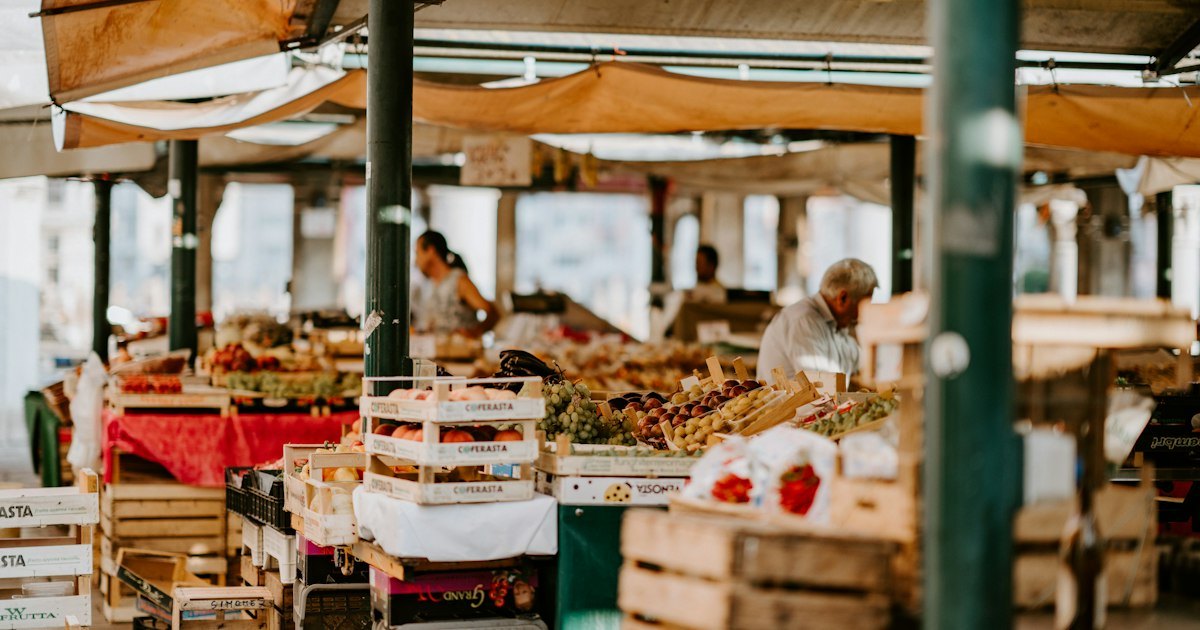
A market stall stacked with goods: live selling moves the same trading instincts onto a phone screen, at a much larger scale.
Viral is a demand test, not a business model
The Malaysian Reserve reported on 16 September 2026 that Malaysia's social commerce sector is moving beyond viral videos and campaign-driven sales, as businesses use livestreaming, short-form content and creator partnerships to build long-term operations. The same report noted that livestream sales rose 48% year on year and now account for almost one-third of TikTok Shop's sales in Malaysia, while nearly six in ten TikTok Shop users in Malaysia prefer live shopping.
The money being pushed into the channel is substantial. TikTok Shop committed cumulative support of up to RM250 million for Malaysian sellers and creators this year through JomLokal Booster 2.0, an RM70 million addition to the RM180 million cost-of-living relief programme launched with the Domestic Trade and Cost of Living Ministry in June. It extended 0% commission to another 44 product subcategories and added a RM2 shipping rebate. JomLokal sellers recorded a 140% year-on-year sales increase in June 2026, and the initiative has now supported 400,000 local sellers and creators across roughly 800,000 products.
The caution comes from the platform itself. TikTok Shop Malaysia strategic partnerships senior director Nur Azre Abdul Aziz told The Malaysian Reserve that brands must take greater ownership of their content strategies as competition grows, and that strengthening product development matters as much as chasing volume. Rising demand also exposes operational weakness: a seller producing 100 units a day from home cannot fulfil thousands of orders from one good livestream.

A phone in hand: nearly six in ten TikTok Shop users in Malaysia say live shopping is their preferred way to buy.
A show you can run every week
The difference between a lucky night and a business is a rundown you can repeat when the host is tired and the audience is small. Fix four things: the slot, the length, the opening and the closing offer. A 90-minute show at the same time every week builds habit that an unannounced three-hour marathon never will.
Inside the show, run segments rather than chatter: a two-minute hook, a demonstration that proves the product works, a proof segment using reviews or live questions, the offer, then a close with a clear deadline. Two people minimum — one host, one operating the product cards, pinned comments and the order feed. Fix the product order in advance and cap the SKUs per session so neither the host nor the packing table is improvising at 11pm.
Fulfilment is where growth is won
TikTok Shop's own framing is blunt: the platform may bring an order spike, but sellers must still deliver within the required time frame to protect the consumer experience. Nur Azre said that with the right support, daily output could rise from 100 units to between 3,000 and 10,000 units.
Some of that support exists. TikTok Shop and government partners have developed 12 livestreaming studios to cut content production costs for MSMEs without stable internet, premises or equipment, and a partnership with the Entrepreneur Development and Cooperatives Ministry has supported about 600 entrepreneurs who collectively generated RM39 million over the past 12 months.
The practical version for a small seller: pre-pack your top movers before the show, set a hard order cap per session, roster extra hands for the 48 hours after a livestream, and pre-book courier pickups. One Malaysian affiliate founder, Carynn Law of DearCarynn, sold her permitted 200 orders within the first hour of a single session, then spent about six weeks clearing the rest of the wholesaler's stock — a neat illustration of how a volume cap protects both margin and service quality.
A phone screen glowing in the dark: the offer, the countdown and the checkout all happen in the palm of the buyer's hand.
The fee stack, and why a good night can still lose money
Live selling is a stack of deductions, not a single commission. TikTok Shop's Malaysia seller documentation lists a transaction fee of 3.78% (SST inclusive) and a platform support fee of RM0.54 per delivered order, introduced on 15 February 2026 and not refunded when an order is later returned. Commission varies by product category, affiliate partners typically take a further cut, and 6% service tax now applies to seller shipping fees. Discounts, ad spend and returns sit on top.
The table below models a single 500-order night. Only the platform fee rates are published; the trading assumptions are illustrative.
| Scenario | Orders delivered | Contribution per order | Total contribution | Returns & refunds | Ad spend | Net result |
|---|---|---|---|---|---|---|
| 15% live discount, 8% return rate | 460 | RM14.97 | RM6,886 | RM576 | RM3,000 | +RM3,311 |
| 15% live discount, 25% return rate | 375 | RM14.97 | RM5,614 | RM1,799 | RM3,000 | +RM815 |
| 30% live discount, 8% return rate | 460 | RM11.52 | RM5,300 | RM511 | RM3,000 | +RM1,789 |
| 30% live discount, 25% return rate | 375 | RM11.52 | RM4,321 | RM1,598 | RM3,000 | −RM277 |
Assumptions: a RM69 headline price discounted 15% (RM59 received) or 30% (RM48.30 received); product cost at 50% of the received price; affiliate commission 10%; platform commission 4%; the published 3.78% transaction fee and RM0.54 platform support fee; RM3.50 net shipping per order; RM5 handling plus 30% of value written off on each return; 500 orders and RM3,000 of ads.
Rent attention, then own some of it
Affiliate reach is rented. TikTok Shop has about 3.6 million affiliate creators in Malaysia and affiliate-generated sales grew more than 125% year on year, which means competitors can buy the same attention from the same people. Every show should harvest something that survives the algorithm: a WhatsApp group for order updates, a repeat-purchase code in the parcel, a QR card in the box. DearCarynn's founder attributes her durability to a following built on a shared journey rather than on products glimpsed during a livestream.
Measure five numbers weekly: average order value, delivered-order rate after returns, contribution per delivered order, repeat purchase rate within 60 days, and cost per new customer. If contribution per delivered order is not positive before ad spend, the show is funding the platform, not the business.
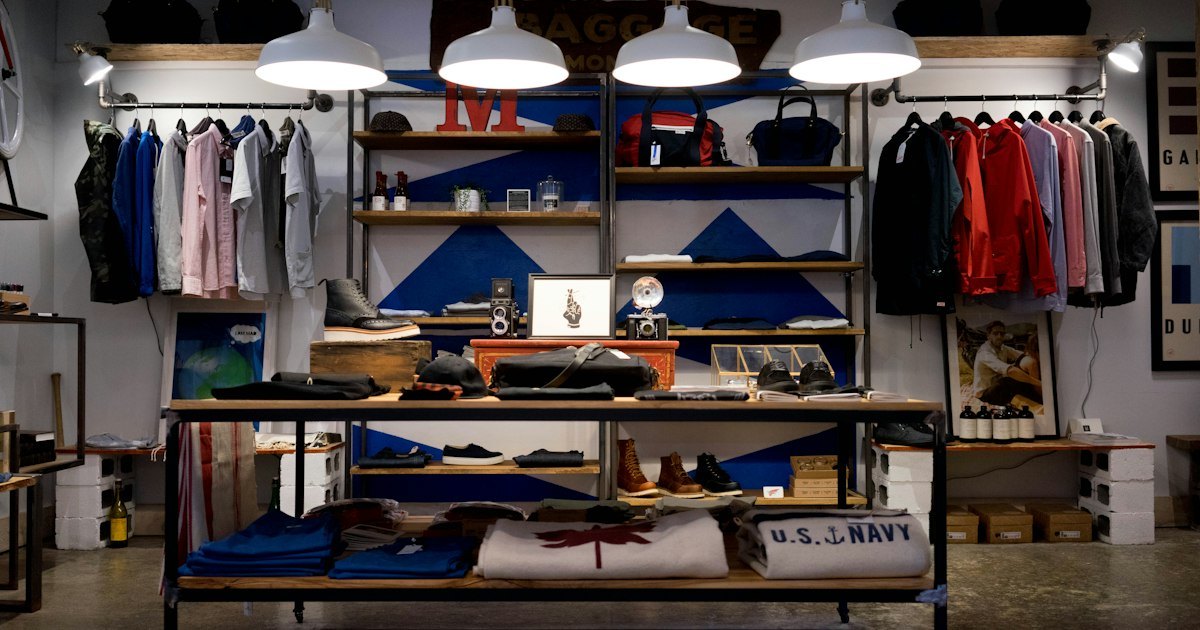
A shop interior: Malaysian sellers are using livestreams from physical outlets to lift footfall in quiet periods rather than replace the store.
A schedule that fits Malaysian shopping hours
Live selling works when it lands inside your buyer's downtime, not yours. Prime time in Malaysia is the evening block after dinner, when the household is home and the phone is in hand; lunchtime suits quick repeat purchases; the days around payday carry higher-ticket items. Keep the same slot every week and treat it as a promise to your audience. TikTok Shop has also observed brands broadcasting during non-peak periods to lift sales, and streaming from physical outlets to pull customers into the store — online and offline feeding each other rather than competing.
Conclusion
Live commerce in Malaysia has grown up. The channel is large — livestreams now drive almost a third of TikTok Shop sales in Malaysia — and the platform is spending serious money to keep sellers in it, with up to RM250 million committed this year alone. Size, though, is not the same as profitability.
The operators who last are the ones who treat a show as a production line: a fixed weekly slot, a written rundown, a capped order volume, pre-packed stock, and a fee-and-returns model they have actually calculated rather than assumed. Then they take the audience off the algorithm and keep it.
Run the numbers before you run the discount — the dashboard will always look better than the bank account.
Frequently Asked Questions
1. How often should a small Malaysian seller go live?
Most SMEs see better results from one or two fixed slots a week than from sporadic long sessions. Consistency builds the habit and makes it possible to plan stock, staffing and ads around a predictable demand curve. Add sessions only once fulfilment for the existing shows is comfortably under control.
2. What is a realistic average order value for live selling?
It varies too widely by category to quote a single figure. What matters is that contribution per delivered order stays positive after commission, affiliate fees, the RM0.54 platform support fee, shipping, returns and ads. Track that number weekly for your own catalogue rather than benchmarking against another seller's category.
3. Do I need a big following before I start selling live?
No. Affiliate creators can carry reach while you build a following, and the platform's JomLokal programmes provide training, visibility and business matching for smaller sellers. The constraint is usually fulfilment capacity rather than audience size, so set an order cap for every session.
4. Why is my live night profitable on the dashboard but not in my bank account?
Because the settlement statement arrives later than the sales report. Commission, affiliate payouts, the transaction fee, platform and shipping charges, refunds on returned orders and non-recoverable return handling all land after the show. Build a contribution-per-order model in a spreadsheet before the discount decision, not after.
Ashley Lu covers digital marketing, social commerce and e-commerce for SMEBuddies. She has worked with Malaysian consumer brands on marketplace operations, paid social and live-selling formats, and writes about the operational detail that separates a profitable channel from an expensive hobby. Her work focuses on unit economics, fulfilment discipline and customer retention for small and medium businesses. She believes the most useful marketing advice for an SME is arithmetic.
Live Commerce Grew Up: Selling Beyond the Viral Spike