By Ryan Lim · October 2026
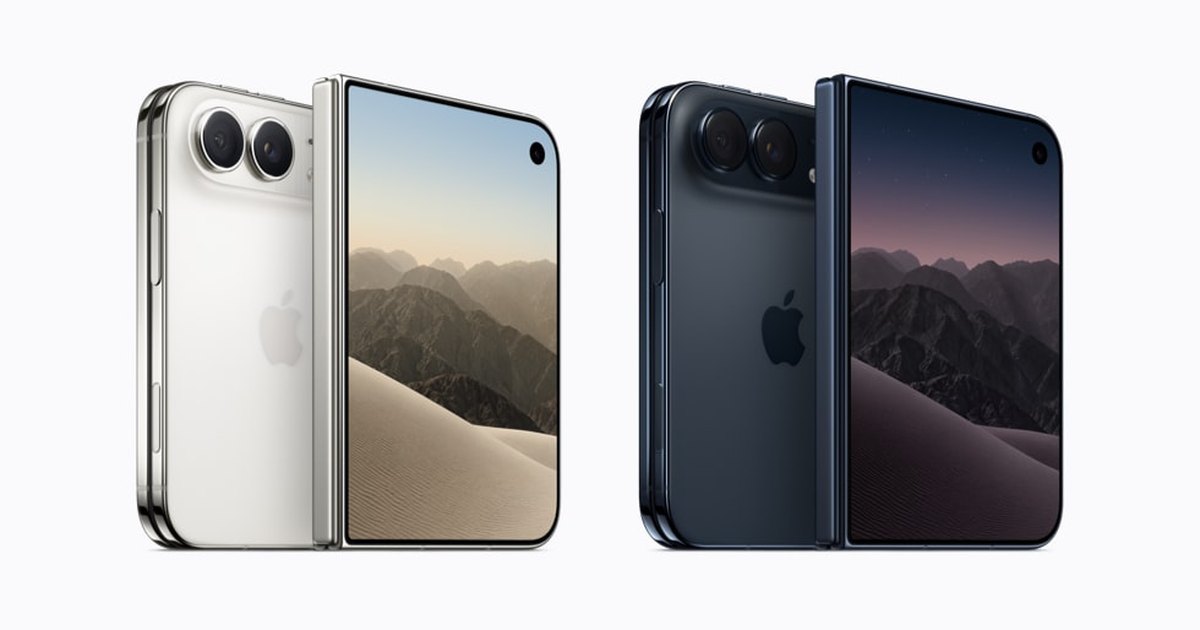
iPhone Duo in star white and night sky. Apple began retail sales in Malaysia on 23 October. Image: Apple
What actually happened today
Apple launched the iPhone Duo across more than 70 countries and regions today, with another 28 markets following from 30 October. Malaysia is in the first wave, and the phone is officially on sale at Apple's online store and through selected carriers and partner stores, starting at RM9,499 for 256GB.
The queue, however, is a different story. Apple's Malaysian iPhone Duo page now carries a notice that the device is "currently available to buy online only", with free delivery or pickup at an Apple Store — and the pickup option has been showing a message to check back for availability on 24 October, the day after launch. MacRumors reported that retail staff were told to expect no stock for walk-in purchases, and AppleInsider reported Apple's statement that pre-order demand had been "nothing short of extraordinary" without confirming store inventory. In plain terms: if you were planning to walk into Apple The Exchange TRX today and walk out with one, don't.
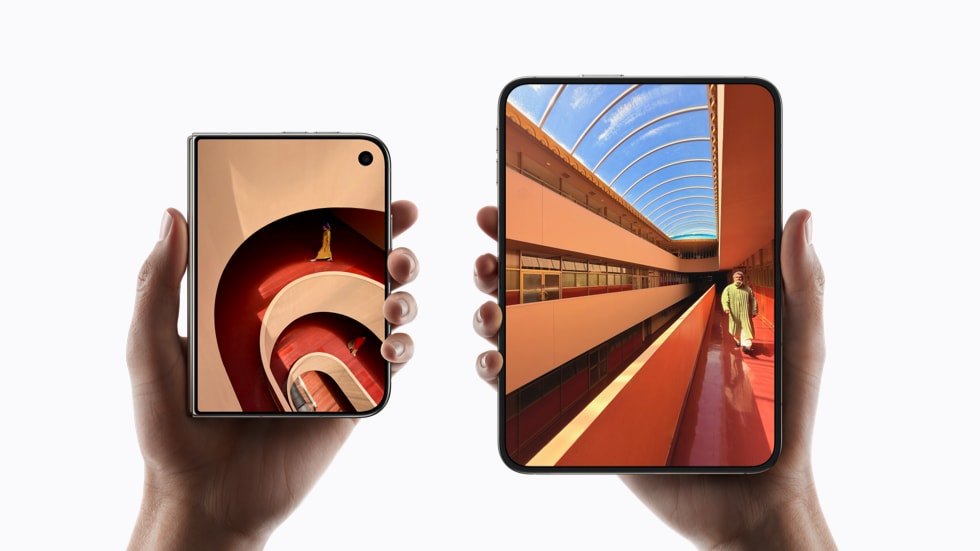
Closed and open: the 5.4-inch outer display and the 7.6-inch inner display. Image: Apple
How bad is the shortage, really
Pretty bad, and it is measurable. When pre-orders opened at 8pm on 16 October, most of the first batch we can see at Apple Authorised Retailers had gone within the hour. Machines, Switch and Senheng showed most configurations sold out, with the stock that remained dated for January 2027; the official LazMall and Shopee Mall listings sold out. Apple's own online store has been quoting delivery from late January 2027 for new orders — roughly three months away.
Telcos are the only channel with any near-term supply, and even there the picture is thin: reporting this week found most 512GB, 1TB and 2TB variants gone across Maxis, CelcomDigi, U Mobile and Yes 5G, leaving mainly the 256GB model, with some fulfilment dates slipping into November. Canceled orders and additional allocations can free up units, so the position changes daily.
Check the date, not the listing. A configuration showing "in stock" online does not mean it arrives on launch day. Before you pay, read the estimated delivery or collection date on the final checkout screen. Several telco and retailer listings currently show fulfilment weeks after today.
The actual price, and the trap in the monthly figure
Apple's Malaysian pricing is unchanged from the pre-order: RM9,499 for 256GB, RM10,499 for 512GB, RM12,499 for 1TB and RM15,499 for 2TB. On an eligible credit card with 0% interest over 24 months, that works out at RM395.79, RM437.46, RM520.79 and RM645.79 a month respectively.
| Channel | What you pay for the 256GB model | The catch |
|---|---|---|
| Apple outright | RM9,499 | Delivery late January 2027 on new orders |
| Apple 0% EPP, 24 months | RM395.79 a month | Eligible credit card, minimum RM2,000 purchase |
| Maxis Zerolution, 48 months on Postpaid 139 | RM165 a month for the device plus RM139 for the plan = RM304 | Four-year lock-in; totals about RM14,592 |
| Maxis, 24 months | RM345 a month for the device | Higher monthly, shorter commitment |
| CelcomDigi Easy360, 36 months on Postpaid 5G 120 | About RM227 a month plus RM120 plan | Three-year term; port-in rebate up to RM600 |
| U Mobile ULTRA Family | From RM227 a month | Free Apple Watch Series 11, eSIM only |
| Yes 5G | From RM166 a month | Rebate up to RM360; order window closed this morning |
Read the structure, not the headline. Maxis advertises the 256GB on Postpaid 139 at "RM9.99 a day", which is real arithmetic but not a daily bill: it is RM304 a month — RM165 for the device over 48 months plus RM139 for the plan — divided by 365 days. The concession that makes it look cheap is the subsidy on the handset, and you pay for it through a four-year plan commitment. Over the full term that is roughly RM14,592 against RM9,499 for buying outright.
CelcomDigi has the most aggressive incentives this week, having extended its offers to 31 October, including a port-in rebate of up to RM600 paid in monthly instalments, trade-in bonuses from RM50 to RM400 depending on your old model, and a free iPad A16 128GB if you add a supplementary line. Those are real value only if you were going to switch networks or add a line anyway — and the rebate is forfeited if you terminate early.
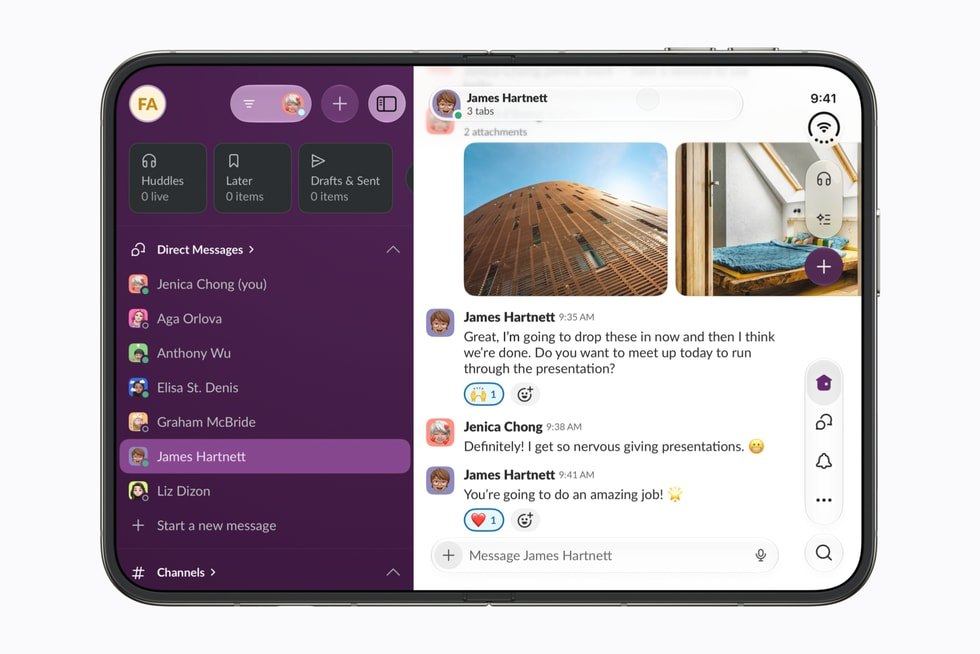
Slack on the unfolded iPhone Duo. A wider screen only pays for itself if someone actually works in two panes all day. Image: Apple
Two things that bite businesses specifically
The first is the SIM. The iPhone Duo in Malaysia is eSIM only — there is no physical SIM tray. If your field staff swap SIM cards between devices, use a company number in a shared handset, or rely on a prepaid data SIM bought at a counter, that workflow breaks. Confirm your carrier supports eSIM for a business line, and decide now whether the phone is enrolled in Apple Business Manager or set up as a personal device with company email on it. The second is the hinge. A folding phone has a mechanical part an ordinary handset does not, so a device handed to a technician who works on site needs accidental damage cover that actually names folding mechanisms in its exclusions.
The tax side is simpler than it looks, and worth doing properly. A RM9,499 phone is a business asset, not a consumable: it sits in your fixed asset register and is claimed through capital allowance over several years rather than deducted in one go. Budget 2027 raised the qualifying value for the small-value asset capital allowance to RM3,000, so a device at this price is comfortably above that threshold, and the accelerated capital allowance on plant, machinery and ICT equipment now runs to 31 December 2030. Confirm the treatment and the rate with your accountant before you file — but do register the asset, because a phone bought on a four-year telco contract that nobody recorded is a common and expensive omission.

The number that matters is the total over the term, not the monthly instalment. Photo: Wikimedia Commons (CC0)
So what should an SME actually do this week
If nobody on your team has a specific, documented reason to need a folding screen, do nothing. Waiting costs you nothing and the supply situation improves; the 28 additional countries on 30 October will not fix Malaysian allocation, but stock does loosen in the weeks after a launch as cancelled orders return.
If you do need one, three routes make sense. Buy outright from Apple at RM9,499 and accept a January delivery, which is the cheapest total cost and carries no lock-in. Buy on Apple's 0% 24-month instalment at RM395.79 a month if cash matters more than speed. Or take a telco deal only if you were already paying for that plan — in which case compare the total over the full term, count the trade-in bonus and rebates you genuinely qualify for, and check whether the device actually arrives this year. What does not make sense is paying a scarcity premium to a reseller for a phone that a business does not need, or signing a four-year contract to get a handset two months sooner.
Conclusion
The iPhone Duo's Malaysian launch day is a supply story, not a product story. Apple has no walk-in stock, retailers sold out within an hour of pre-orders, and new online orders now land in late January 2027. A business that did not plan for this in mid-October cannot buy its way into one today without paying over the odds or committing to a long contract.
Treat it as a budget decision rather than a launch event. The total cost ranges from RM9,499 outright to roughly RM14,592 on the longest telco term, and the difference buys you nothing except a smaller monthly figure. If a wider screen genuinely improves how someone quotes, reviews documents or sells on site, the maths can work — and the 0% instalment keeps the cash in the business.
For everyone else, the sensible answer is the one nobody wants to hear on launch day: wait for the January allocation, and spend the difference on the tools your team already uses every day.
Frequently Asked Questions
1. Can I walk into the Apple Store at TRX and buy an iPhone Duo today?
Unlikely. Apple's Malaysian product page lists the iPhone Duo as available online only, with delivery or store pickup, and the pickup option has been showing a check-back message dated 24 October. Reporting suggests Apple Stores were not allocated walk-in stock for launch day. Check the product page or call before travelling.
2. If I order from Apple today, when does it arrive?
Late January 2027 at the time of writing. Apple's online store has been quoting delivery from around 22 January 2027 for new orders. Dates shift as cancellations release units, so check the estimate on the checkout screen rather than the product page.
3. Is the telco route cheaper than buying outright?
Only if you would pay for that plan anyway. A 48-month Maxis structure totals about RM14,592 against RM9,499 outright, with the handset subsidy paid for through the commitment. Shorter terms cost more per month but less in total. Compare the full-term cost, not the monthly figure.
4. Does the iPhone Duo work with a Malaysian physical SIM?
No. The iPhone Duo is eSIM only with no physical SIM tray. Confirm eSIM support for your business line and check how your staff would move a number between devices before you commit.
5. Can I claim the phone as a business expense?
It is treated as a capital asset rather than a one-off expense, so it goes into your fixed asset register and is claimed through capital allowance over several years. The small-value asset threshold of RM3,000 does not cover a RM9,499 device. Confirm the rate and treatment with your accountant.
Ryan Lim covers business conditions, financing and markets for SMEBuddies. He writes about how national policy and economic shifts land on Malaysian small businesses — budgets, lending, costs and purchasing decisions — translating announcements into the numbers owners actually plan around. He is more interested in the total over the term than in the monthly instalment.
iPhone Duo Is on Sale in Malaysia Today — and You Probably Can't Buy One