Stop posting randomly and start building a content system that saves time, keeps you consistent, and drives real results for your SME.

You know the feeling. It's 10am on a Tuesday and you're staring at a blank social media post template, scrambling to think of something to publish. Or worse — you haven't posted anything in two weeks because you "didn't have time."
For Malaysian SME owners, content marketing is often pushed aside in favour of "more urgent" tasks like fulfilling orders, managing staff, and putting out daily fires. But here's the problem: inconsistent content means inconsistent growth. Your potential customers can't find you, and your existing customers forget about you.
A content calendar is the simplest tool to fix this. Not a complicated spreadsheet with colour-coded tabs and formulas — just a practical system that helps you plan, create, and publish content without the daily panic. Here's how to build one that actually works.
Why Most Content Calendars Fail
Before we build the right one, let's diagnose why most content calendars are abandoned within weeks:
- Too ambitious: Planning 30 posts a month when you can barely manage 8 is a recipe for burnout.
- No variety: Posting only product promos bores your audience — and the algorithm penalises you for it.
- No connection to business goals: You're posting "just to post" without a clear purpose.
- Done by one person in isolation: When the content calendar lives only in one person's head, it dies when that person is busy.
- Too rigid: A calendar that doesn't allow for trending topics or spontaneous ideas feels like a prison.
The system below addresses all these failure points. It's designed for busy Malaysian SME owners who need a content calendar that's simple, flexible, and results-driven.

Step 1: Define Your Content Pillars
Content pillars are the 3-5 core topics that your brand consistently talks about. They ensure your content has focus and variety without feeling chaotic. For a Malaysian SME, good content pillars might look like:
- Pillar A — Educational: Teach your audience something useful. E.g., "How to choose the right running shoes" for a sportswear SME.
- Pillar B — Behind the Scenes: Show the people, process, and place behind your products. E.g., a batik maker showing the dyeing process.
- Pillar C — Customer Stories: Share testimonials, case studies, or user-generated content. E.g., a customer using your furniture in their home.
- Pillar D — Promotional: Product launches, sales, and special offers. Keep this to no more than 20% of your content.
- Pillar E — Cultural/Trending: Tie your brand to local events — Hari Raya, Chinese New Year, Deepavali, Merdeka, or current trends.
With 5 pillars, you can plan 5 posts per week — one per pillar. That's a manageable cadence for most SMEs, and the variety keeps your audience engaged.
Step 2: Choose Your Channels (and Stick to Them)
Malaysian SMEs often spread themselves too thin trying to be on every platform. The reality is you only need 2-3 active channels. Here's how to choose:
- Instagram: Best for visual products (F&B, fashion, beauty, retail, crafts). Dominant in Malaysia with strong DM engagement.
- Facebook: Still relevant for older demographics (30+) and community building via Facebook Groups. Stronger for B2B SMEs.
- TikTok: Best for reaching younger audiences and viral growth. Ideal for F&B, services, and lifestyle brands.
- LinkedIn: Only if you're in B2B, professional services, or recruitment.
- WhatsApp Business: Underrated but critical for direct customer communication and broadcast lists in Malaysia.
- Blog/Website: Essential for SEO — blog posts drive long-term organic traffic from Google searches.
Step 3: Build Your Template (Keep It Simple)
You don't need a fancy tool. A Google Sheets spreadsheet with these columns is enough:
- Date: When it goes live.
- Channel: Instagram, Facebook, TikTok, Blog, etc.
- Pillar: Which content pillar this belongs to.
- Topic / Headline: A working title or idea.
- Format: Photo, video, carousel, Reel, Story, text-only.
- Assets Needed: Photos to shoot, graphics to design, videos to edit.
- Caption / Script: Draft the text in advance.
- Status: Idea → Drafting → Ready → Published.
If you prefer a visual calendar, use Trello or Notion with a board view (one column per week). But a spreadsheet is perfectly fine — what matters is consistency, not aesthetics.
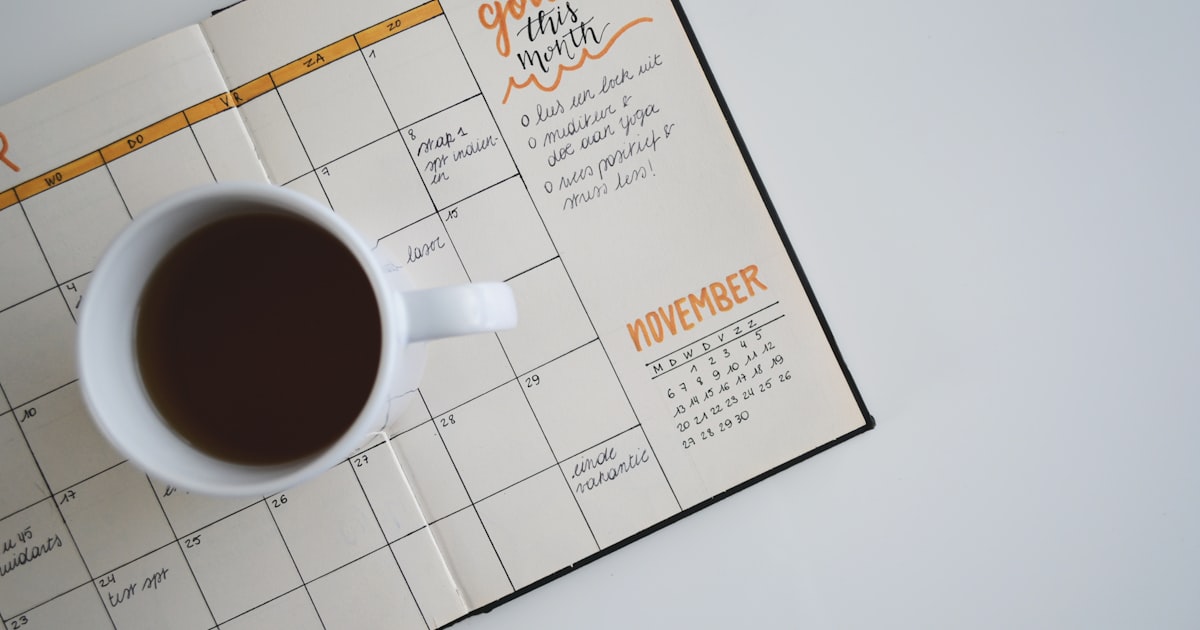
Step 4: Plan in Monthly Batches (Theme Each Month)
The most sustainable content cadence for an SME owner is monthly batching. Here's the workflow:
- End of previous month: Spend 1 hour planning the next month's content. Pick a monthly theme (e.g., "Back to School" in January, "Raya Prep" in March).
- Weekly check-in: Spend 15 minutes on Monday reviewing the upcoming week's posts. Adjust for any new developments or trending topics.
- Create in batches: Dedicate 2-3 hours once a week to shoot photos or record videos for 5-7 posts at once. This is far more efficient than creating one post per day.
- Schedule in advance: Use tools like Meta Business Suite (free), Buffer (free tier), or Later (paid) to schedule posts. This frees you from daily posting.
Monthly theming also makes your content feel cohesive. If March is "Raya Prep Month" for your home decor SME, every post ties back to preparing your home for Hari Raya — educational tips, product showcases, customer makeovers, and promotional bundles. The algorithm loves thematic consistency because it signals expertise in a niche.
Step 5: Leave Room for Spontaneity
A content calendar should guide you, not cage you. Leave 20-30% of your slots flexible to respond to trending topics, viral sounds, or last-minute business updates. In your spreadsheet, mark some days as "Flex / Trending."
For example, if you're a bakery in KL and suddenly "matcha crinkle cookies" trend on TikTok, you want the flexibility to pivot and create that content without feeling like you're "breaking" your calendar. Flexible slots give you that freedom.
6 Tools to Power Your Content Calendar
- Google Sheets / Excel: Free, simple, and collaborative. Best for SMEs on a tight budget.
- Notion: Free for individuals and small teams. Combines calendar view, databases, and notes in one tool.
- Trello: Visual kanban board. Great if you're a visual planner. Free tier is generous.
- Meta Business Suite: Free scheduling for Facebook and Instagram. Built-in analytics.
- Buffer: Schedule posts across multiple channels. Free plan covers 3 channels.
- Later: Visual Instagram scheduler with drag-and-drop calendar. Free tier available.

A Note on Content Quality vs. Quantity
Many Malaysian SME owners fall into the trap of thinking they need to post every single day. You don't. A single high-quality, valuable post per week that gets 500 meaningful engagements is worth more than 7 low-effort posts that get 5 likes each.
If you can only commit to 3 posts per week, that's fine. What matters is showing up consistently. A content calendar helps you make the most of whatever time you have — by removing the daily "what do I post?" decision fatigue.
Your 15-Minute Action Plan
Here's what you can do right now to start building your content calendar:
- Open Google Sheets and create the 8-column template from Step 3.
- Define your 5 content pillars (write them in a separate sheet tab).
- List your 2-3 active channels — delete the rest from your to-do list.
- Brainstorm 10 content ideas across your pillars — just the topic, nothing fancy.
- Schedule 2 hours this week to batch-create your first week of content.
That's it. In 15 minutes, you've gone from "posting randomly" to having a functional content system. The hard part isn't the planning — it's the consistency. But with a calendar that works for you, consistency becomes a habit rather than a struggle.
This article was written by Ryan Lim, a contributor to SMEBuddies. Ryan covers compliance, marketing, and business strategy topics for Malaysian SMEs.
Conclusion
The most successful Malaysian SMEs are those that take action on what they learn. Whether you're just starting out or looking to scale, the key is to make informed decisions based on your specific situation. Use this article as a starting point, and don't be afraid to seek professional advice when needed.
Frequently Asked Questions
1. What is the most cost-effective marketing channel for SMEs?
Social media marketing, particularly on Facebook and Instagram, offers the lowest cost per lead for most Malaysian SMEs, starting at as little as RM 10 per day.
2. How much should I spend on marketing?
A common benchmark is 5-10% of revenue. For a new business, focus on low-cost digital channels first before scaling up.
3. Do I need a marketing agency or can I do it myself?
Many SMEs start with DIY marketing using tools like Canva, Meta Business Suite, and Mailchimp. Agencies become valuable when you need to scale.
How to Create a Content Calendar That Actually Works