By Ryan Lim · November 2026
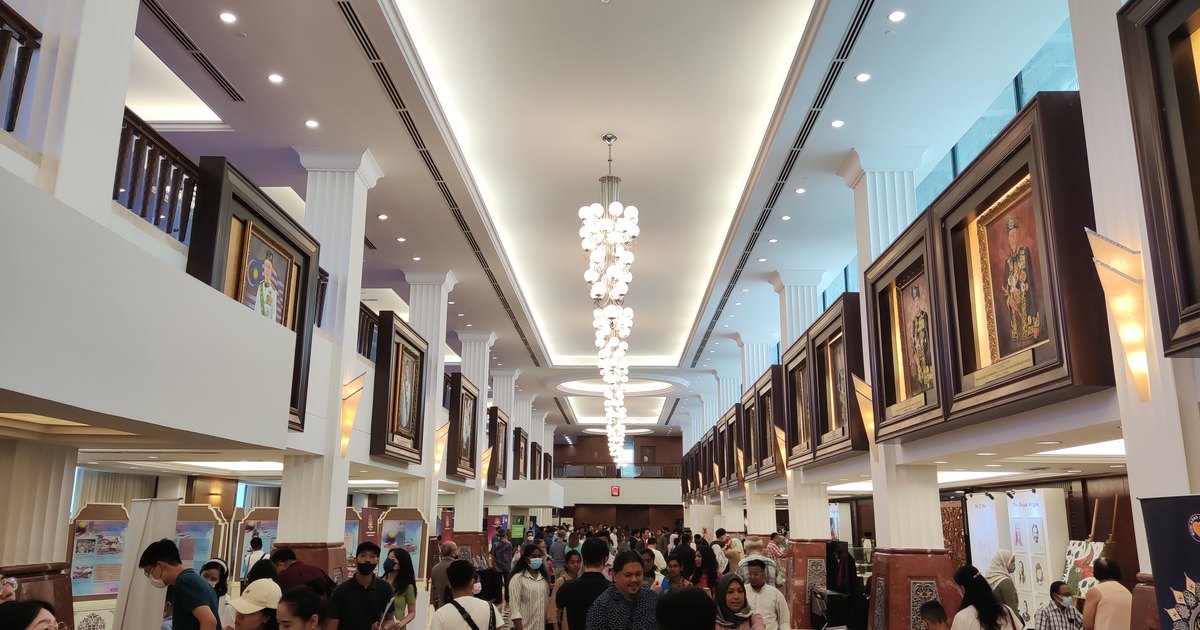
The main hall inside the Parliament building. For the next three weeks the chamber next door works through the 2027 estimates ministry by ministry. Photo: Wikimedia Commons / Wee Hong
What begins at the House today
Committee stage is the second of the three readings a Supply Bill must survive. The policy debate, which ran from 12 October, ended on 29 October with the Bill passed by voice vote. From today, the House stops arguing about the budget as a whole and starts voting on the estimates of each ministry, one head of expenditure at a time.
The calendar runs to 26 November, with a break for Deepavali: no sitting on 9 and 10 November, and committee debate scheduled for 2 to 5 November, 11 and 12, 16 to 19, and 23 to 26. The current sitting is scheduled to run 37 days, to 8 December.
How to read a committee-stage vote
At this stage an MP can question a minister about a specific line, and an amendment can be moved to cut or reallocate it. With a government majority, defeats are rare. The useful signal is not whether a vote passes but what the minister says while defending it — whether the allocation figure has changed since 9 October, and whether a programme that was announced without mechanics now has some.
That makes the winding-up speeches the part of the record worth reading. They are published in the Hansard, and they usually appear in ministry statements the same evening.
Vote 1: Entrepreneur development and cooperatives
This is where the MSME programme money sits. Budget 2027 leans on the ministry's ABCD Framework, a staged roadmap aimed at the "missing middle" — businesses too large for micro schemes and too small for capital markets — and on the declaration of 2027 as Malaysia MSME Year by minister Steven Sim Chee Keong. Samenta national president Datuk William Ng welcomed both on 10 October, calling the budget an "SME Budget" and asking for faster disbursement with fewer bureaucratic hurdles (The Edge, 10 October 2026).
What to watch: whether any programme allocation moves between 9 October and the winding-up, and whether MSME Year 2027 comes with a published delivery calendar. A year-long campaign without a calendar is a slogan.

Hands guiding a component through a machine. Manufacturing SMEs sit at the edge of several of these votes at once — grants, training and financing. Photo: Wikimedia Commons
Vote 2: Finance, and the money you actually borrow
The Finance Ministry's votes carry the RM57 billion financing and guarantee envelope for 2027, up from RM50 billion. Within it, RM32 billion of guarantees runs through Syarikat Jaminan Pembiayaan Perniagaan and Credit Guarantee Corporation, with SJPP coverage extended to mid-tier companies in all sectors, its guarantee limit raised to RM50 million and RM1 billion reserved for local mergers and acquisitions.
The same vote contains the RM10 billion SME Stabilisation Relief Facility, doubled from RM5 billion in this budget, and the RM30 million channelled through MDEC to help 4,000 MSMEs adopt AI and automation. On the facility, Bank Negara Malaysia reported RM3.8 billion approved against the first RM5 billion as at 30 September, across more than 6,800 SME accounts.
What to watch: disbursement targets rather than allocations, and whether the MDEC fund's eligibility rules are published before year end. An allocation that takes nine months to reach a bank counter is a headline, not a facility.

A calculator and a notebook on a desk. Disbursement, not allocation, is the figure that decides whether a facility reaches your business. Photo: Wikimedia Commons
Vote 3: Human resources, where the wage bill is decided
The RM2,000 minimum wage from June 2027 is the measure with the widest reach. Human Resources Minister R. Ramanan said on 16 October that the order would be the seventh made under the National Wages Consultative Council Act 2011, and that enforcement falls to the labour departments in Peninsular Malaysia, Sabah and Sarawak (Bernama, 16 October 2026). The Edge reported on 13 October that nearly 49% of the workforce sits in MSMEs exempted from the higher rate on the current wording.
The same ministry's votes carry RM8 billion of cross-ministry TVET spending, including RM3 billion through HRD Corp for three million training places and RM500 million through PTPK.
What to watch: the exemption test. "Annual sales below RM50 million" has not been defined in a published instrument, and how related companies are treated decides whether a group with several Sdn Bhds is exempt or not.

A parcel changing hands indoors. Enforcement of online selling rules sits under the domestic trade vote, and the dedicated e-commerce law has slipped to 2027. Photo: Wikimedia Commons
Vote 4: Domestic trade and the online marketplace
This vote funds enforcement of consumer protection and price rules, including online selling. There is still no dedicated e-commerce statute: the E-Commerce Bill that the Prime Minister promised on 9 October will now be tabled at the first parliamentary meeting of 2027, according to Deputy Minister Datuk Dr Fuziah Salleh (The Star, 18 October 2026). A licensing regime for platform operators, including overseas ones, is under discussion (Bernama, 14 October 2026).
What to watch: enforcement headcount and complaint-handling capacity, not new promises. If the ministry asks for more officers, that tells you where it intends to act while the Bill waits.
The tax question that is already settled
One budget argument closed before committee stage began. Finance Minister II Amir Hamzah Azizan told the House on 29 October that GST remains off the table, citing the compliance burden: nearly 700,000 businesses, or 90% of those cited, were registered under GST in 2018, against 130,000, or 1%, under SST in 2026 (The Star, 29 October 2026). He said SST collections rise from RM55.9 billion in 2025 to an estimated RM67 billion this year and RM73.3 billion in 2027, already 3% of GDP — the same share GST produced in 2017.
For an owner, that removes one planning risk for 2027: no new consumption tax to reprice for. It also means the compliance load stays where it is.
Three checks instead of three weeks of Hansard
| Check | Where | What it tells you |
|---|---|---|
| The ministry's winding-up | Hansard, or the ministry's statement that evening | Whether a programme's mechanics were described, and how |
| The final allocation | Compare with the 9 October speech | Whether the money moved, and in which direction |
| The Gazette | Federal Gazette, then agency guidelines | When you can rely on it, and on what terms |
Do not act on a debate: a statement made in committee is a commitment, not a rule. Rates, thresholds and eligibility only bind once they appear in a gazetted instrument or a published scheme guideline. Verify with the ministry, Bank Negara Malaysia or the relevant agency before changing contracts, prices or payroll — and treat anything you read here as a map to the primary record, not a substitute for it.
Conclusion
Committee stage is where a budget stops being a speech and becomes a set of numbers attached to named programmes. For an SME, the four votes to follow are entrepreneur development, finance, human resources and domestic trade — and of those, the human resources vote is the one that will change your monthly costs.
You do not need to watch the sittings. You need the winding-up speech for each ministry, the final allocation compared with 9 October, and the gazetted instrument before you commit money.
Everything else this month is noise until it is printed.
Frequently Asked Questions
1. Can the committee stage change the RM459.8 billion total?
It can change individual ministry estimates and reallocate within them, but the headline package was set at the policy stage. In practice, with a government majority, the more common outcome is a clarified programme rather than a reduced total.
2. Will the SME tax cut be voted on during committee stage?
No. Tax rates are not in the Supply Bill. They come through the Finance Bill, which follows the budget on its own timetable, and only bind once passed and gazetted.
3. Where can I read what a minister said?
The Hansard for the Dewan Rakyat is published by Parliament, and ministries usually issue a statement the same evening summarising a winding-up. Both are free, and both are more reliable than a news summary of a debate.
4. Does the Deepavali break delay the budget?
Not on the published calendar. There is no sitting on 9 and 10 November, and committee debate resumes on 11 November. The Bill still has to clear the committee stage, a third reading, the Dewan Negara and royal assent.
5. Should I delay a financing application until the budget is passed?
No, if you need working capital now. The SME Stabilisation Relief Facility is open and capped at 3.75% a year including guarantee fee until 30 June 2027 or full utilisation, and the 2027 financing envelope will not be available sooner because of a parliamentary timetable.
Ryan Lim covers business conditions, financing and markets for Malaysian SMEs at SMEBuddies. He tracks interest rates, credit conditions and the policy calendar, and translates them into decisions an owner can take with the information available that week. He is more interested in what a measure does to a cash-flow forecast than in how it is announced.
Committee Stage Opens Today: The Budget Lines an SME Should Watch