By Ashley Lu · November 2026
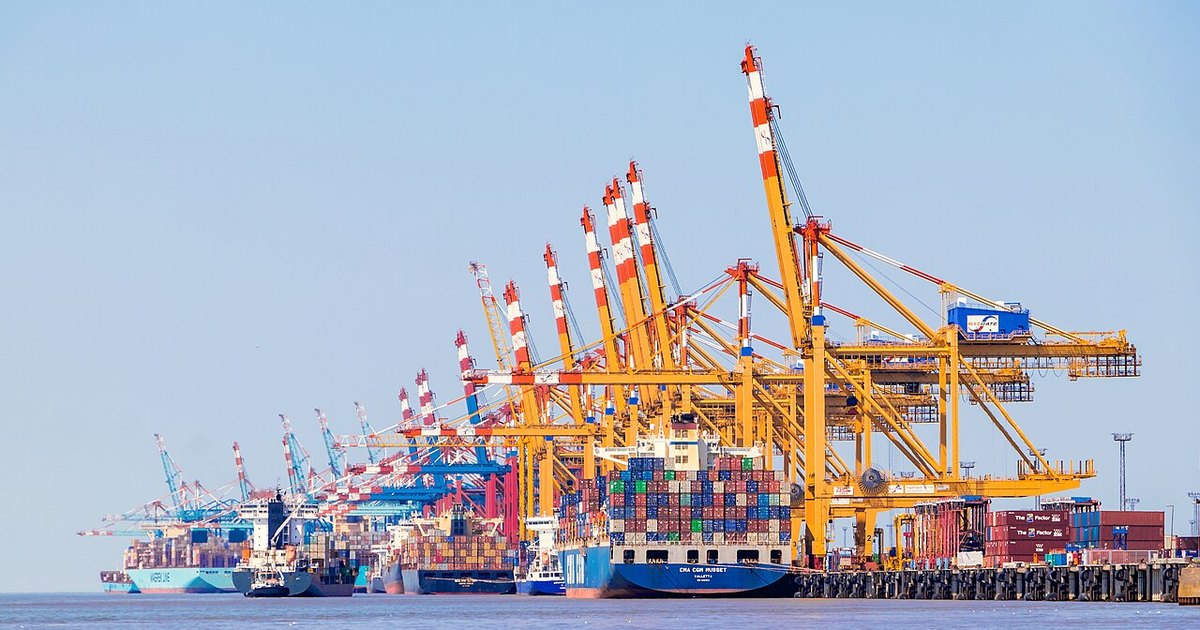
Container cranes at Bremerhaven in Germany. The terminal your Christmas stock passes through may look nothing like this, but the sequence — vessel, berth, yard, customs, haulage — is the same everywhere. Photo: Wikimedia Commons / H. Zell (CC BY-SA 3.0)
Count backwards from 25 December
Work backwards from the shelf. Christmas is Friday 25 December. School holidays start on 4 or 5 December, so family shopping begins that weekend. Most importers want stock on the shelf by 10 December to catch the two full weeks before the holiday. Unpacking, ticketing and allocation take three to five working days. Haulage from Port Klang or Penang to your store or warehouse takes one or two. Customs clearance takes one to three, longer if documents are wrong. That is already around 10 December minus a fortnight — the first week of December — and everything before that is the ocean and the factory.
What a mid-November sea order can still make
Transit time depends on the origin port, the carrier's rotation and blank sailings, so there is no published figure to plan from. Force your forwarder to commit in writing: ex-factory pickup, vessel departure, arrival at the Malaysian port, expected clearance, delivery to your door.
| Stage | Planning range to test with your forwarder |
|---|---|
| Production and packing at origin | 2 to 4 weeks, longer over the pre-Lunar New Year build-up |
| Booking and vessel departure | 3 to 10 days from cargo ready, worse in peak season |
| Ocean transit to Port Klang or Penang | Varies by origin; get the carrier's rotation in writing |
| Berth, discharge and yard release | 2 to 5 days, longer if the terminal is congested |
| Customs clearance and haulage | 1 to 3 days clearance, 1 to 2 days haulage |
| Unpacking, ticketing, allocation | 3 to 5 working days |
Add those up honestly and a mid-November sea order is a January arrival for many product categories. That is a reason to split the order and be selective about what goes on the water.
Split the order: air top-up, sea base
Air freight costs a multiple of sea freight per kilogram, so it is not a substitute — it is insurance on the twenty per cent of your range that actually pays for Christmas. Send the best sellers, the gift-boxed lines and the reorder of whatever sold out in November by air, and let the long tail travel by sea and arrive when it arrives. For each SKU, compare expected contribution per unit over the December window against the air premium per unit. If the premium eats the contribution, the SKU stays on the water.
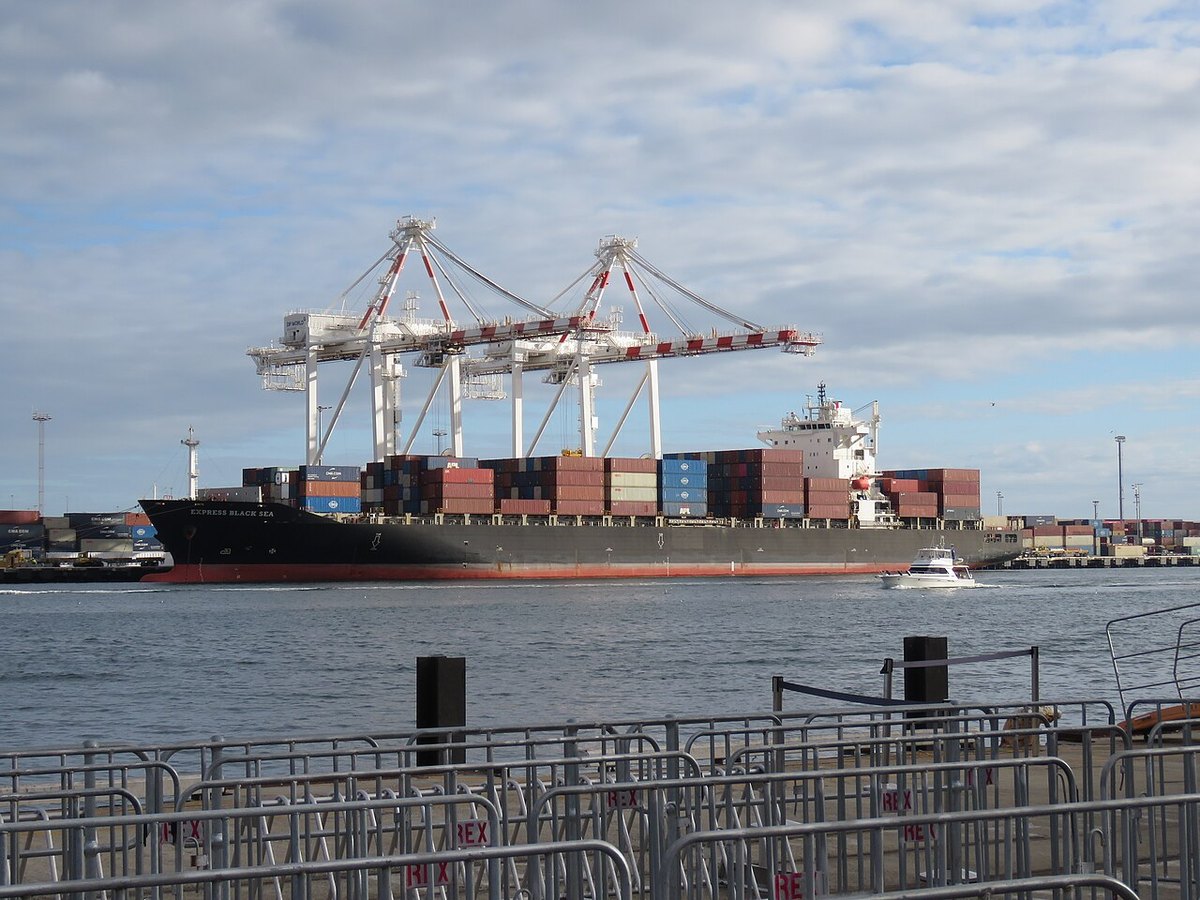
A container ship working alongside gantry cranes. One blanked sailing or one missed berth window moves your delivery date by a week. Photo: Wikimedia Commons / Calistemon (CC BY-SA 4.0)
The deposit-and-balance cash trap
Most importers work on a deposit at order and the balance before shipment or against the bill of lading. That structure puts the largest cash outflow in the same weeks as the smallest cash inflow: the balance falls due in late November or early December, the goods arrive mid-December, and the sales cash lands in the last ten days of the month — or, for card and platform sales, in January. A deposit paid in October against stock sold in December is a sixty- to ninety-day cash cycle on the busiest quarter of the year.
Two practical defences. First, negotiate the balance against documents rather than before shipment, so your money and your goods move together. Second, fund the December gap deliberately — a working capital line drawn in November is cheaper than a supplier who will not release containers, and Bank Negara Malaysia's SME Stabilisation Relief Facility remains open to affected SMEs until 30 June 2027 or full utilisation, after RM3.8 billion of its first RM5 billion allocation was approved as at 30 September 2026.
The January problem
Stock that arrives after the peak does not disappear; it becomes clearance stock. On a RM60-cost item, a 30% markdown leaves RM8.25 of contribution and a 40% markdown leaves nothing, which is the arithmetic a January clearance is fought on. Before you confirm a Christmas order, ask what the unit is worth to you in February. If the answer is "whatever I can get", the order is a bet on a shipping schedule you do not control.
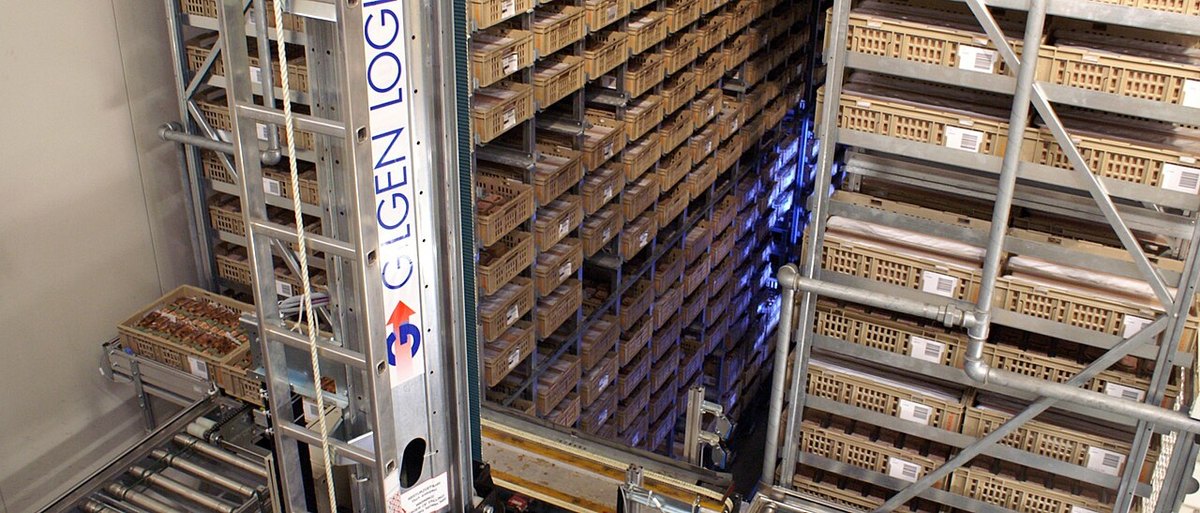
Racked stock waiting to be picked. Every week goods sit here after 25 December is a week of storage cost against a price that is already falling. Photo: Wikimedia Commons / Gilgen Logistics AG (CC BY-SA 4.0)
Documents to have ready before the vessel sails
Clearance delays are almost always paperwork delays. Have the commercial invoice and packing list matching line by line, the bill of lading or airway bill consistent with them, the correct tariff classification, and any permit or certificate your product needs — SIRIM approval or certification for regulated electrical goods, toys and similar categories, and whatever import licensing your product attracts. Keep the records supporting your sales tax and e-invoice position, and reconcile the import documents against what your accounts will report.
Freight costs are not settled yet
Port Klang Authority has proposed higher charges for less-than-container-load cargo. As reported by The Star on 22 September 2026, warehouse handling would rise from RM12 to RM16.50 a tonne with the minimum charge going from RM20 to RM30, freight forwarding terminal handling from RM55 to RM60 per cubic metre, the declaration charge from RM30 to RM35 per house bill of lading, and documentation from RM170 to RM227 per delivery order. The Federation of Malaysian Manufacturers put the effect on an illustrative 20-tonne import shipment at 31.78% for warehousing and 22.2% for forwarding. These are proposals, not rates in force — the New Straits Times reported in September that businesses should not assume the increase yet. Ask your forwarder whether your next quotation includes them, and on what basis.

A Christmas shop window in Wetherby, England. The display is the cheap part; the stock behind it is where the cash went, months earlier. Photo: Wikimedia Commons / Mtaylor848 (CC BY-SA 4.0)
The decision table
| If your forwarder's delivery date is | Do this |
|---|---|
| Before 1 December | Proceed by sea. Book the follow-up reorder now, not in December. |
| 1 to 10 December | Proceed, but plan the shelf date honestly and brief staff on what arrives when. |
| 11 to 20 December | Air-freight only the lines that pay for it. Sea stock becomes January clearance. |
| After 20 December | Do not order for Christmas. Buy locally, or plan the stock as January and February trade. |
Confirm before you commit the deposit: your forwarder's written cut-off dates for your specific origin and carrier, the full landed cost including duty, sales tax, haulage and any proposed port charge, and the delivery window in your supplier's contract — not the one in the quotation. School holiday and public holiday dates affect haulage and clearance staffing as well as footfall, so check the state gazette for your own operating state. Royal Malaysian Customs and your forwarder are the authority on classification and clearance, not this article.
Conclusion
Christmas stock is decided in mid-November and paid for in December, which is exactly why it goes wrong. The order that clears production, sails, clears customs and reaches your shelf by 10 December is the only order that earns Christmas money; everything later is a January markdown waiting to be priced.
Three habits make the difference. Get five dates in writing from your forwarder and hold them to it. Split the order so air freight protects the lines that pay for it and sea freight carries the rest. And structure the balance so your cash and your containers move together, with a working capital line agreed before you need it.
Then run the February test on every SKU before you sign: if this arrives late, what is it worth to me in February? If the answer is uncomfortable, the order is a shipping bet, not a Christmas plan.
Frequently Asked Questions
1. Is it too late to order Christmas stock in mid-November?
For sea freight from most regional origins, probably — you will be racing the calendar and the terminals. Air freight can still make it for high-contribution lines. Use the decision table: if delivery lands after 10 December, do not order for Christmas.
2. How much deposit should I pay a supplier?
There is no rule that fits every supplier relationship, but the structure matters more than the percentage. Pay the balance against documents rather than before shipment where you can, so payment and control of the goods move together, and never fund the balance from money you have not yet collected.
3. What documents cause the most clearance delays?
Mismatches between the commercial invoice, packing list and bill of lading, wrong tariff classification, and missing permits or SIRIM certification for regulated goods. Check all four before the vessel sails, not after it berths.
4. Are Port Klang's LCL charges going up now?
Not yet. Port Klang Authority has proposed higher handling, terminal, declaration and documentation charges for LCL cargo, reported by The Star on 22 September 2026. They remain proposals. Ask your forwarder whether a quotation includes them and on what basis.
5. Where can I fund the December cash gap?
Start with your own bank and an agreed working capital line drawn before the peak. Bank Negara Malaysia's SME Stabilisation Relief Facility is open to affected SMEs until 30 June 2027 or full utilisation, with RM10 billion in total allocation after the Budget 2027 top-up.
Ashley Lu covers retail, e-commerce and supply chains for SMEBuddies. She writes about the operational economics of Malaysian importing and selling — landed costs, freight timing, stock commitments and the cash cycle between a deposit and a December till — and works through the numbers with small importers so the decisions are made on figures rather than on optimism.
Christmas Stock Is Ordered Now: Lead Times, Deposits and the Cash Trap