By Ryan Lim · October 2026
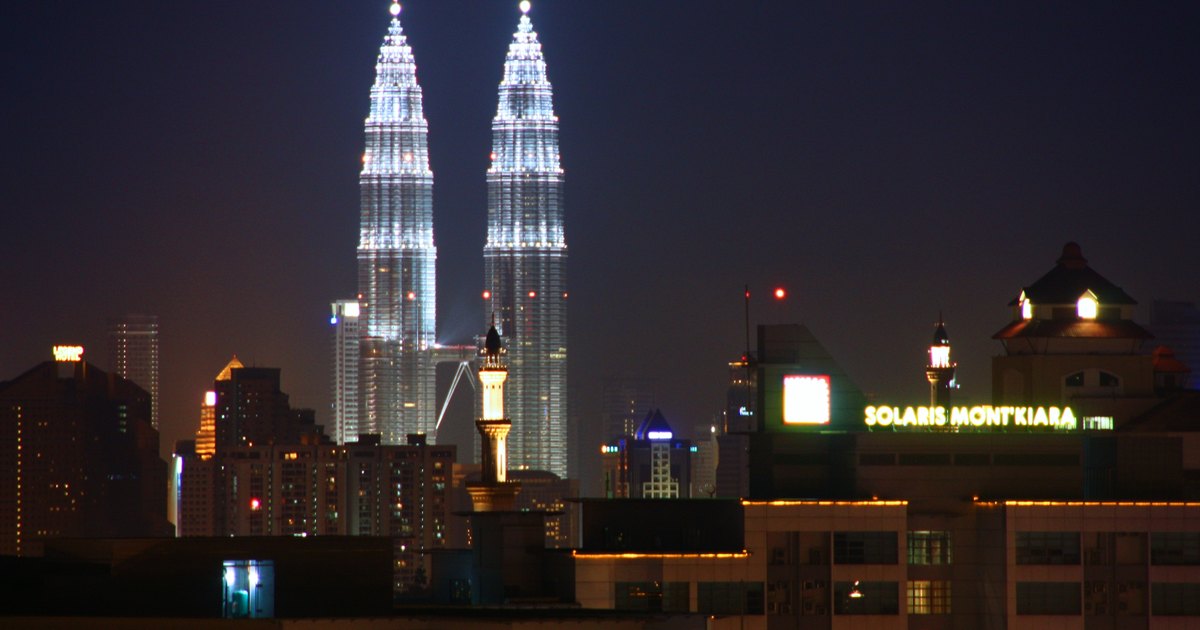
The Kuala Lumpur skyline at night. Budget 2027 was tabled on 9 October and now runs through eight days of policy-stage debate before the committee stage in November. Photo: Wikimedia Commons
The one-page version
Anwar, who is also Finance Minister, tabled the fifth Madani Budget on 9 October. His framing was to "reach for the skies while remaining rooted to the earth" — a spending plan that raises wages and widens support while keeping the fiscal deficit on its consolidation path. For the SME sector the budget is unusual in that most of the benefit arrives as cheaper money and lower taxes rather than as grants.
| Measure | What it means for an SME |
|---|---|
| RM57 billion financing and guarantees (up from RM50 billion) | More loan and guarantee capacity through the banking system, SJPP and CGC channels |
| Income tax cut of 1 percentage point | 14% on the first RM150,000 of chargeable income, 16% on RM150,001–RM600,000, from 2027 |
| Minimum wage exemption | MSMEs with annual sales below RM50 million are exempt from the RM2,000 rate due June 2027 |
| RM5 billion top-up to the SME Stabilisation Relief Facility | Takes BNM's working capital facility to RM10 billion, open until June 2027 |
| RM30 million for AI and automation | Spread across 4,000 SMEs — an average of about RM7,500 each |
| MediAsas health cover | RM200 per worker subsidy on first-year premiums for SMEs with under 75 employees |
The tax cut: worth up to RM6,000, but only if you are profitable
The MSME income tax rate falls by one percentage point. Businesses pay 14 per cent on the first RM150,000 of chargeable income instead of 15 per cent, and 16 per cent on chargeable income between RM150,000 and RM600,000 instead of 17 per cent. The government expects this to benefit 300,000 enterprises, with additional income of up to RM6,000 each.
Put that against the criticism, because both are true. The Institute of Strategic Analysis and Policy Research (Insap) worked the numbers down: a business with RM100,000 in chargeable income saves about RM1,000 a year, or roughly RM83 a month. And a tax cut only helps a business that makes a profit — the SMEs with the thinnest cash reserves, which Insap says are often the ones making little or no profit, gain nothing at all from it.
Two related measures are worth more than the rate change to a smaller business. The qualifying value threshold for each small asset eligible for capital allowance rises to RM3,000, and the accelerated capital allowance on plant, machinery and ICT equipment has been extended to 31 December 2030.
A worker assembling parts. Manufacturers can now reclaim sales tax on machinery, spare parts and equipment bought from local traders or distributors. Photo: Wikimedia Commons
The wage exemption: read the fine print before you relax
The national minimum wage rises from RM1,700 to RM2,000 a month effective June 2027, covering more than four million workers. MSMEs with annual sales below RM50 million are exempted "to allow them time to adjust their business models", in Anwar's words, and Finance Minister II Amir Hamzah Azizan confirmed afterwards that the exemption stands for now because parts of the sector remain under pressure.
Three details complicate the relief. First, the exemption is based on annual sales, and the Malaysian Employers Federation has already asked for clarity on how the RM50 million threshold is assessed, how related companies are treated and how it applies to different business structures. Second, the government is also introducing a RM2,500 minimum monthly wage for semi-skilled workers and graduates — which sets an expectation inside your workforce even where the statutory floor does not bind you. Third, government-linked investment and holding companies have committed to raising their living wage benchmark from RM3,100 to RM3,400, which will pull at your better staff.
The SME Association's president, Chin Chee Seong, called the 17.6 per cent wage increase a risk to margins, hiring, consumer prices and employment, and warned that smaller firms will still feel it through supply chains. Insap put it more bluntly: an exemption cannot stop workers from leaving for better pay.
Confirm before you rely on it: the Supply Bill 2027 was tabled on 9 October and faces eight days of policy-stage debate from 12 October, ministerial winding-up from 26 to 29 October, and committee-stage debate from 2 to 26 November before a vote. Until measures are passed and gazetted, treat the details as proposals. The sales threshold for the wage exemption, eligibility for the SME relief facility and the tax rates should all be confirmed with your accountant, LHDN, Bank Negara Malaysia or KUSKOP before you make commitments.
The money: RM57 billion, plus RM5 billion more for working capital
The financing and guarantee envelope rises to RM57 billion from RM50 billion. More immediately useful is the addition to Bank Negara's SME Stabilisation Relief Facility, which was created in May 2026 with an initial RM5 billion to cushion the economic impact of the prolonged Iran War. Budget 2027 adds RM5 billion, taking the facility to RM10 billion, and the central bank expects around 9,000 more MSMEs including microenterprises to draw on it.
As at 30 September 2026, RM3.8 billion of the original RM5 billion had already been approved across more than 6,800 SME accounts — so the first tranche is nearly exhausted. The facility stays open to affected SMEs in all sectors until 30 June 2027 or full utilisation, whichever comes first. For small contractors in grades G1 to G4 working on government projects, the CAKNA facility is being strengthened, and the RM10 nominal stamp duty on CAKNA I and II agreements has been extended to 31 December 2030.
The association's caution is worth repeating: Chin said strict eligibility rules and slow approvals remain the real barrier, and asked for stronger SJPP and CGC guarantees, simpler applications and faster decisions. Apply while your accounts still look healthy rather than after a missed payment.

A one-percentage-point tax cut is worth up to RM6,000 a year — about RM500 a month at the top of the range. Photo: Wikimedia Commons (CC0)
RM30 million for AI, and a realistic look at RM7,500
The budget allocates RM30 million to help 4,000 SMEs adopt AI and automation. Divided evenly that is about RM7,500 a business. The SME Association's view is that RM7,500 per enterprise is unlikely to fund meaningful transformation, and that AI success should be measured by cost savings, efficiency and productivity rather than adoption numbers.
That is a fair reading. RM7,500 covers a year of a mid-tier AI subscription, some integration work, or a single focused automation project — not a transformation programme. The businesses that get value from it will be the ones that pick one expensive, repetitive process and measure the hours it returns, rather than buying a platform and then looking for a job for it. RM8 billion has also been set aside for TVET, with the association pushing for industry participation in curriculum design so that training matches what electrical and electronics, precision manufacturing and logistics employers actually need.
Health cover, credit cards and the E-Commerce Bill
Three smaller measures will touch most SMEs. MediAsas, a voluntary basic medical and health insurance plan with standardised hospital charges, launches in January 2027; for SMEs with fewer than 75 employees the government will subsidise the first-year premium by RM200 per worker, capped at 50 employees per company, which the government expects to reach up to 200,000 SME workers. EPF members under 55 can pay premiums from Akaun Sejahtera, and premiums qualify for income tax relief. Separately, RM40 million is allocated for MediAsas vouchers for employees of SMEs with fewer than 75 workers.
Commercial banks began offering basic credit cards in phases from October 2026 — no rewards or cashback, a simplified structure, and interest or profit capped at 14 per cent a year, with existing cardholders allowed to transfer eligible balances. And the Prime Minister said an E-Commerce Bill will be tabled at the next parliamentary sitting to strengthen accountability among online platforms and sellers, alongside a review of enforcement against foreign e-commerce competitors. The Bill's contents have not been published, so treat it as a deadline to get your listings, product documentation and tax paperwork in order rather than a known set of rules.
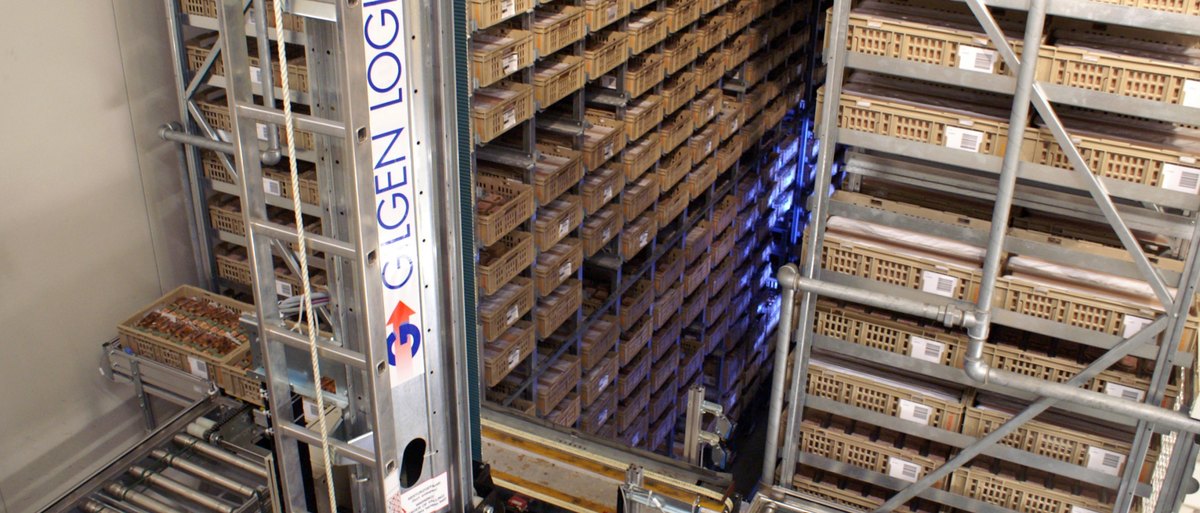
Automated small-parts storage. Budget 2027 keeps the accelerated capital allowance on plant, machinery and ICT running to December 2030. Photo: Wikimedia Commons
What to do in the next 60 days
Do not wait for the vote to prepare. The parliamentary committee stage runs through November, which means the practical window to act is now — and two of the most useful items, the SME relief facility and the capital allowance extension, are already in force or continuous.
First, work out what the tax cut is actually worth to you using this year's chargeable income, then decide whether it funds equipment, a wage adjustment or simply stays in reserves. Second, if cash flow is tight, assemble the documentation for a working capital facility now — bank statements, management accounts, an e-invoice compliant sales record and a 13-week forecast — rather than waiting until the first tranche of the relief fund is fully committed. Third, map the June 2027 wage change even though you are exempt: model a 10 to 15 per cent increase for your lowest-paid tier and see what it does to your margin, because that is the number your staff will be comparing against.
Fourth, before 31 December, tidy the records that support every claim you intend to make: fixed asset register, stock write-offs, supplier invoices, and the capital allowance documentation for anything you bought this year. Fifth, decide on AI with a cost line attached, not a demo — the RM30 million across 4,000 businesses will not stretch far, and the queue will be long.
Conclusion
Budget 2027 is better understood as a cash-flow budget than a growth budget. The measures that will actually reach a small business are the RM10 billion relief facility, the extended capital allowance, the RM10 stamp duties, and the wage exemption that buys 12 to 18 months to prepare for RM2,000 — not the tax cut, which is worth RM500 a month at most and nothing at all to a loss-making firm.
The criticism from the associations deserves attention rather than dismissal. Samenta called it an SME Budget and welcomed the framework; the SME Association welcomed the intent but said the cumulative cost of doing business remains the hurdle; Insap said the government identified the right problems but not the root cause. All three can be right at once, and an owner's job is not to settle the argument but to see which measure applies to their own numbers.
Start with the cash-flow forecast, not the tax table. The money available this quarter is working capital and allowances, and both are decided by documents you can prepare this month.
Frequently Asked Questions
1. When does the SME tax cut take effect?
The one-percentage-point reduction applies from year of assessment 2027 — 14 per cent on the first RM150,000 of chargeable income and 16 per cent on RM150,001 to RM600,000. It affects 2027 profits, not the year you are closing now, and only businesses that are in scope as MSMEs benefit.
2. My sales are under RM50 million — am I automatically exempt from the RM2,000 minimum wage?
The exemption is stated for MSMEs with annual sales below RM50 million, effective when the new rate starts in June 2027. The assessment method, treatment of related companies and application across different business structures are still being clarified by the government. Confirm your position with your accountant and the Ministry of Human Resources before you plan around it.
3. How do I get money from the SME relief facility?
It is a Bank Negara Malaysia facility channelled through participating banks, aimed at SMEs affected by the economic impact of the Middle East conflict. Expect to provide bank statements, management accounts, statutory filings and a cash-flow forecast. Apply while your account conduct is still clean — RM3.8 billion of the original RM5 billion was already approved by 30 September 2026.
4. Is the RM7,500 for AI per SME guaranteed?
No. The budget allocates RM30 million for 4,000 SMEs, which averages RM7,500 each, but the eligibility rules, application channel and disbursement schedule have not been published. Treat it as a programme to watch, not a budget line you can spend.
5. What is the single most useful thing in this budget for a small business?
For most SMEs it is cheaper working capital and the extended capital allowance, with the wage exemption as a planning window. If your cash cycle is tight, the RM10 billion relief facility and the RM10 stamp duty on P2P and CAKNA agreements are the measures that change your month-to-month position.
Ryan Lim covers business conditions, financing and markets for SMEBuddies. He writes about how national policy and economic shifts land on Malaysian small businesses — budgets, lending, costs and trade — translating announcements into the numbers owners actually plan around. He is more interested in what a measure is worth in ringgit than in how it reads in a speech.
Budget 2027: What Malaysian SMEs Actually Get From the RM57 Billion Package