By Ryan Lim · November 2026
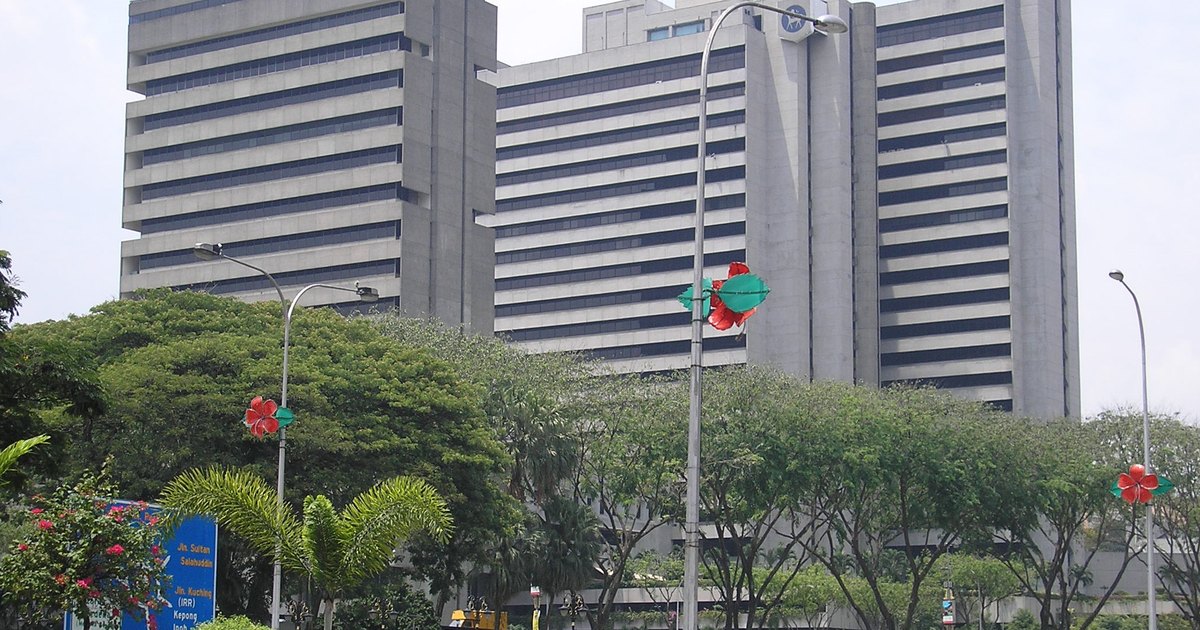
Bank Negara Malaysia's headquarters in Kuala Lumpur. The committee's statement is published on the central bank's site shortly after the meeting ends. Photo: Wikimedia Commons / Two hundred percent, CC BY-SA 3.0
Published at 9am, ahead of the 3pm announcement. This article does not state an outcome it cannot know. It prices a hold and a 25 basis point rise in ringgit, and sets out what to do under either. Bank Negara Malaysia publishes the decision and full statement at about 3pm; check the statement, not this page.
What is being decided today
The Monetary Policy Committee meets for the sixth and final scheduled time this year, with the statement due at about 3pm. The Overnight Policy Rate has been 2.75% since 9 July 2025, when it was cut from 3.00%. Every meeting since has held, seven in a row, the last on 3 September 2026.
The backdrop is unusually balanced. September inflation rose 1.8% year on year, below August's 1.9% (The Edge Malaysia, October 2026). Growth has been stronger than expected: 5.7% in the first half, and a 5.3% advance estimate for the third quarter published on 16 October. Energy-driven cost pressure remains the committee's stated worry. Soft inflation, firm growth and imported cost risk is exactly the setting where reasonable people disagree.
Scenario A: a hold at 2.75%
If the rate is held, nothing on your loan book changes this month: the SBR-pegged facility keeps its rate, instalments stay put, and the decision moves to the first meeting of 2027.
The signal would be that the committee wants more evidence that energy costs are passing through to consumer prices before moving. For the ringgit a hold is mildly negative against a tightening dollar, but rarely decisive. For a borrower it buys one more quarter at the current cost of money.
A hold is not a floor: it does not remove a hike in January.
Scenario B: a rise to 3.00%
If the committee raises by 25 basis points, the SBR moves by the same 25 points, and banks typically announce revised base rates within days for application about a week later. Your spread stays; your all-in rate rises by a quarter of a point.
The signal would be that the balance of risks has tipped towards inflation and that normalisation should start now. UOB Global Economics and Markets Research has argued exactly this, expecting 3.00% at this meeting followed by an extended pause; Nomura and ANZ have also called a November move.
The difference in ringgit
| Facility | Hold at 2.75% (rate 4.75%) | Rise to 3.00% (rate 5.00%) | Monthly difference | Annual difference |
|---|---|---|---|---|
| RM300,000, 5 years | RM5,627.07 | RM5,661.37 | +RM34.30 | +RM411.56 |
| RM500,000, 7 years | RM7,008.37 | RM7,066.95 | +RM58.59 | +RM703.04 |
| RM1,000,000, 10 years | RM10,484.77 | RM10,606.55 | +RM121.78 | +RM1,461.33 |
| RM250,000 overdraft, fully drawn | RM1,250.00 interest | RM1,302.08 interest | +RM52.08 | +RM625.00 |
The assumptions are a reducing-balance term loan, a fixed spread of 2.00 percentage points over the SBR, no fees and no change to tenure; the overdraft is priced at 6.00% rising to 6.25%. Your letter of offer governs, and Islamic financing uses a profit rate with different mechanics.
Kuala Lumpur at night. A quarter-point change is felt twice: once in the instalment, and once in what the ringgit does to imported input prices. Photo: Wikimedia Commons
What either outcome means for 2027
The more useful question is the shape of next year, not today's number. Most houses see 3.00% at some point in 2027 rather than a cycle: RHB Research expects a 25 basis point rise in the first half, TA Research sees a modest rise in 2027 if global central banks tighten further, and even UOB, which expects the move today, forecasts an extended pause at 3.00%. In the Reuters poll around the September meeting, 19 of the 26 economists giving longer forecasts saw 2.75% through the end of 2027.
Plan for a band of 2.75% to 3.25%, not for a tightening cycle. Price new floating debt with about 50 basis points of headroom and do not restructure around a forecast.
The ringgit and your imported inputs
A higher OPR usually narrows the interest rate gap with the dollar and tends to support the ringgit, which lowers the ringgit cost of imports with a lag. The dollar was trading at roughly RM4.08 in mid-October 2026, and the ringgit's direction has mattered more to input costs this year than the policy rate has.
Be honest about the ordering: freight, insurance and energy prices driven by the Middle East conflict have moved landed costs far more than a quarter point of interest, which is the reason the SME Stabilisation Relief Facility exists at all. If your costs are import-driven, a rate rise is a second-order problem next to your next shipment.
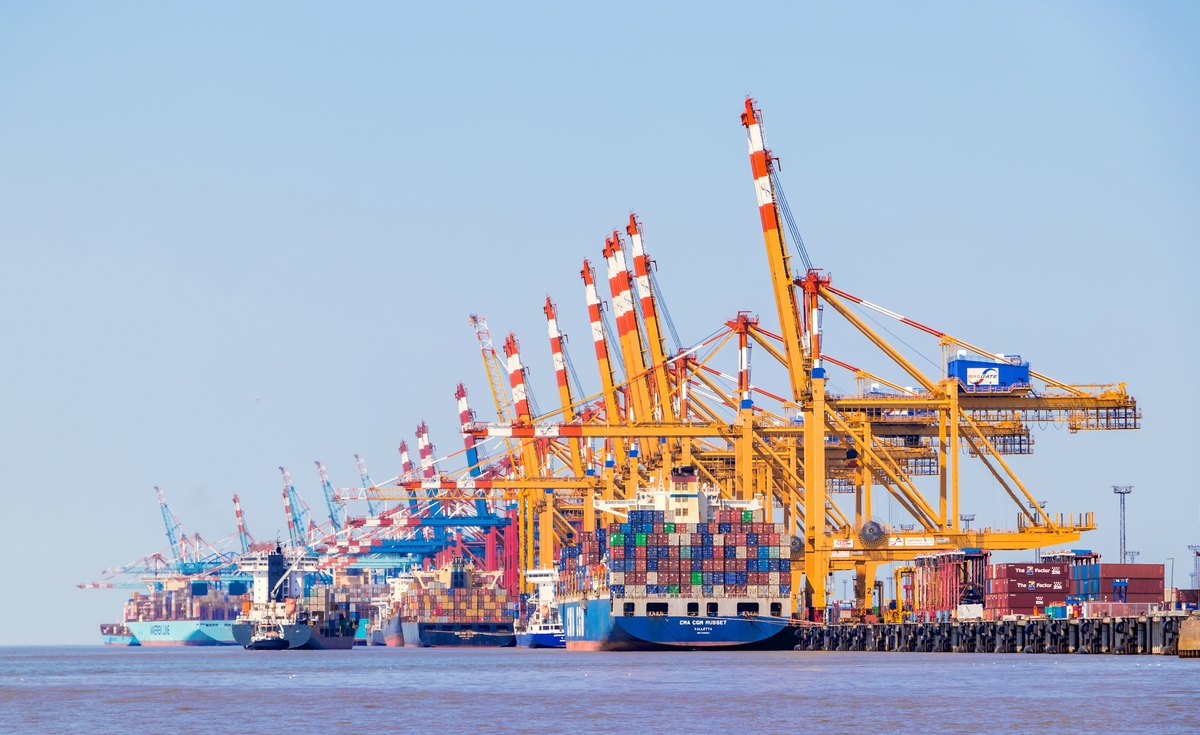
Container cranes at Bremerhaven in Germany. For an importer, freight and insurance have moved landed costs more than any single policy rate decision. Photo: Wikimedia Commons
Your January-to-March borrowing calendar
| When | What to do |
|---|---|
| December 2026 | Assemble the file: latest accounts, six months of bank statements, order book and a one-page cash-flow forecast. Ask for pre-approval now. |
| January 2027 | Draw working capital as needed, not in one lump. Confirm your bank has 2027 SJPP or CGC guarantee quota before assuming a guaranteed facility. |
| February 2027 | Close the 2026 accounts early. Credit decisions run on the most recent set of numbers. |
| March 2027 | If you want the 3.75% facility, apply now. RM3.8 billion of its first RM5 billion was approved in roughly four and a half months, and it closes on 30 June 2027 or on full utilisation. |
The 2027 envelope is larger: RM57 billion in financing and guarantees, including RM32 billion through SJPP and CGC, with SJPP extended to mid-tier companies and its guarantee limit at RM50 million. Allocations, not approvals — the bank still decides.

A calculator and a notebook. Working out your own exposure beats waiting for a forecast to be right. Photo: Wikimedia Commons
Two things to do this week, whatever was decided
First, find the reference rate clause in every facility and write the rate, spread and reset mechanism on one page. Most owners do not know which loans are floating until the instalment changes.
Second, decide in advance what you would do if the rate were 50 basis points higher by December 2027. If the answer is a price increase, a contract renegotiation or a smaller capex plan, start that conversation now while you have room to be calm about it.
Confirm with the authority: the decision, the statement and any change to base rates are published by Bank Negara Malaysia and by your bank. This is arithmetic on stated assumptions, not a forecast or financial advice, and the 2027 envelope and guarantee schemes remain subject to their own eligibility rules and each bank's credit assessment.
Conclusion
By the time you read this, the answer is public and takes one line in a statement. What should take longer is your own arithmetic: the outstanding balance, the remaining tenure, the spread, and what a quarter point does to your monthly number.
On representative SME facilities the difference between 2.75% and 3.00% is RM34 to RM122 a month — survivable, but not invisible on a thin margin. The decision that matters more is whether you enter 2027 with your file ready, your guarantee quota confirmed and your cheap working capital applied for before June.
Do that in December and January, and today's number becomes a detail rather than a disruption.
Frequently Asked Questions
1. Has Bank Negara announced the decision yet?
At the time this article was published, at 9am on 5 November 2026, no. The statement is normally released at about 3pm on the day of the meeting. Check the central bank's website for the actual decision and wording.
2. When would a rate change hit my instalment?
Banks usually announce revised base rates within days of the decision and apply them from a stated effective date, often around a week later. Your bank's notice gives the date that applies to your facility.
3. Should I fix my rate before the announcement?
Only if your margin cannot absorb a further rise and the fixed rate on offer is reasonable relative to floating. Fixing on the morning of a decision is usually too late to get a good price, and the fees can exceed the saving.
4. Is a hike bad for my export business?
Not necessarily. A higher rate tends to support the ringgit, which helps with imported inputs but makes exports slightly less competitive on price. For most SMEs the freight and energy cost picture matters more.
5. What is the deadline for the 3.75% working capital facility?
30 June 2027, or earlier if the RM10 billion allocation is fully used. Given that RM3.8 billion of the first RM5 billion was approved by 30 September 2026, applying by March is the safer plan.
Ryan Lim covers business conditions, financing and markets for Malaysian SMEs at SMEBuddies. He tracks interest rates, credit conditions and the policy calendar, and translates them into decisions an owner can take with the information available that week. He is more interested in what a measure does to a cash-flow forecast than in how it is announced.
BNM's Decision Is In: What the 2026 Rate Setting Means for 2027 Borrowing