By Low Kok Ping · November 2026
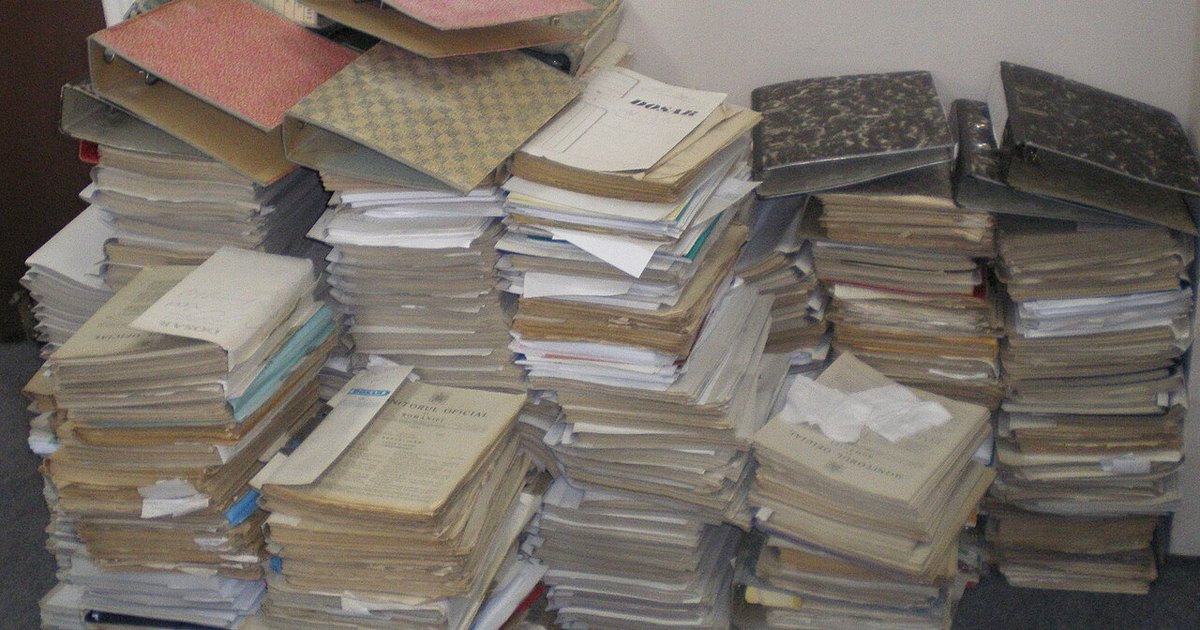
Stacks of files. A receivables position that lives only in someone's memory is the one that fails an application or a dispute. Photo: Pizarros, Wikimedia Commons, CC BY-SA 3.0.
Why this week leaks cash
Nothing about a four-day break creates bad debt. What it does is bunch everything into a shorter week while removing the people who normally approve things. Three mechanisms do the damage.
First, approval chains pause. A payment run needs three signatures; two of those people were away; the run slips a week, and every invoice in it slips with it. Second, bank processing bunches: a weekend followed by a public holiday pushes clearing into Tuesday and Wednesday. Third, your own staff are on leave, which is precisely when nobody is chasing the overdue list.
Then comes the quiet part. Some customers who were already slow will use the holiday as a reason, and it will sound reasonable. A customer with a cash problem and a customer with a payment habit problem produce the same sentence and need opposite responses.
The five days
Day one is Tuesday 10 November, not Monday — Monday is the replacement holiday in most states, and in Group B states Tuesday may be thinner because schools are closed. Plan five working days from Tuesday, running into the following Monday.
| Day | Action | Output you should have by 5pm |
|---|---|---|
| Tue 10 Nov | Run the ageing report; list the top ten overdue accounts by value, not by age | One page with customer, amount, days overdue, last contact, owner |
| Wed 11 Nov | Send statements to every account over terms, each with a specific due date and the invoice numbers | Sent log with the date and the contact it went to |
| Thu 12 Nov | Telephone every account over 30 days. Calls, not emails | Notes on what was said, who promised what, and by when |
| Fri 13 Nov | Escalate the three largest to a written payment plan with dates and amounts | Signed or acknowledged plan, or a decision to stop supply |
| Mon 16 Nov | Reconcile receipts against the plan; update the 13-week cash forecast | Revised forecast and a short list of accounts for next week |
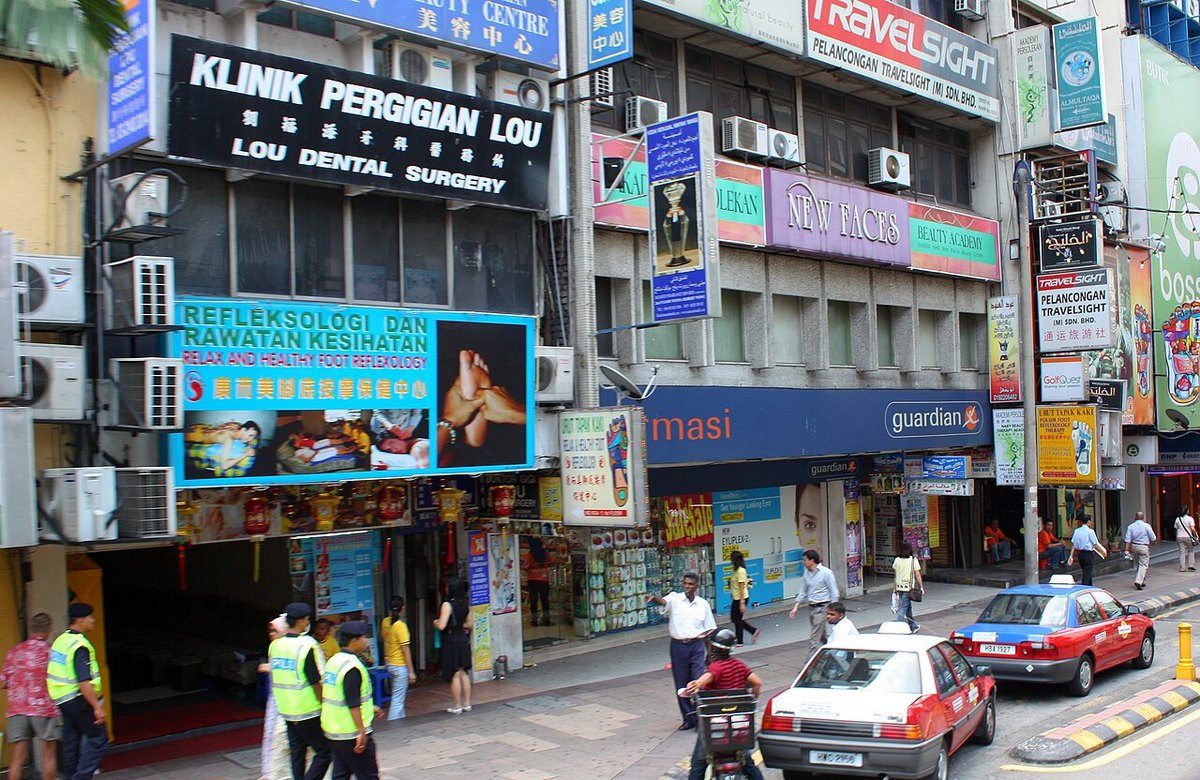
Shophouse businesses on a Kuala Lumpur street. Most of them extend credit to someone; few have written terms that say what happens when it is not paid. Photo: Andy Mitchell, Wikimedia Commons, CC BY-SA 2.0.
Calls, not emails
An email is a record; a call is a decision. For anything over 30 days, the call is what produces a date. Ask three questions in this order: is the invoice approved, when is the next payment run, and what do you need from me to get into it. Then repeat the date back and confirm it in writing the same day.
The most common blockage is administrative: a missing purchase order number, an invoice raised to the wrong entity, a delivery note never signed. Those are fixed in a five-minute call and never fixed by a reminder email.
When to stop supplying
Set the trigger before the emotion arrives. A workable rule: supply stops when an account is 60 days past terms with no agreed plan, or when a promised payment date is missed twice. Apply it to the largest account as readily as the smallest, because the largest is where the loss is.
Stopping supply is a commercial lever, not a punishment, and it works better with warning. Tell the customer in writing that supply pauses on a named date unless a plan is agreed, and keep the door open to a partial arrangement — half the order on cash, half on terms.

A shophouse in Kuala Pilah. Small trading businesses are where receivables slip quietly, one unpaid invoice at a time. Photo: Wikimedia Commons, CC BY-SA 4.0.
Interest, terms and what the law does not give you
Malaysia has no general statutory late-payment interest rate for ordinary commercial invoices. If you want interest, it has to be in your terms of trade, agreed before the invoice, and expressed clearly enough to be enforceable. Many SMEs discover in a dispute that their invoice footer's "1.5% per month" was never part of the contract.
Construction is the exception: the Construction Industry Payment and Adjudication Act 2012 provides a statutory payment and adjudication regime for construction contracts, including interest on unpaid progress payments. It does not reach ordinary trading invoices. If you obtain judgment, the court can award interest on the sum — a remedy after litigation, not a rate that attaches to your invoice.
The practical alternative to interest is a discount: two per cent off for payment within seven days costs less than the borrowing you would otherwise do, and it converts a chase into a choice.
A cash problem or a habit problem
Both look the same on an ageing report. They behave differently under pressure. A customer with a cash problem will engage, explain, offer a partial payment, and keep to a plan once agreed. A customer with a habit problem will agree warmly, miss the date, avoid the call, and pay only when supply stops.
A useful test: ask for a small immediate payment against the oldest invoice. A cash-constrained but honest customer usually finds something; a habit problem usually finds a reason. Record the answer, because it decides how much credit you extend next quarter.

The ageing report on Monday, the forecast on Friday. Both are documents a bank will ask for. Photo: Wikimedia Commons, CC0.
What a clean ledger is worth at the bank
Receivables discipline is no longer just a cash-flow habit; it is underwriting. A working capital application is assessed on the quality of the book: who owes you, how old the debt is, whether promises are documented, and whether the same customers pay late every month.
There is a facility worth knowing about here. Bank Negara Malaysia's SME Stabilisation Relief Facility was doubled in Budget 2027 to RM10 billion, after RM3.8 billion of the initial RM5 billion allocation was approved as at 30 September 2026, benefiting more than 6,800 SME accounts, according to BNM's 9 October 2026 statement. It remains open to affected SMEs in all sectors until 30 June 2027 or full utilisation. Budget 2027 also raised the financing and guarantee envelope to RM57 billion for 2027, from RM50 billion.
None of that replaces a clean ledger. A bank looking at two otherwise identical applications will fund the one where the top ten debtors are documented, aged and contacted — and it will ask why the other one is not.
Confirm before you act: what your own terms of trade actually say about interest and suspension of supply; your bank's current requirements and the participating institutions for the SME Stabilisation Relief Facility, which are listed by Bank Negara Malaysia; and, for construction claims, whether the Construction Industry Payment and Adjudication Act 2012 applies to your contract. Your lawyer, your bank and BNM are the authorities; this article is operating practice, not legal advice.
Conclusion
The week after a long break is not the week to hope. It is the week to run the ageing report, put statements out with real dates, and pick up the phone to anything over 30 days. Five days of disciplined follow-up recovers more cash than a month of reminder emails.
Decide the stop-supply rule in advance, in writing, and apply it to your biggest customer first. Ask for interest only if your terms actually provide for it; otherwise use a settlement discount, which is cheaper and works faster.
And keep the file clean enough that a bank could read it. The RM10 billion facility and the RM57 billion financing envelope are real money available until mid-2027 — but they flow to businesses whose receivables position can be evidenced.
Frequently Asked Questions
1. Why do payments always slip after a public holiday?
Three reasons: approval chains pause while signatories are away, bank clearing bunches into the days after the holiday, and your own collections staff are on leave. The effect is usually one to two weeks of delay, concentrated in the accounts that were already slow.
2. Can I charge interest on overdue invoices?
Only if your terms of trade provide for it and were agreed with the customer. Malaysia has no general statutory late-payment rate for ordinary commercial invoices. Construction contracts are different, because the Construction Industry Payment and Adjudication Act 2012 applies.
3. Should I stop supplying a customer who is 45 days late?
That depends on your own rule, but a workable threshold is 60 days past terms with no agreed plan, or two missed promised dates. Give written warning with a named date, and offer a partial arrangement to keep the relationship alive.
4. Does a payment plan need to be in writing?
Yes, even a short one — dates, amounts, and what happens if a date is missed. It is the difference between a promise and a record, and it is what a bank will ask to see if you apply for working capital later.
5. Is the SME Stabilisation Relief Facility still open?
Yes. Following Budget 2027 it stands at RM10 billion, open until 30 June 2027 or full utilisation, and Bank Negara Malaysia reported RM3.8 billion approved as at 30 September 2026. Check the participating banks and current criteria with BNM before applying.
Low Kok Ping covers financing, cash flow and grants for Malaysian SMEs at SMEBuddies. He works with owners on the numbers behind working capital — receivables, facility applications and the forecasts banks actually read. His writing focuses on the operating habits that decide whether a sound business can fund itself through a slow quarter.
Back After Four Days Off: The Week Your Receivables Slip