Amazon's AI Warehouse Revolution: 1 Million Robots, Conversational AI, and What It Means for SMEs
From Proteus robots that take spoken orders to Vulcan's sense of touch — Amazon's logistics transformation is reshaping e-commerce and small business logistics worldwide.

Amazon wants warehouse workers to stop programming robots and start talking to them.
At an event near London on June 4, 2026, the e-commerce giant unveiled an upgraded version of Proteus — its autonomous warehouse robot — capable of responding to employees' conversational instructions. Workers no longer need predefined commands. They simply describe the task, and the AI figures out the priority, route, and timing. "You tell it what needs to be done. It figures out the rest," said Scott Dresser, VP of Amazon Robotics.
This announcement marks a bold new chapter in Amazon's decade-long automation journey. The company now operates over one million robots across its global fulfillment network — nearly one robot for every human employee — and plans to invest €10 billion (US$11.6 billion) into expanding and modernizing its European operations alone.
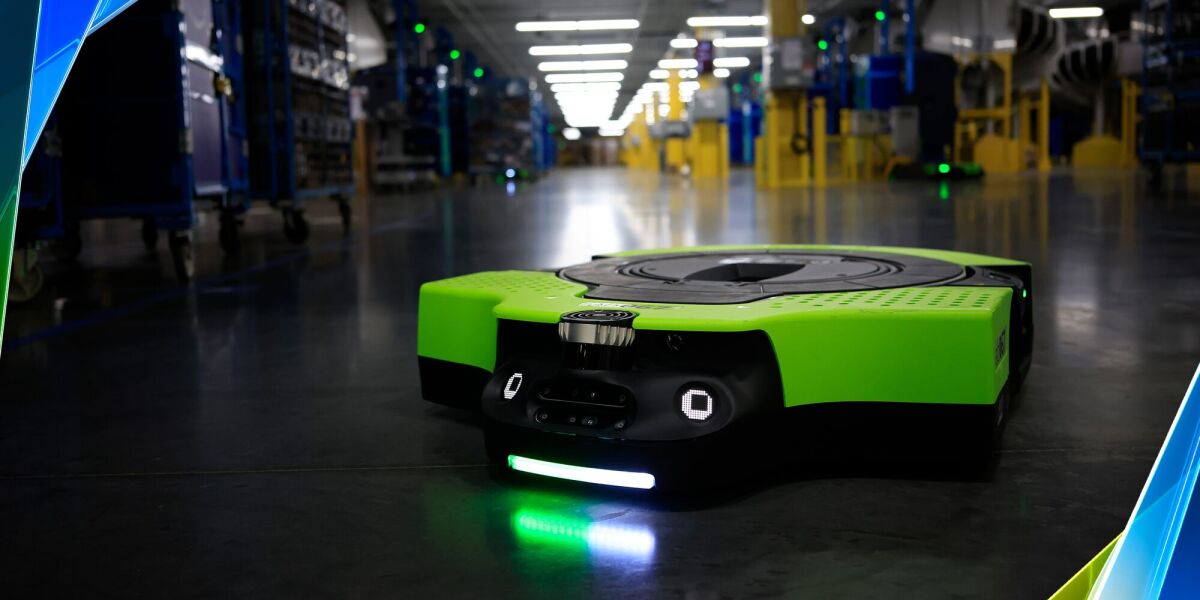
Credit: Amazon | Amazon Proteus robot moving carts in fulfillment center
Meet the Robot Fleet: Proteus, Vulcan, and Beyond
Amazon's warehouse automation isn't a single robot — it's an entire ecosystem of specialized machines working in concert.
Proteus is Amazon's fully autonomous mobile robot. The original version moved heavy carts (up to 400kg / 882 lbs) in dock areas across 25 US facilities. The 2026 upgrade is a leap forward: it understands natural language commands, plans its own routes, and prioritizes tasks without human intervention. It will reach European fulfillment centers in early 2027 and can now move across entire warehouse floors instead of staying in designated zones.
Vulcan, announced in May 2025, is perhaps even more impressive. Equipped with force sensors and AI-powered cameras, Vulcan has a sense of touch — it can feel items to determine how much pressure to apply, preventing damage. Its arm, described by Amazon as "a ruler stuck onto a hair straightener," rearranges items inside storage compartments. With suction-cup and camera systems, it picks roughly 75% of items in Amazon's inventory. It's already operational in Spokane, Washington and Hamburg, Germany, having processed over half a million orders.
Other robots fill specific niches: Sparrow handles individual item picking, Cardinal sorts packages, Robin processes inbound inventory, Sequoia manages bulk storage, STARK handles tote systems (deploying to 15 European sites by 2027), and Hercules and Titan move heavy payloads across fulfillment center floors.
The new Shreveport, Louisiana fulfillment center — Amazon's most advanced — uses eight different robot models and deploys 10 times more robotics than legacy sites.
The AI Brain Behind the Machines
What makes Amazon's 2025-2026 automation push different is the AI layer connecting everything. In July 2025, Amazon announced a new generative AI foundation model purpose-built for its robotics fleet. This model allows robots to learn from their own failures, adapt to new situations, and coordinate with each other dynamically.
Proteus's natural language capability is powered by this same AI foundation. Instead of requiring engineers to write code for every new task, warehouse workers can now give spoken instructions — the same kind of conversational interaction users have with ChatGPT, Claude, or Alexa. This dramatically lowers the barrier to robot deployment and makes warehouse automation accessible to a broader workforce.
On the consumer side, Amazon is also rolling out Alexa+ to 10 additional countries in 2027, and its same-day grocery delivery service now reaches over 2,300 US cities plus parts of Tokyo.
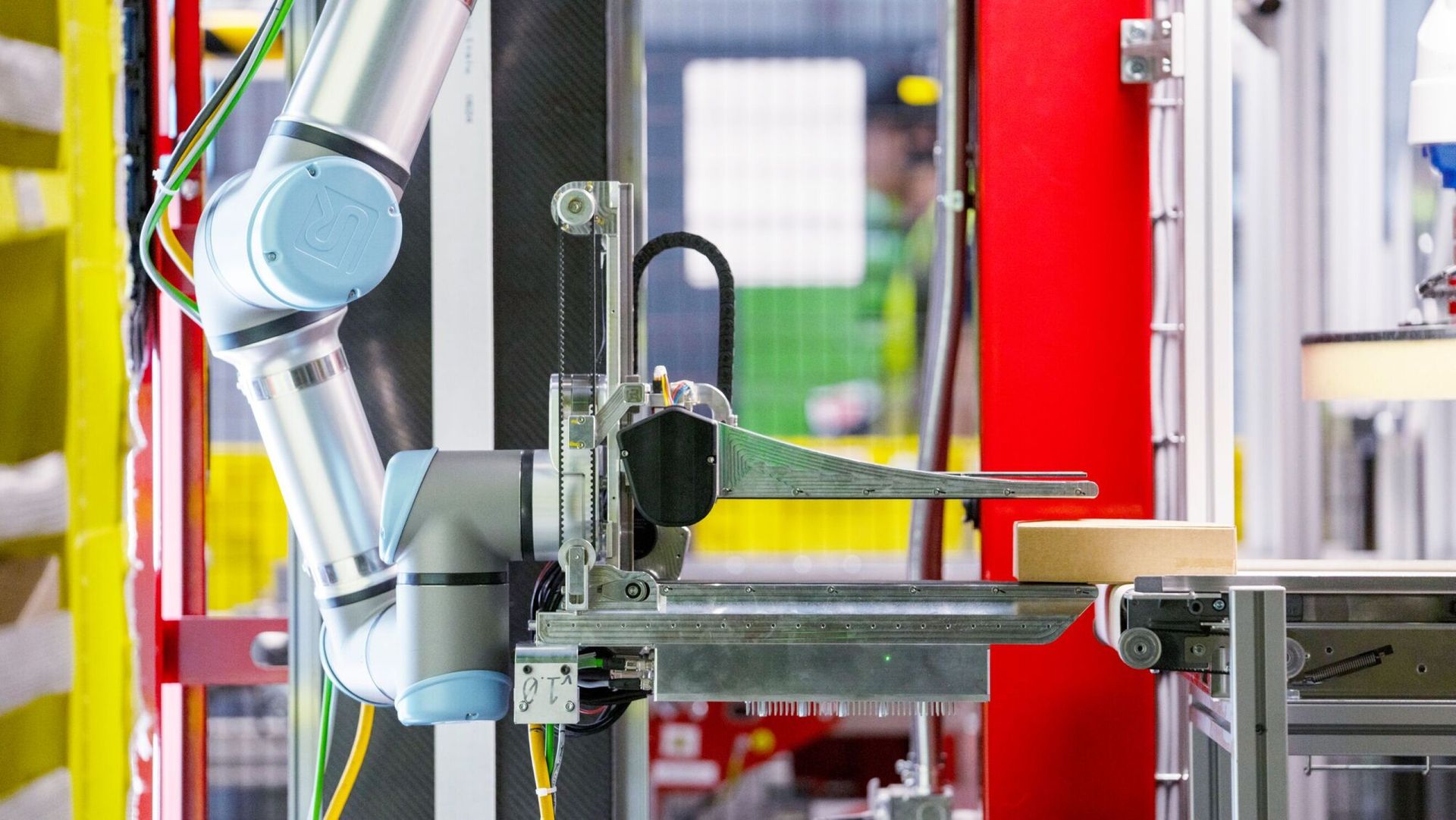
Credit: Amazon | Vulcan robot using force sensors to pick items from storage pods
What This Means for Malaysian SMEs
Amazon's robotics transformation has direct implications for small and medium businesses in Malaysia, whether they sell on Amazon or not.
For Amazon sellers: Faster fulfillment means tighter delivery windows and higher customer expectations. Amazon's same-day and next-day delivery capabilities, powered by AI-optimized warehouse operations, set a benchmark that all e-commerce players eventually must match. Malaysian sellers on Amazon Global can expect faster inventory turnover and lower storage costs as AI predicts demand more accurately.
For local logistics: While Malaysian SMEs may not deploy million-robot fleets, the technology is trickling down. Warehouse robotics companies like GreyOrange, Locus Robotics, and Geek+ are already active in Southeast Asia. The same AI models — route optimization, inventory prediction, automated picking — are becoming available as affordable SaaS solutions for mid-sized warehouses.
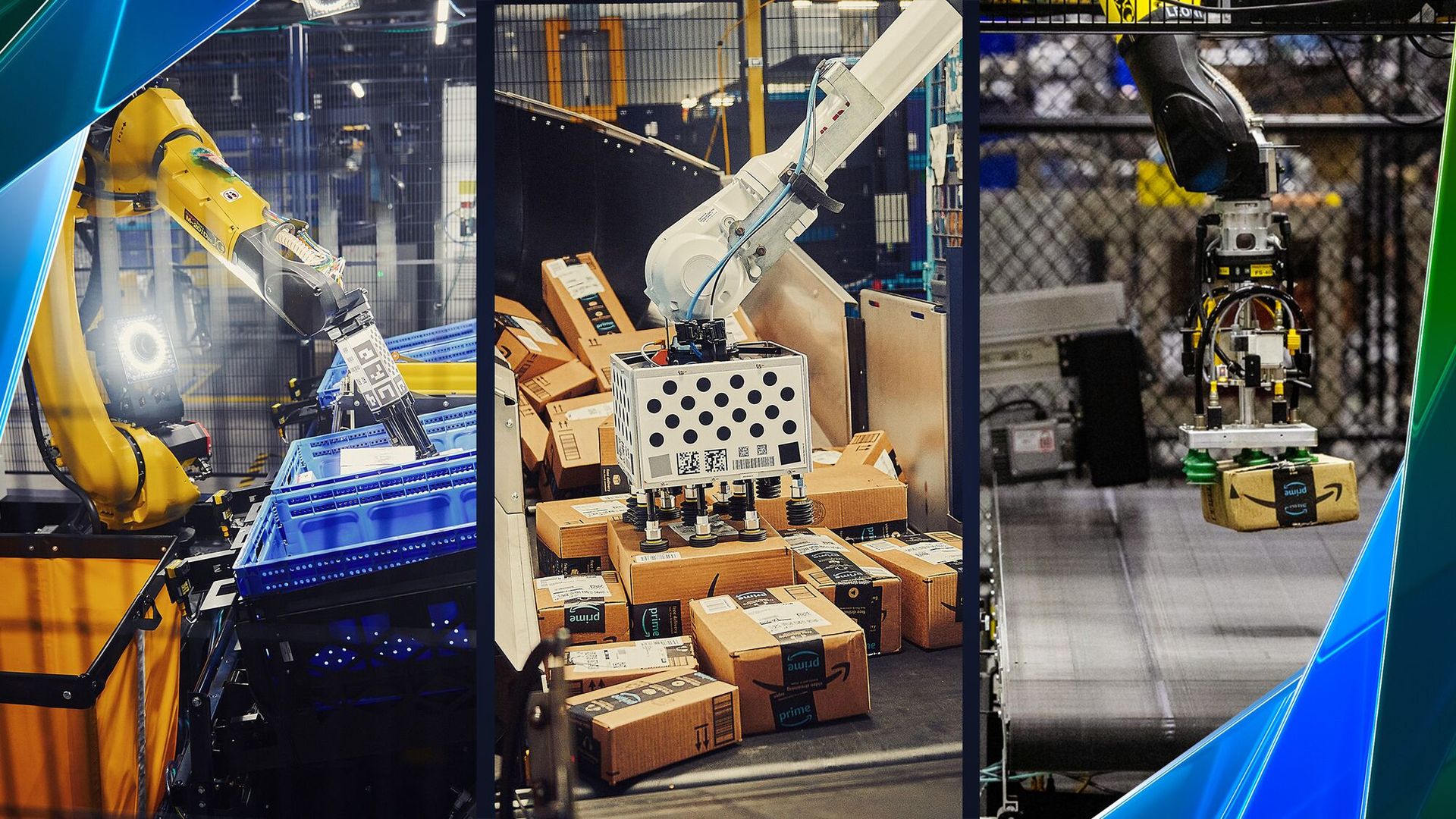
Amazon robotic arms work together in fulfillment centers - Sparrow, Cardinal, and more handle picking, sorting, and packing
For workforce development: Amazon's approach — robots working alongside humans, not replacing them — is the model most experts advocate for Malaysia. The new Proteus robot requires workers to talk to it, not code for it, which means digital literacy matters more than programming skills. Malaysian SMEs investing in automation should look for solutions that augment their existing workforce rather than require specialized technical hires.
The cost trend is also encouraging. Amazon's massive scale is driving down component costs for sensors, actuators, and AI processors — the same components used in smaller-scale warehouse robots. Industry analysts expect mid-tier warehouse robotics solutions to become 30-40% more affordable within the next two years as supply chains mature.
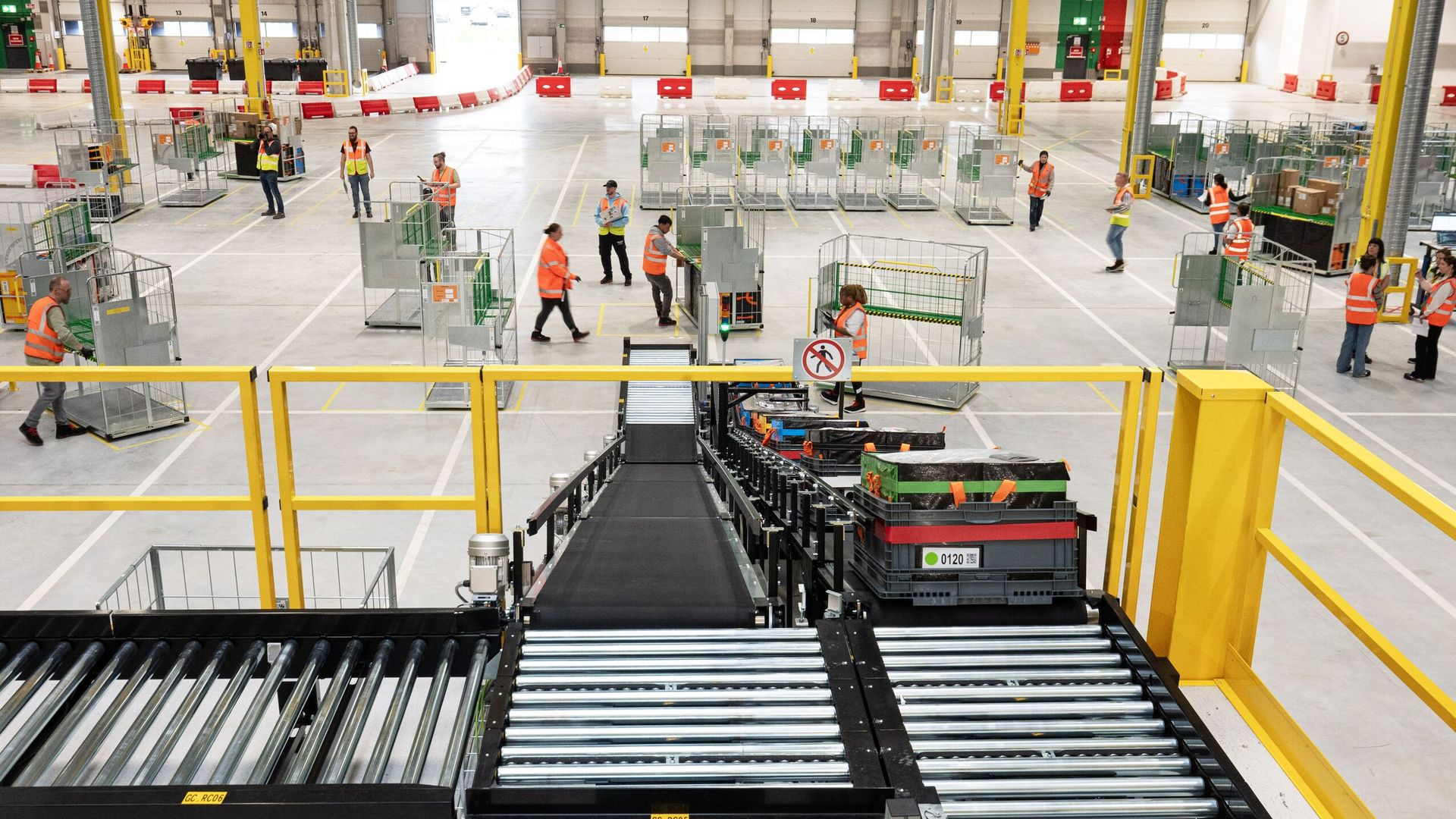
Credit: Amazon | Amazon modern fulfillment centers combine AI, robotics, and human expertise to enable same-day delivery to 2,300+ cities
The Bigger Picture: $200 Billion Bet on AI
Amazon's warehouse robotics push is part of a broader corporate strategy. In February 2026, Amazon forecast over $200 billion in capital expenditures for the year — a 50%+ jump from 2025. Much of this goes to AI infrastructure, data centers, and automation.
This spending reflects a race across the entire tech industry. Amazon is not alone: Walmart, JD.com, Alibaba, and Shopify are all investing heavily in AI-powered logistics. For Malaysian SMEs, the message is clear: AI-enabled logistics is becoming table stakes, not a competitive advantage. Businesses that delay automation risk falling behind on delivery speed, cost efficiency, and inventory accuracy.
Amazon's own numbers tell the story. The company plans to open 25+ new same-day delivery sites across Europe in 2026 alone, with Amazon Now (ultra-fast delivery for essentials) expanding to Manchester and Birmingham. In the US, same-day grocery now covers 2,300+ cities.
The takeaway for SME owners: you don't need a million-robot warehouse. But you do need to start thinking about how AI and automation can improve your logistics today — whether through smarter inventory management, automated order processing, or predictive demand forecasting.
Frequently Asked Questions
A: Amazon crossed 1 million industrial robots deployed in mid-2025 and continues expanding. The company has approximately one robot for every human employee across its global fulfillment network.
A: Yes. The upgraded Proteus (announced June 2026) accepts conversational instructions. Workers describe what needs to be done, and the robot determines the priority, route, and timing autonomously — no coding or predefined commands required.
A: Amazon emphasizes a "co-bot" model where robots and humans work alongside each other. The Vulcan robot, for example, handles the physically demanding tasks (bending, reaching high shelves) to improve safety, while humans handle exceptions and supervision. Amazon's VP of Applied Science states: "I don't believe in 100% automation."
A: SME-friendly warehouse robotics from companies like Geek+, Locus Robotics, and GreyOrange offer affordable entry points. AI-powered inventory management and route optimization software are available as SaaS subscriptions starting from RM500/month, making automation accessible even for smaller operations.
A: Amazon's 2026 capital expenditure of $200 billion+ (up 50%+ from 2025) funds AI infrastructure, data centers, robotics deployment, and fulfillment center expansion — including 25+ new same-day delivery sites across Europe.
Ready to automate your warehouse? Start small: evaluate your current logistics bottlenecks, research AI-powered inventory tools available in Malaysia, and consider pilot programs with local automation vendors. The age of AI logistics isn't coming — it's already here.
SEO Meta Title: Amazon's AI Warehouse Revolution: 1M Robots & What It Means for Malaysian SMEs
SEO Meta Description: Amazon deploys 1M+ AI-powered warehouse robots including conversational Proteus and touch-sensitive Vulcan. Discover what Amazon's $200B automation push means for Malaysian SMEs and e-commerce sellers.
SEO Keywords: Amazon warehouse robots, Proteus robot, Vulcan robot, AI logistics, warehouse automation Malaysia, Amazon robotics 2026, SME logistics automation, Amazon fulfillment AI, conversational AI warehouse, Amazon same-day delivery
Internal links: /blog/ai-tools-every-sme-should-know, /blog/digital-transformation-smes-2026
Conclusion
As a Malaysian SME, staying informed and taking action on what you learn is what sets your business apart. The strategies and tools discussed in this article are designed to be practical and achievable. Start with one area, master it, then expand. Remember, the goal is progress, not perfection.
This article was written by Ryan Lim, a contributor to SMEBuddies. Ryan covers business operations and technology topics to help Malaysian SMEs grow smarter.
Amazon's AI Warehouse Revolution: 1 Million Robots, Conversational AI, and What It Means for SMEs