By Dennis Tan · October 2026

Discounts still move shoppers. The difference now is that the comparison happens before a person ever sees the promotion.
Malaysian sellers spent the last decade optimising for a human scrolling a grid on a phone. That human is still there. What changed in September is who does the shortlisting: an AI agent that reads product feeds, compares attributes, checks stock and comes back with one recommendation instead of thirty tabs.
Which means the work is no longer about persuasive copy. It is about whether your product exists, in writing, in a form a machine can compare.
What Changed in September
On 16 September 2026, OpenAI introduced new advertising features and named Shopify its first e-commerce partner and HubSpot its first customer-relationship partner. The Shopify app began with US merchants and reached other ChatGPT Ads markets from 23 September. On that same date, ChatGPT Ads expanded into Southeast Asia and Taiwan — Indonesia, Malaysia, the Philippines, Singapore, Thailand, Vietnam and Taiwan — taking the product to more than 60 countries. Ads appear to users on the free and Go plans; paid and enterprise tiers stay ad-free.
Around the same time, retail analysts began telling merchants the same thing. Retail Asia reported on 29 September that retailers were being advised to structure product data for AI shopping agents, and data-engineering consultancies published readiness guides arguing that catalogue quality now decides who gets recommended. Meanwhile in China, where Alibaba's Qwen shopping assistant inside Taobao has passed 300 million monthly users according to market figures cited in industry analyses, the model is already proven at scale — and Alibaba Cloud said at its Apsara conference on 23 September that it will open its first cloud regions in Türkiye, Finland and the Netherlands over the next twelve months, having marketed a suite of agentic tools for Europe in the second half of 2026. The mechanism is arriving in Malaysian feeds without a local press release.
How an Agent Reads Your Listing
A person sees a photo, a price and a feeling. An agent sees a record. It checks whether the attributes it was asked about — size, material, colour, compatibility, delivery window, return terms — are present as fields, whether the price and stock are current, and whether the promise holds up.
Accenture's agentic-commerce research found up to 86% of agent-mediated transactions are at risk of being abandoned or switched to a competitor when something goes wrong mid-purchase. There is no persuasion stage in that process. A missing attribute is not a weak point; it is a disqualification.
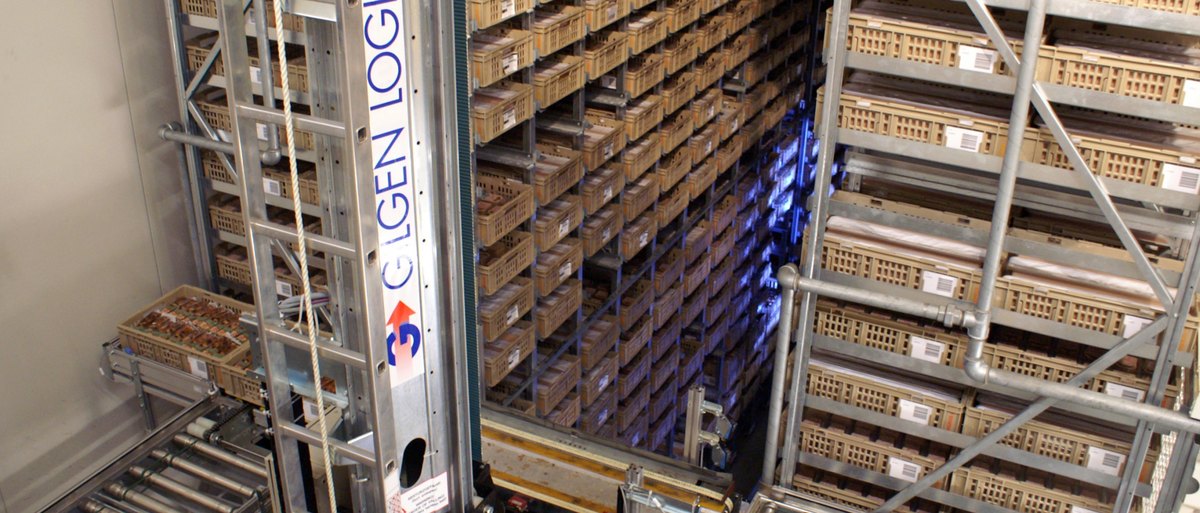
Shelves of small parts in an automated storage system — every one of those items is a set of product facts an AI shopping agent has to be able to read. Photo: Gilgen Logistics AG / Wikimedia Commons (CC BY-SA 4.0).
The Fields That Decide Whether You Appear
OpenAI's product feed specification for shopping in ChatGPT sets out nine required fields, and a row without a valid availability value is rejected outright. Titles are limited to about 150 characters and descriptions to about 5,000 characters of plain text. The specification is explicit that empty fields should stay empty: do not write "null", "unknown" or "n/a", and never invent a product code to fill a gap.
| Field | What it must say | Where the truth lives |
|---|---|---|
| Identifier, brand, seller | Stable ID, barcode or GTIN where you have one, brand and seller name | Your catalogue or stock system |
| Title and description | What the product is, in plain text, without marketing shortcuts | Catalogue, updated when the product changes |
| Attributes | Size, material, colour, dimensions, compatibility, care | Catalogue fields, not paragraph prose |
| Price | Ringgit amount, currency, SST status, effective dates | Commerce platform, current |
| Availability | In stock, out of stock, backorder — accurate today | Inventory system, synced daily at minimum |
| Delivery promise | Cut-off time, courier, Peninsular and East Malaysia coverage | Fulfilment records |
| Returns and warranty | Window, condition, who pays return postage | Approved policy page |
| Images and reviews | Consistent per-variant photos; ratings tied to the right variant, with dates | Catalogue and review platform |
Listing Audit Checklist
Run this over your twenty best-selling items before touching a single new channel. It takes an afternoon and needs no software purchase.
- Every title names the product, the variant and one differentiator — no internal codes or campaign names.
- No core field is blank, and none contains "n/a", "unknown" or a zero standing in for nothing.
- Sizes, materials and dimensions are in fields, not buried in a description or visible only in a photo.
- Stock reflects what is physically on the shelf today, and price matches the ringgit figure on the product page.
- Delivery cut-off times are stated, including how long East Malaysia takes.
- Returns, refunds and warranty terms exist on a plain page with a date on it.
- Photos are consistent per variant, correctly named, and show the product rather than a lifestyle scene alone.
- Reviews attach to the correct variant and carry dates.
- You have asked ChatGPT or a similar assistant about your own products and checked whether the answer is correct.

Freshness rules apply to data as much as to produce: a stock figure that is a week old is a stock figure an agent cannot use.
Feed Formats Without the Jargon
A product feed is a spreadsheet with agreed columns. That is the whole idea. CSV and TSV are files you can open in Excel; XML and JSON are the same rows written in a structured syntax. Channels publish a template listing which columns are required, and you fill it.
The second format worth knowing is the structured data on your product page — a small block of code, in the page's source rather than in what visitors see, that restates the product name, price, currency, availability, brand and ratings in a fixed vocabulary. Most Malaysian site platforms and hosted storefronts can generate it automatically from your catalogue fields, which is another reason getting the fields right comes first.

A shop's own catalogue is often the only place all its product facts live together — which is why it becomes the agent's source of truth.
Conclusion
ChatGPT Ads opened in Malaysia on 23 September, and the same structured-data requirements now shape whether a Malaysian listing is recommended or skipped. This is still early: NielsenIQ's research across markets found shoppers are comfortable letting AI research and recommend, but far fewer will hand over the purchase itself, and agentic checkout is unproven at Malaysian scale.
That gap is the opportunity. The cleanup work is unglamorous and cheap — correct titles, real attributes, current stock, honest delivery promises, dated returns terms, consistent photos — and it improves your existing channels whether or not an agent ever reads them.
Start with your twenty best sellers this week. An agent cannot recommend a product it cannot read, and no amount of advertising fixes an unreadable catalogue.
Frequently Asked Questions
Are ChatGPT ads really available in Malaysia?
Yes. OpenAI's release dated 23 September 2026 expanded ChatGPT Ads to Southeast Asia and Taiwan, naming Indonesia, Malaysia, the Philippines, Singapore, Thailand, Vietnam and Taiwan — taking availability to more than 60 countries. Ads show to users on the free and Go plans, while paid and enterprise tiers remain ad-free.
Do I need to rebuild my online store for AI agents?
No. Rebuilding is the expensive answer to a data problem. The work is to complete and standardise the fields you already have, keep price and stock current, and publish delivery and returns terms clearly. Most hosted platforms can then export a feed and generate structured product data from those fields.
What is a product feed, in one sentence?
It is a spreadsheet of your products with agreed columns — identifier, title, description, brand, price, availability, image and links — that a shopping channel or AI agent reads directly, in CSV, XML or JSON form.
How often should stock and price be updated?
More often than most small sellers do. Nightly is a defensible minimum; on-demand and near-real-time syncs are better for fast-moving categories. The test that matters is simple: if a customer orders at 10am, would the stock figure an agent saw at 9am still have been true?
Will clean data guarantee sales from AI agents?
No. Clean data makes you eligible to be compared; it does not decide the outcome. Pricing, reviews, delivery reliability and returns handling still determine who wins. Analyst estimates of how much agentic commerce will matter vary widely, so treat readiness as insurance, not as a revenue promise.
Dennis Tan covers e-commerce, marketplaces and logistics for SMEBuddies, following how Malaysian sellers move from marketplace dependence toward their own channels. He has worked with online retailers on catalogue management, fulfilment and returns processes, and writes about the operational detail that decides whether a listing actually sells. His work for SMEBuddies focuses on changes an owner or a small team can make without hiring a specialist.
AI Shopping Agents Can't Read Your Product Data — Fix That First